Walk into a small EV repair shop in a Tier-2 city and, at first glance, nothing feels unusual.
Batteries are stacked neatly, labels look familiar, and the pricing seems reasonable enough to not raise suspicion. But spend a little more time there ask a few questions and things start to feel slightly off.
You’ll hear lines like, “same spec, but this one lasts longer,” or “this is cheaper, but works fine.” That’s usually where the difference begins. Because what looks like a normal, functioning market on the surface is, in many places, a mix of genuine products and questionable ones.
It Didn’t Start as a Black Market
The situation didn’t begin this way. It built up over time.
Lithium batteries became mainstream faster than most supply chains could handle. EV adoption increased, solar installations picked up, and backup systems started shifting toward lithium. Demand moved quickly, but supply didn’t always follow in a structured way.
Globally, lithium-ion demand has grown into a massive industry. In India, that pressure shows up more clearly in smaller cities, where access to verified supply is limited and pricing plays a bigger role in decision-making.
And when demand grows faster than organized supply, informal markets tend to fill the gap.
What’s Already Happening on the Ground
In cities like Chennai, there have already been reports of unregulated electric vehicles using low-quality or recycled lithium batteries entering the market at scale. In some cases, estimates suggest tens of thousands of such units are being sold every month.
Looking closely, the pattern is fairly consistent.
Many of these setups rely on reused or low-grade cells, poorly implemented battery management systems, and assembly practices that cut corners. At the same time, India still depends heavily on imported lithium cells and components, which creates fluctuations in availability and pricing.
When supply becomes uncertain but demand stays high, the market doesn’t slow down it adapts. And not always in a structured way.
“Fake” Doesn’t Always Look Fake
One of the biggest challenges is that counterfeit batteries don’t always look suspicious.
Some are simply repackaged. Others carry branding that closely resembles known Lithium ion battery manufacturers in India. In a few cases, even the labeling and packaging are convincing enough to pass a basic inspection.
The difference usually lies inside the battery, not outside.
Lower-grade cells, missing safety layers, and inconsistent assembly aren’t visible when you’re making the purchase. By the time the issue becomes noticeable, the damage is already done.
Why Tier-2 Cities See More of This
This isn’t happening randomly, and it’s not just about awareness.
In larger cities, buyers often have access to authorized dealers or direct connections to verified Lithium ion battery suppliers in India. There’s some level of accountability built into the process.
In Tier-2 and Tier-3 cities, the situation is different. Dealers often source from multiple channels, product verification isn’t always straightforward, and pricing becomes the deciding factor more often than it should.
From a buyer’s perspective, the logic is simple: if something works and costs less, it feels like a reasonable choice. That’s enough for lower-quality products to move quickly through the market.
The Price Factor Changes Everything
Batteries make up a significant portion of an EV’s cost, often around 40–50 percent. That alone makes pricing a sensitive factor.
Even a small difference in cost can influence decisions.
Cheaper batteries tend to sell faster, especially in price-sensitive markets. Over time, this creates a cycle where demand starts favoring lower-cost options, even if quality is compromised. And once that cycle sets in, it reinforces itself.
The Risks Don’t Show Up Immediately
Another reason this problem persists is timing.
These batteries don’t usually fail right away. For the first few weeks or even months they might perform normally. That’s what makes them harder to judge at the start.
Gradually, though, issues begin to surface. Charging becomes inconsistent, backup drops, and in some cases, overheating becomes noticeable.
The bigger concern isn’t just reduced performance it’s unpredictability. Without proper internal safety mechanisms, the margin for error becomes much smaller.
Even Experienced Buyers Get It Wrong
It’s not always easy to identify a counterfeit product, even for someone with experience.
Many of these batteries replicate branding from established Lithium ion battery manufacturers in India, sometimes down to small details. Packaging looks right, labels seem correct, and there may even be codes that appear legitimate.
At that point, the product itself doesn’t provide enough information. The reliability of the supplier becomes more important than the appearance of the battery.
Where the System Starts Breaking
The issue isn’t limited to counterfeit manufacturing it’s also about how the supply chain is structured.
Not all sellers are connected to verified Lithium ion battery suppliers in India. Many rely on intermediaries or unverified sources, where traceability becomes weaker at each step.
Once traceability is lost, maintaining consistent quality becomes difficult. That’s where most of these problems begin, long before the product reaches the end buyer.
Why Brand Reliability Starts to Matter More
In this kind of environment, brand reliability becomes more important than usual.
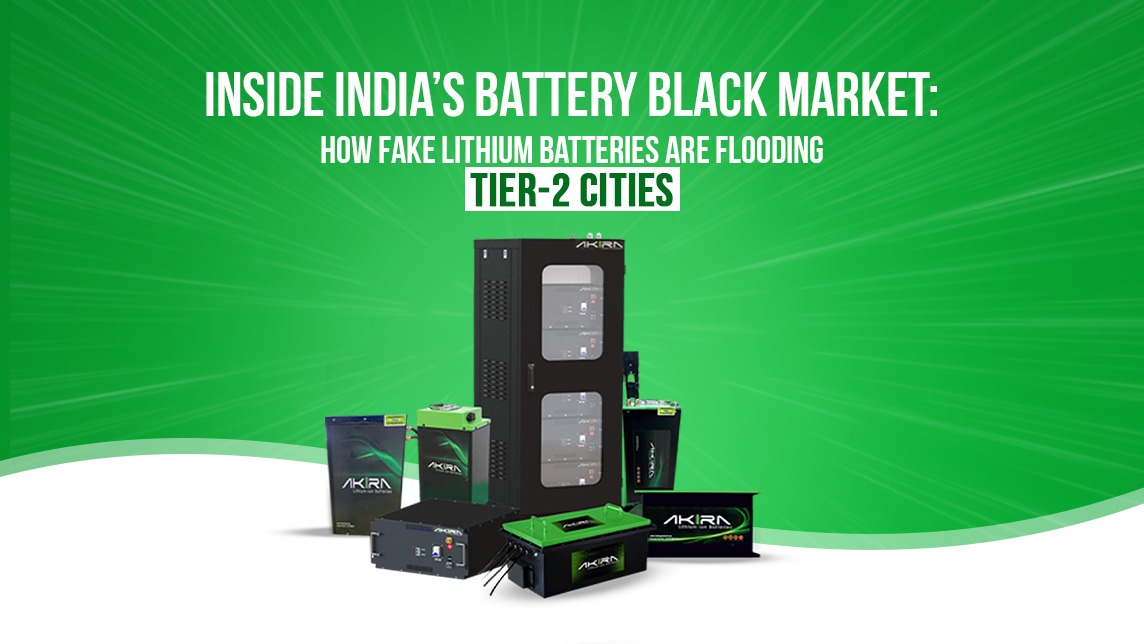
Companies like Akira are focusing on consistent supply chains and dependable performance, making sure that what reaches the customer matches what’s promised.
For buyers, choosing a brand like Akira is less about marketing and more about reducing uncertainty. In a mixed market, that distinction matters.
What Needs to Change
The situation isn’t likely to correct itself without changes at multiple levels.
Stronger enforcement against counterfeit products would help, but so would better awareness among buyers. Easier access to verified Lithium ion battery suppliers in India and more transparent distribution systems could also reduce the problem.
Until then, the responsibility often falls on buyers and dealers to be more cautious.
Final Thoughts
India’s battery market is expanding quickly, but that growth isn’t always structured.
The presence of counterfeit lithium batteries reflects a gap between demand and organized supply. And until that gap narrows, the risk remains.
In this market, appearances can be convincing. What actually matters is what’s behind them and that’s not always easy to see at the start.
FAQs
1. Why are fake lithium batteries increasing in India?
Rapid demand, supply gaps, and price sensitivity are allowing counterfeit products to enter the market more easily.
2. Are counterfeit lithium batteries dangerous?
Yes. Many lack proper safety systems, increasing the risk of overheating, failure, or fire.
3. Why are Tier-2 cities more affected?
Limited access to verified Lithium ion battery suppliers in India and less structured distribution make these markets more vulnerable.
4. Can fake batteries look genuine?
Yes. Many copy branding from Lithium ion battery manufacturers in India, making them difficult to identify visually.
5. How can buyers avoid fake batteries?
Buy from trusted suppliers, verify documentation, and choose reliable brands like Akira with consistent quality and support.