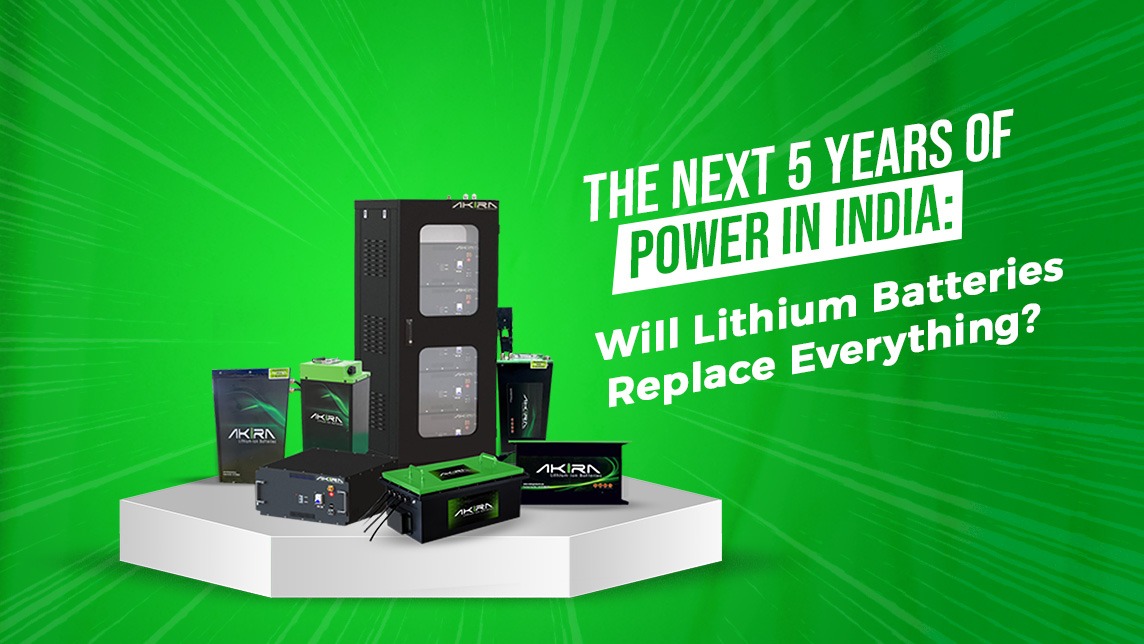
India’s energy shift isn’t something we need to predict anymore we can already see it happening around us. There is a clear trend where electric scooters can be seen everywhere, while roof-mounted solar panels can now also be found in greater numbers. Even the alternative energy sources have changed their form.
But the question remains: will lithium-ion batteries rule over all other batteries in the next five years?
Not entirely. But they’re definitely moving into a position where they’ll dominate most of the important use cases.
What’s Actually Changing on the Ground
If we look at how things have evolved over the last few years, lithium-ion batteries have quietly moved from being “advanced tech” to something much more practical.
Today, they’re used in vehicles, homes, and even small commercial setups. That shift has pushed many Lithium ion battery manufacturers in India to expand faster than expected, especially in assembly, battery management systems, and localized performance improvements.
What’s interesting is that this growth isn’t just demand-driven. Policy support like FAME incentives and PLI schemes has also played a role in nudging the ecosystem forward.
Why EVs Are Driving Most of This Change
If there’s one area where the impact is most visible, it’s electric mobility.
The rise of EV battery manufacturers in India isn’t happening in isolation. It’s directly tied to how quickly two-wheelers, three-wheelers, and delivery fleets are switching to electric. In many cities, this shift already feels normal.
And from a practical standpoint, lithium-ion batteries just make more sense for EVs:
- They hold more energy, which means better range
- Charging is quicker compared to older options
- Maintenance tends to be lower over time
Of course, infrastructure still has to catch up in some places but the direction is already set.
Lithium Ion Battery Price in India: Still a Barrier?
This is where things get a bit more real.
The Lithium ion battery price in India is still higher than lead-acid, and that’s often the first thing buyers notice. For someone making a short-term decision, that upfront difference matters.
But over time, the equation shifts. Lithium batteries last longer, perform more consistently, and don’t need the same level of maintenance.
Even so, pricing isn’t going to drop overnight. It depends on raw material imports, global supply chains, and how quickly Lithium ion battery manufacturers in India can scale domestic production.
It’s Not Just About EVs Anymore
One thing that often gets overlooked is how lithium batteries are spreading beyond vehicles.
We’re starting to see them in:
Solar storage systems
As more homes and businesses install solar panels, storing that energy efficiently becomes important and lithium fits well here.
Residential backup setups
There’s a slow but noticeable shift from traditional inverters to lithium-based systems, mainly for reliability.
Commercial use
Small businesses and offices are also exploring lithium options for uninterrupted operations.
This wider adoption changes the conversation. It’s no longer just about EVs it’s about energy in general.
So, Will Lithium Replace Lead-Acid Completely?
Not immediately and probably not everywhere.
Lead-acid batteries still have one clear advantage: lower upfront cost. That keeps them relevant, especially in price-sensitive markets and basic applications.
What we’re more likely to see is a gradual shift:
- Lithium taking over where performance and long-term value matter
- Lead-acid continuing where cost is the deciding factor
Over time, that balance will keep changing but it won’t flip overnight.
Where Indian Manufacturers Fit In
Another important piece of the puzzle is local manufacturing.
The growth of EV battery manufacturers in India and other domestic players shows that India isn’t just importing technology anymore we’re adapting it.
Companies are working on making batteries that actually suit Indian conditions, whether that’s heat, usage patterns, or inconsistent power environments.
Brands like Akira are part of this shift, focusing on solutions that aren’t just technically sound but also practical to use. And as adoption increases, players like Akira will likely have a bigger role in making lithium more accessible across different segments.
The Challenges That Still Matter
Even with all this momentum, a few issues haven’t gone away.
- A lot of raw materials are still imported
- Prices can fluctuate depending on global supply
- Recycling infrastructure is still developing
- Not everyone fully understands lithium technology yet
None of these are deal-breakers but they do slow things down.
What the Next 5 Years Might Actually Look Like
Instead of a complete replacement, the next five years will probably be about steady expansion.
We’ll likely see:
- Lithium becoming the default choice for EVs
- More adoption in solar and backup systems
- A gradual shift in the Lithium ion battery price in India
- Continued growth from domestic manufacturers
The key word here is “gradual.” The change is happening but in phases.
Final Thoughts
If there’s one thing that stands out, it’s this: lithium batteries aren’t just an upgrade they’re becoming a foundation for how energy is stored and used.
They won’t replace everything overnight. But in most high-growth areas, they’re already becoming the preferred option.
And as the ecosystem matures with better pricing, stronger local manufacturing, and more awareness companies like Akira will be in a position to bridge the gap between technology and everyday use.