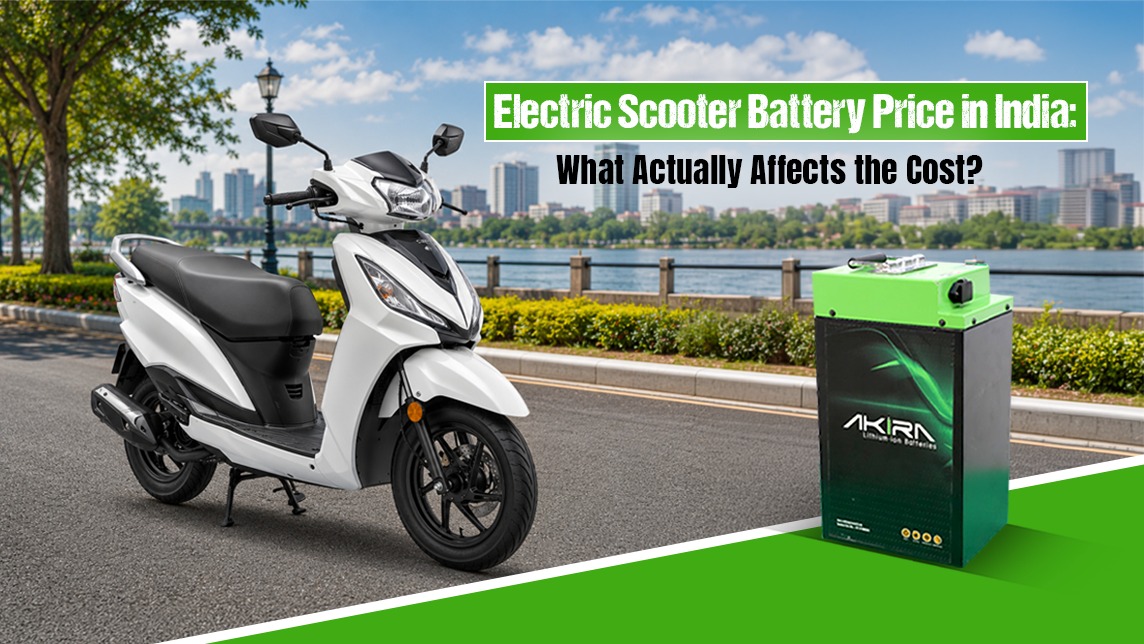
Electric Scooter Battery Price in India: What Actually Affects the Cost?

When people ask about electric scooter battery price, they usually expect one fixed number.

But battery pricing does not work like that.

Two batteries may look similar from outside. Both may fit an electric scooter. Both may even show the same voltage on the label. Still, the price can be different because the real difference sits inside the pack — cell quality, Ah capacity, BMS, safety protection, charging support, warranty, and how well the battery matches the scooter.

This is where many buyers make a mistake. They compare only the rate and ignore the things that decide battery life and daily performance.

A low-priced battery may look attractive at first. But if the range drops early, charging becomes slow, heating starts, or replacement comes too soon, the saving disappears.

So before buying a lithium battery for electric scooter, it is better to understand what actually affects the cost.

Voltage And Capacity Decide A Big Part Of The Price

Battery price changes with voltage and Ah capacity.

A 48V battery will not cost the same as a 60V or 72V battery. Same way, a 24Ah battery and a 40Ah battery will not give the same range or carry the same cost.

Higher capacity means the battery can store more energy. That usually means better range, but also higher price.

Akira offers electric scooter lithium batteries in different voltage and capacity options, including 48V, 60V, and 72V variants. This helps riders, dealers, and replacement buyers choose the battery based on scooter voltage, daily range requirement, and usage pattern.

So when someone asks, “Battery ka rate kya hai?”, the first question should be:

  • Which scooter is it for?
  • What voltage does it need?
  • How much range do you expect?
  • Is the scooter used for short rides or daily work?

Without this, price comparison is incomplete.

Cell Quality Makes A Real Difference

The cell is the main part of the battery pack.

Low-grade cells can reduce the first cost, but they usually show problems later. Range starts dropping. Heating may increase. Charging can become uneven. The battery may not handle daily riding properly after some time.

A properly built battery pack costs more because the cells are better, the pack design is stronger, and the output stays more consistent.

This matters in electric scooters because the battery does not sit idle. It faces charging, discharging, road vibration, heat, rider weight, and daily movement.

This is one reason the lithium ion battery price in India changes so much from one supplier to another.

A cheaper battery is not always a better deal. Sometimes it is only cheaper on the first bill.

BMS Quality Should Not Be Ignored

Many buyers ask about voltage, Ah, and price.

Very few ask about BMS.

That is a mistake.

BMS means Battery Management System. It controls and protects the battery pack. It monitors charging, discharging, current flow, temperature, and safety limits.

A strong BMS helps protect the battery from overcharging, deep discharge, overheating, and uneven cell performance. Without proper BMS protection, even a decent battery pack can become unreliable.

For scooter use, this matters a lot.

Some riders charge daily. Some ride in hot weather. Some carry extra load. Some use the scooter for delivery or business work. The BMS quietly handles a lot of this pressure.

So yes, a battery with a better BMS may cost more. But it also gives better safety and longer usable life.

Daily Usage Decides The Right Battery

Every rider does not need the same battery.

A person using the scooter only for nearby market runs does not need the same battery as someone doing daily delivery work. One needs basic range. The other needs stronger cycle life, better BMS support, and faster charging ability.

This is where many wrong purchases happen.

The buyer sees a cheaper battery and thinks it will do the same job. But if the scooter is used heavily, a small or weak battery gets deeply discharged again and again. That reduces life.

So the better question is not only:

“What is the electric scooter battery price?”

The better question is:

“Which battery will handle my daily use without getting over-stressed?”

That is how practical buyers should think.

Charging Time Also Changes The Value

Fast charging sounds simple, but it depends on battery design, charger compatibility, and BMS support.

A battery that charges faster can help riders who use their scooter daily and cannot wait too long between rides. But fast charging should not come at the cost of safety.

A well-designed battery handles charging properly. A weak pack may claim fast charging, but if the internal design is poor, heat and cell stress can reduce battery life.

So while comparing battery prices, do not only ask how fast it charges. Ask whether the battery can handle that charging safely over time.

Akira’s electric scooter battery range focuses on fast charging, safe operation, and long cycle life. These are the points buyers should check before choosing a scooter battery.

Warranty And Support Affect The Real Cost

Battery buying does not end after payment.

If there is a problem later, service support matters. A battery without proper support can become a headache, especially when the scooter is used every day.

This is where buying from a serious two wheeler battery manufacturer in India makes a difference.

A proper manufacturer understands the application. An electric scooter battery has to handle daily riding, charging cycles, vibration, heat, and different user habits. It cannot be treated like a random battery pack.

Warranty, technical support, and correct guidance may not look like big features on day one. But they matter when the battery starts working in real conditions.

Customisation Can Affect Price Too

Electric scooters do not all use the same battery pack.

Some need 48V. Some need 60V. Some need 72V. Capacity also changes depending on motor power, range expectation, battery space, and usage.

A customised battery may cost more than a standard pack, but it can perform better if it matches the scooter properly.

Wrong battery matching creates problems. The scooter may not give proper range. Charging may not suit the pack. The battery may heat up. The vehicle may feel underpowered.

For OEMs, dealers, fleet users, and replacement buyers, customisation can add real value when done properly.

What Should Buyers Check Before Comparing Price?

Before comparing battery price, check the basics properly.

  • Does the battery voltage match the scooter?
  • Is the Ah capacity enough for daily running?
  • Does the BMS support the load and charger?
  • Will the battery fit properly in the scooter space?
  • Is the battery suitable for daily charging and discharging?
  • Is warranty and service support clear?
  • Is the supplier or manufacturer reliable?

Price makes sense only after these points are clear.

Otherwise, two batteries may look similar but perform very differently.

Final Thoughts

The electric scooter battery price in India depends on more than just battery size.

Voltage, Ah capacity, cell quality, BMS, range, charging speed, warranty, customisation, and brand support all affect the final cost.

If someone rides only short distances, a basic battery may be enough. But if the scooter is used daily, carries load, runs longer routes, or supports work income, battery quality becomes more important than the lowest price.

Akira Batteries offers lithium battery options for electric scooters across different voltage and capacity needs. For riders, dealers, and businesses looking for a dependable lithium battery for electric scooter, the right choice should come from proper matching, not guesswork.

A cheap battery may save money today.

A well-matched battery saves trouble later.

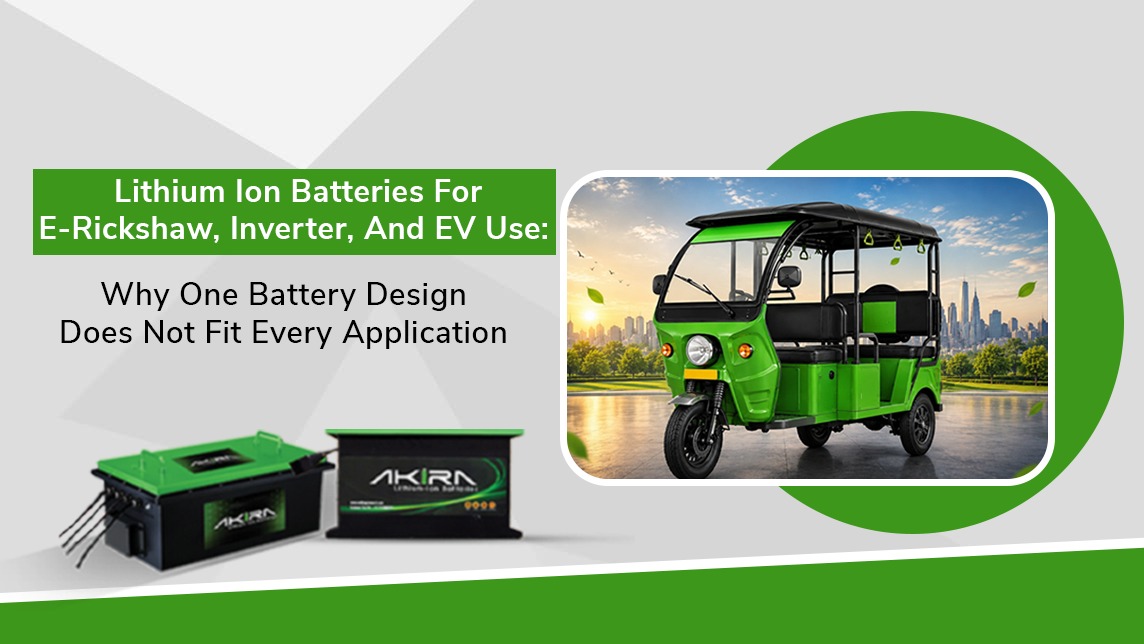
Lithium Ion Batteries For E-Rickshaw, Inverter, And EV Use: Why One Battery Design Does Not Fit Every Application

A lithium battery may look like one product from outside.

Same box, voltage label and the same old promise of long life and fast charging.

But in real use, every battery does not do the same job. A battery used in an e-rickshaw works differently from one used in an inverter. An electric scooter battery also has a different load pattern.

That is why one battery design cannot fit every application.

Akira, a Lithium ion battery manufacturers in India works across different lithium battery applications, including e-scooters, e-rickshaws, e-autos, inverter backup, telecom, solar, and ESS. Because of this, battery selection should start with the actual use, not just voltage and Ah rating.

E-Rickshaw Batteries Need Load Handling

An e-rickshaw battery has a hard job.

It carries passengers, runs for long hours, faces traffic, uneven roads, slopes, heat, and daily commercial use. The driver depends on the battery for income, so weak performance directly affects earning.

A lithium ion battery for e rickshaw should hold voltage properly under load. If voltage drops too much during acceleration or passenger load, the rickshaw feels weak. Range also drops faster.

So, e-rickshaw batteries need strong discharge support, thermal control, stable output, and long cycle life. Capacity matters, but it is not the only thing. The battery should match the motor, controller, vehicle weight, passenger load, and daily route.

Inverter Batteries Need Stable Backup

An inverter battery has a different role.

It does not face road vibration or acceleration load. Instead, it has to give steady backup during power cuts.

A lithium ion battery for inverter should support safe charging, stable discharge, and proper inverter compatibility. In homes, it may run lights, fans, Wi-Fi, TV, or small appliances. In shops and offices, it may support computers, CCTV, billing machines, and basic systems.

However, problems start when the battery is not matched properly. If the inverter charging profile is wrong, the battery may undercharge or overcharge. If the connected load is too high, backup drops quickly.

For inverter use, the main focus should be backup stability, BMS protection, charging compatibility, and long usable life.

EV Batteries Need Compact Power And Safety

EV batteries, especially for scooters and two-wheelers, need quick response.

They must fit in limited space, stay lightweight. And they also need to support acceleration, rider load, heat, road vibration, and daily charging.

A scooter rider notices battery problems quickly. If the battery heats up, range drops, or the pack cuts off suddenly, the ride gets disturbed.

Because of this, EV batteries need proper cell matching, compact pack design, BMS safety, thermal handling, and charger compatibility.

This is where experienced lithium ion battery manufacturers in India matter. A scooter battery, e-rickshaw battery, and inverter battery all need different design priorities.

BMS Settings Change With Application

BMS is not just a protection board.

It controls how the battery behaves during charging and discharge. For an e-rickshaw, the BMS must handle heavy load and long working hours. And an inverter, it must support steady backup. Last for a scooter, it must manage compact power delivery, heat, and sudden load changes.

If the BMS does not match the application, issues can appear later. The battery may cut off early, heat up, charge poorly, or give uneven performance.

So, when comparing lithium ion battery suppliers in India, buyers should ask one simple question:

Is this battery designed for my application, or is it just a general lithium pack?

That answer matters.

Why Application-Wise Battery Selection Matters

Lithium batteries are not one-size-fits-all.

An e-rickshaw needs load handling. An inverter needs stable backup. An EV needs compact power delivery and safety.

The chemistry may be lithium, but the design has to match the job.

Akira’s wide application range helps buyers choose batteries based on actual use instead of guesswork. For e-rickshaw owners, inverter users, dealers, OEMs, and businesses, this makes a real difference.

A well-matched battery works quietly in the background.

A wrongly matched battery becomes a regular complaint.

Final Thoughts

The right lithium battery is not selected only by voltage and Ah rating.

It depends on where the battery will be used, how much load it will handle, how often it will charge, and what kind of performance the user expects.

That is why buyers should work with experienced lithium ion battery manufacturers in India who understand different battery applications.

Because in real use, the best battery is not the one that only looks good on paper.

It is the one that fits the job properly.

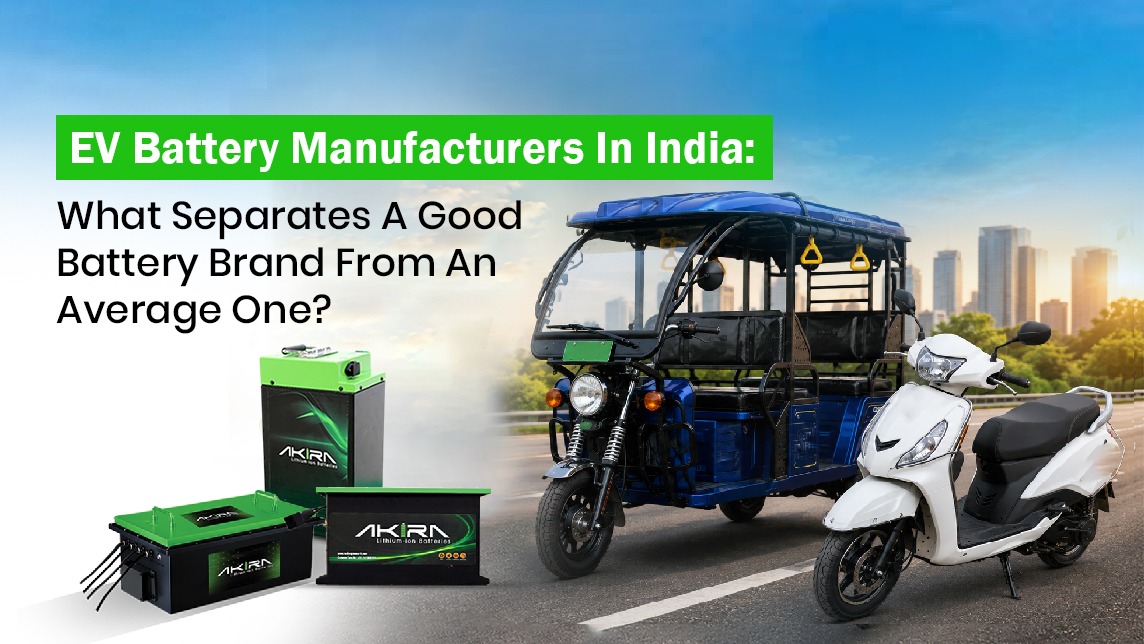
EV Battery Manufacturers In India: What Separates A Good Battery Brand From An Average One?

India’s EV market is growing fast. New brands are coming in, and almost every company talks about long range, fast charging, safety, and long battery life.

But real use tells a different story.

Two battery packs may look similar from outside. Same voltage. Similar capacity. Similar box. Still, once they go into an electric scooter, e-rickshaw, e-cycle, or fleet vehicle, the difference starts showing.

One battery gives stable range. Another heats up. One charges properly. Another gives sudden cut-off issues.

That is why choosing from the right EV Battery Manufacturers In India matters. The battery does more than power the vehicle. It affects range, safety, charging behaviour, daily performance, and long-term cost.

A Good Brand Understands The Vehicle First

A good EV battery brand does not build every pack in the same way.

An e-scooter battery needs compact size, safe charging, and proper range. An e-rickshaw battery works harder. It carries passengers, runs for long hours, and handles rough roads. An e-cycle battery needs a lighter pack. Fleet vehicles need consistency across many units.

This is where average brands often fall short. They sell by voltage and Ah rating only. But real EV use needs more checking.

A serious manufacturer looks at vehicle type, motor load, battery space, controller, charger, daily range, and road condition before suggesting the right pack.

Cell Quality Changes Long-Term Performance

Cell quality is one of the biggest differences between a strong battery and an average one.

Low-grade cells may reduce the first cost. At first, that looks attractive. Later, the problems start. Range drops. Heating increases. Charging becomes uneven. The battery may also struggle under load.

A better battery brand pays attention to cell selection and cell matching. The cells inside the pack should work evenly. If some cells become weak earlier than others, the full pack suffers.

This is why buyers should not judge Lithium Ion Battery Manufacturers In India only by price. A cheaper pack may cost more later through complaints, downtime, and early replacement.

BMS Is Not Just A Feature Name

Many buyers ask only three things: voltage, Ah, and price.

But in lithium batteries, the BMS matters a lot.

BMS means Battery Management System. It checks charging, discharging, temperature, current flow, and cell behaviour. A good BMS helps protect the pack from overcharge, deep discharge, overheating, and uneven cell performance.

Some brands mention BMS in product details, but quality still matters. A weak BMS can lead to sudden cut-offs, poor charging, heating, or uneven range. For an EV user, that problem shows up directly on the road.

Heat, Testing, And Road Use Matter

EV batteries do not work in perfect lab conditions.

In India, they face heat, dust, traffic, vibration, rough roads, and daily charging. Many packs sit under seats, inside metal boxes, or in vehicles parked under direct sun.

So heat handling and testing matter.

A serious manufacturer checks charging behaviour, discharge performance, temperature response, BMS function, and pack consistency before the battery reaches the user.

This becomes even more important for commercial use. E-rickshaw drivers run long hours. Delivery riders need steady range. Fleet owners expect many vehicles to perform the same way.

When comparing Electric Vehicle Battery Manufacturers In India, buyers should ask how the battery performs in real use, not only how much range it claims.

Customisation And Support Make A Difference

Not every EV needs the same battery.

One vehicle may need 48V, another may need 60V, and a heavier setup may need 72V. E-rickshaws may need higher-capacity packs. E-scooters need compact design. Fleet users may need stronger cycle life and better service planning.

Because of this, customisation matters.

A good manufacturer can support different voltage, capacity, size, and application needs. This helps OEMs, dealers, and fleet operators avoid wrong battery matching.

Support after purchase also matters. If a rider faces a problem, someone should check it properly. If a dealer gets repeated complaints, the manufacturer should guide them. Battery quality does not end after dispatch.

So before choosing any Lithium Ion Battery Supplier In India, buyers should check warranty, service response, and technical support.

Where Akira Fits In

Akira Batteries works across EV and energy storage applications such as e-scooters, e-autos, e-rickshaws, e-cycles, telecom, solar, and ESS.

This range matters because every application teaches something different about load, charging, battery life, and user behaviour.

For buyers, dealers, OEMs, and fleet operators, that experience helps in choosing the right battery instead of forcing one pack into every vehicle.

Final Thoughts

Every brand talks about range, fast charging, long life, and safety. But the real difference comes from cell quality, BMS protection, pack design, heat handling, testing, application knowledge, and support.

Good EV Battery Manufacturers In India do not just sell battery packs. They understand how the battery will work after it leaves the factory.

Because in EVs, the battery decides whether the vehicle becomes dependable or becomes a regular complaint.