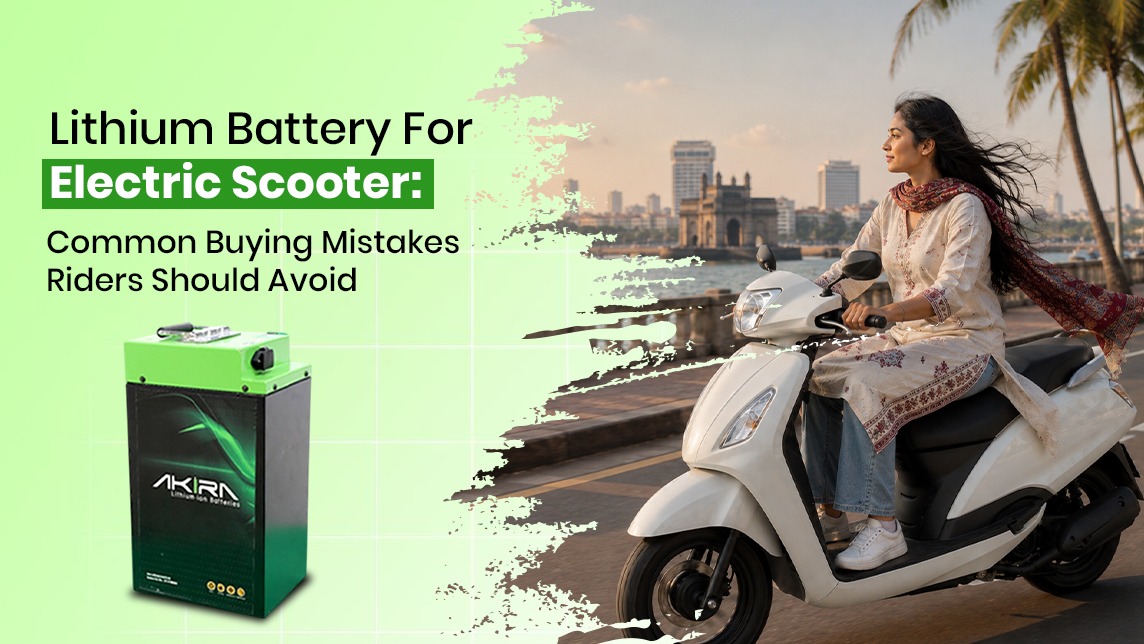
Lithium Battery For Electric Scooter: Common Buying Mistakes Riders Should Avoid

Buying a lithium battery for electric scooter looks simple until the wrong battery starts creating problems.

At first, everything may seem fine. The scooter runs. Charging happens. Range looks okay. But after a few weeks or months, small issues start coming up.

Range drops faster than expected. Battery heats during charging. The scooter feels weak with load. The charger does not match properly. The battery cuts off suddenly.

Most of these problems do not happen because lithium battery technology is bad. They happen because the battery was not selected properly.

The company Akira provides e-scooter lithium batteries in various voltages and capacities, such as 48V, 60V, and 72V models. Other features included in the series include longevity, light weight, safety, quick charging capability, compactness, customization, minimal self-discharge, environmentally friendly construction, and GPS compatibility.

But even with a good product range, the battery must match the scooter and the rider’s usage. That is where many buyers make mistakes.

Mistake 1: Buying Only By Voltage

Many buyers think if the voltage matches, the battery is correct.

That is only half true.

Yes, voltage matters. A 48V scooter needs a 48V battery. A 60V scooter needs a 60V battery. A 72V scooter needs a 72V battery.

But voltage alone does not decide performance.

Two 60V batteries can behave very differently under load. One may hold voltage properly during acceleration. Another may drop quickly when the scooter carries two people or climbs a slope.

So do not buy only because the sticker says the right voltage. Check capacity, discharge support, BMS quality, charger matching, and scooter load requirement too.

Mistake 2: Ignoring Daily Riding Pattern

A rider using the scooter for nearby market runs does not need the same battery as someone doing delivery work all day.

This is where many wrong purchases happen.

Some buyers choose a lower-capacity battery because it costs less. That may work for short rides. But if the scooter runs long routes daily, the battery gets deeply discharged again and again. That reduces life.

For regular riders, delivery users, shop owners, and commercial two-wheeler users, battery selection should depend on daily range, load, road condition, and charging time.

The right battery is not always the biggest one. It is the one that fits your actual use.

Mistake 3: Not Checking Battery Size And Fitment

A battery may have the right voltage and capacity, but still not fit correctly in the scooter.

This sounds basic, but it happens often.

Battery box size, connector type, wire length, mounting space, and weight placement all matter. If the battery does not sit properly, vibration can create trouble. If the connector is loose or mismatched, heating and power cut issues can start.

In replacement cases, this is even more important. Many scooters look similar from outside, but the battery space and wiring can be different.

Mistake 4: Using The Wrong Charger

A good battery can still suffer if the charger is wrong.

Lithium batteries need proper charging voltage and current. If the charger does not match the battery, it can cause undercharging, overcharging, heating, poor backup, or early failure.

Some riders continue using an old charger without checking whether it suits the new lithium battery. That is risky.

Fast charging also needs care. It is useful, but only when the battery design, BMS, and charger all support it properly. Otherwise, fast charging can stress the cells and reduce battery life.

Mistake 5: Ignoring BMS Protection

BMS is not a small feature in a lithium battery.

It is one of the main protection systems.

BMS stands for Battery Management System. It monitors and controls charging, discharging, temperature, current flow, and cell behaviour. A proper BMS helps protect the battery from overcharge, deep discharge, overheating, and uneven cell performance.

A weak BMS may not create problems on day one. Later, it can show through sudden cut-offs, uneven range, heating, or poor charging response.

When comparing lithium ion battery suppliers in India, do not ask only about price and Ah rating. Ask about BMS protection, safety features, and battery support.

Mistake 6: Believing Range Claims Without Checking Conditions

Range claims can mislead buyers.

A battery may show good range under light load and smooth road conditions. But daily riding is different. Traffic, potholes, speed, rider weight, extra passenger, tyre condition, road slope, and weather all affect range.

This is why two riders using the same battery may not get the same result.

So if someone promises very high range without asking about your scooter and usage, be careful.

A practical battery supplier will ask questions first. Scooter voltage, motor power, daily route, load, charger, and expected backup all matter.

Mistake 7: Buying Without Warranty And Service Support

A scooter battery is not something you buy and forget.

If the scooter is used every day, support matters. If the battery gives trouble, you need proper help. Otherwise, the scooter stands idle and the rider loses time.

This becomes more important for dealers, fleet users, and riders who use the scooter for work.

Buying from a serious two wheeler battery manufacturer in India gives more confidence because the manufacturer understands battery matching, pack design, application requirements, and service expectations.

Akira, the flagship brand of Ruchira Green Earth, works across EV battery applications including e-scooter, e-cycle, e-rickshaw, solar, telecom, and ESS batteries.

Final Thoughts

A lithium battery for electric scooter should not be selected in a hurry.

The wrong battery may run the scooter for a few days, but later it can create range issues, charging problems, heating, sudden cut-offs, or early replacement cost.

Before buying, check the basics properly:

  • Does the voltage match?
  • Is the capacity enough for daily use?
  • Will it fit inside the scooter properly?
  • Is the charger compatible?
  • Does the BMS offer proper protection?
  • Is service support available?

These checks matter more than a low first price.

Akira offers e-scooter lithium battery options in different voltage and capacity combinations, giving riders, dealers, and businesses room to choose based on actual scooter use.

A good scooter battery should not only run the vehicle.

It should run the vehicle without becoming a regular headache.

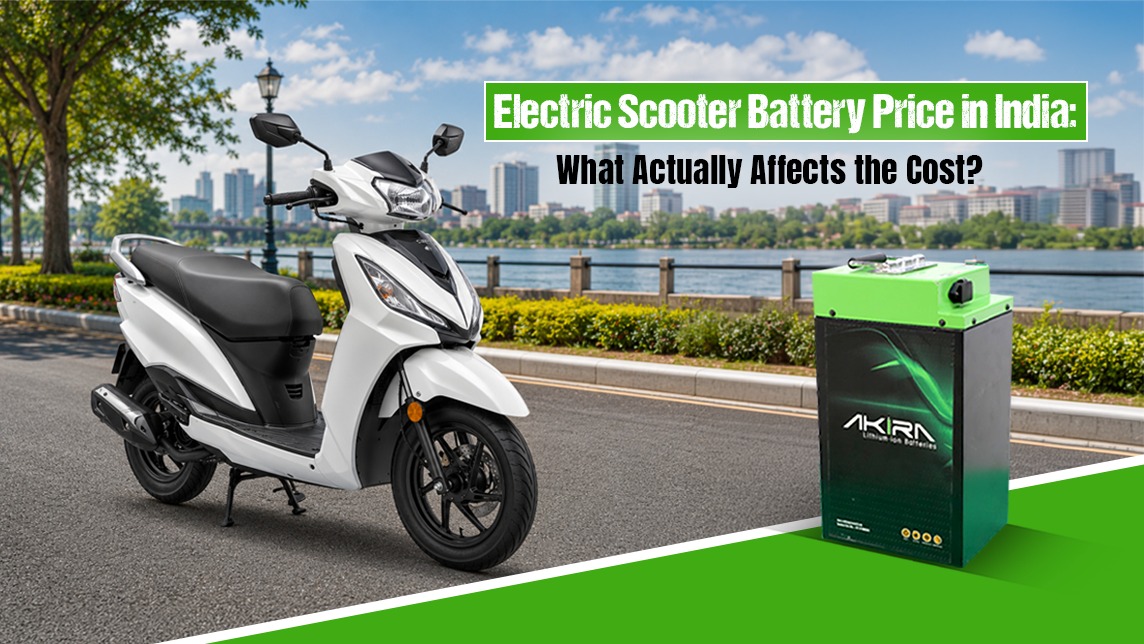
Electric Scooter Battery Price in India: What Actually Affects the Cost?

When people ask about electric scooter battery price, they usually expect one fixed number.

But battery pricing does not work like that.

Two batteries may look similar from outside. Both may fit an electric scooter. Both may even show the same voltage on the label. Still, the price can be different because the real difference sits inside the pack — cell quality, Ah capacity, BMS, safety protection, charging support, warranty, and how well the battery matches the scooter.

This is where many buyers make a mistake. They compare only the rate and ignore the things that decide battery life and daily performance.

A low-priced battery may look attractive at first. But if the range drops early, charging becomes slow, heating starts, or replacement comes too soon, the saving disappears.

So before buying a lithium battery for electric scooter, it is better to understand what actually affects the cost.

Voltage And Capacity Decide A Big Part Of The Price

Battery price changes with voltage and Ah capacity.

A 48V battery will not cost the same as a 60V or 72V battery. Same way, a 24Ah battery and a 40Ah battery will not give the same range or carry the same cost.

Higher capacity means the battery can store more energy. That usually means better range, but also higher price.

Akira offers electric scooter lithium batteries in different voltage and capacity options, including 48V, 60V, and 72V variants. This helps riders, dealers, and replacement buyers choose the battery based on scooter voltage, daily range requirement, and usage pattern.

So when someone asks, “Battery ka rate kya hai?”, the first question should be:

  • Which scooter is it for?
  • What voltage does it need?
  • How much range do you expect?
  • Is the scooter used for short rides or daily work?

Without this, price comparison is incomplete.

Cell Quality Makes A Real Difference

The cell is the main part of the battery pack.

Low-grade cells can reduce the first cost, but they usually show problems later. Range starts dropping. Heating may increase. Charging can become uneven. The battery may not handle daily riding properly after some time.

A properly built battery pack costs more because the cells are better, the pack design is stronger, and the output stays more consistent.

This matters in electric scooters because the battery does not sit idle. It faces charging, discharging, road vibration, heat, rider weight, and daily movement.

This is one reason the lithium ion battery price in India changes so much from one supplier to another.

A cheaper battery is not always a better deal. Sometimes it is only cheaper on the first bill.

BMS Quality Should Not Be Ignored

Many buyers ask about voltage, Ah, and price.

Very few ask about BMS.

That is a mistake.

BMS means Battery Management System. It controls and protects the battery pack. It monitors charging, discharging, current flow, temperature, and safety limits.

A strong BMS helps protect the battery from overcharging, deep discharge, overheating, and uneven cell performance. Without proper BMS protection, even a decent battery pack can become unreliable.

For scooter use, this matters a lot.

Some riders charge daily. Some ride in hot weather. Some carry extra load. Some use the scooter for delivery or business work. The BMS quietly handles a lot of this pressure.

So yes, a battery with a better BMS may cost more. But it also gives better safety and longer usable life.

Daily Usage Decides The Right Battery

Every rider does not need the same battery.

A person using the scooter only for nearby market runs does not need the same battery as someone doing daily delivery work. One needs basic range. The other needs stronger cycle life, better BMS support, and faster charging ability.

This is where many wrong purchases happen.

The buyer sees a cheaper battery and thinks it will do the same job. But if the scooter is used heavily, a small or weak battery gets deeply discharged again and again. That reduces life.

So the better question is not only:

“What is the electric scooter battery price?”

The better question is:

“Which battery will handle my daily use without getting over-stressed?”

That is how practical buyers should think.

Charging Time Also Changes The Value

Fast charging sounds simple, but it depends on battery design, charger compatibility, and BMS support.

A battery that charges faster can help riders who use their scooter daily and cannot wait too long between rides. But fast charging should not come at the cost of safety.

A well-designed battery handles charging properly. A weak pack may claim fast charging, but if the internal design is poor, heat and cell stress can reduce battery life.

So while comparing battery prices, do not only ask how fast it charges. Ask whether the battery can handle that charging safely over time.

Akira’s electric scooter battery range focuses on fast charging, safe operation, and long cycle life. These are the points buyers should check before choosing a scooter battery.

Warranty And Support Affect The Real Cost

Battery buying does not end after payment.

If there is a problem later, service support matters. A battery without proper support can become a headache, especially when the scooter is used every day.

This is where buying from a serious two wheeler battery manufacturer in India makes a difference.

A proper manufacturer understands the application. An electric scooter battery has to handle daily riding, charging cycles, vibration, heat, and different user habits. It cannot be treated like a random battery pack.

Warranty, technical support, and correct guidance may not look like big features on day one. But they matter when the battery starts working in real conditions.

Customisation Can Affect Price Too

Electric scooters do not all use the same battery pack.

Some need 48V. Some need 60V. Some need 72V. Capacity also changes depending on motor power, range expectation, battery space, and usage.

A customised battery may cost more than a standard pack, but it can perform better if it matches the scooter properly.

Wrong battery matching creates problems. The scooter may not give proper range. Charging may not suit the pack. The battery may heat up. The vehicle may feel underpowered.

For OEMs, dealers, fleet users, and replacement buyers, customisation can add real value when done properly.

What Should Buyers Check Before Comparing Price?

Before comparing battery price, check the basics properly.

  • Does the battery voltage match the scooter?
  • Is the Ah capacity enough for daily running?
  • Does the BMS support the load and charger?
  • Will the battery fit properly in the scooter space?
  • Is the battery suitable for daily charging and discharging?
  • Is warranty and service support clear?
  • Is the supplier or manufacturer reliable?

Price makes sense only after these points are clear.

Otherwise, two batteries may look similar but perform very differently.

Final Thoughts

The electric scooter battery price in India depends on more than just battery size.

Voltage, Ah capacity, cell quality, BMS, range, charging speed, warranty, customisation, and brand support all affect the final cost.

If someone rides only short distances, a basic battery may be enough. But if the scooter is used daily, carries load, runs longer routes, or supports work income, battery quality becomes more important than the lowest price.

Akira Batteries offers lithium battery options for electric scooters across different voltage and capacity needs. For riders, dealers, and businesses looking for a dependable lithium battery for electric scooter, the right choice should come from proper matching, not guesswork.

A cheap battery may save money today.

A well-matched battery saves trouble later.

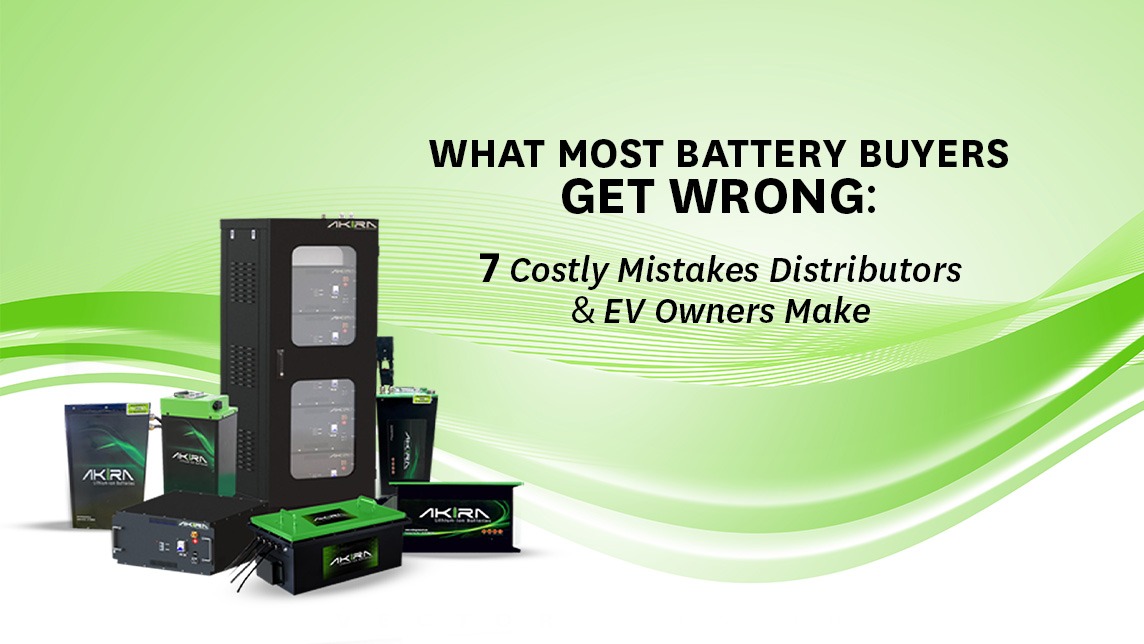
What Most Battery Buyers Get Wrong: 7 Costly Mistakes Distributors & EV Owners Make

Buying a battery should be straightforward, right? You check specs, compare prices, done. But somehow, a lot of buyers and distributors included end up making the same mistakes. Not big obvious ones, but small decisions that quietly cost more over time.

At Akira, we’ve seen this play out again and again. Here are a few things people tend to get wrong (and usually realize a bit too late).

1. Focusing Only on Price

Most searches start with Lithium ion battery price in India. That’s fair. But stopping there? Not ideal.

Lower-priced batteries often cut corners, cell quality, build, or safety features. They may work fine initially, but performance drops faster than expected. Then replacement costs come in and suddenly the “cheap” option isn’t cheap anymore.

2. Assuming All Lithium Batteries Are the Same

They’re not. Different chemistries behave differently. 

For example, LFP batteries are generally safer and last longer compared to some alternatives. But many buyers don’t check this at all. They just see “lithium” and move on. That lack of detail can matter more than people think.

3. Choosing the Wrong Battery for the Application

A Lithium battery for electric scooter is built for mobility, frequent charging, and compact design. That’s very different from a stationary backup system.

Still, people mix these use cases. The result? Lower efficiency, reduced lifespan, and sometimes compatibility issues. It’s not always obvious at first, but it shows up over time.

4. Overlooking After-Sales Support

This part gets ignored more than it should.

Batteries are long-term products. Issues can come up with installation, performance, warranty claims. Without proper support, even a good product becomes frustrating to deal with.

That’s why brands like Akira emphasize service along with product quality.

5. Not Checking Cycle Life

Cycle life is one of the most important factors and one of the least discussed.

It basically tells you how long the battery will remain usable. A battery with higher cycle life might cost more upfront but lasts significantly longer. Skipping this detail often leads to earlier replacements.

6. Undersizing for Inverter Use

When selecting a Lithium ion battery for inverters, buyers often underestimate their actual power needs.

The system works, but backup duration is shorter than expected. Frequent deep discharges then reduce battery life further. It’s a small miscalculation that creates ongoing inconvenience.

7. Ignoring Safety Standards

Not all batteries come with a proper protection system. A good Battery Management System (BMS) is a must for controlling temperature, voltage, etc.

If not installed, it increases the chances of overheating, short circuits, etc. It is not something you want to compromise on.

Final Thoughts

Most battery buying mistakes don’t look serious in the beginning. The product works, things seem fine. It’s only after a few months or a year that the gaps start showing.

A slightly more informed decision at the start usually saves both money and effort later. It’s less about spending more, and more about choosing correctly.

FAQs

1. What is the average lithium ion battery price in India?

Prices vary depending on capacity, brand, and chemistry. Lower-cost options are available, but higher-quality batteries tend to offer better long-term value.

2. Which lithium battery is best for electric scooters?

LFP batteries are commonly preferred due to their safety, stability, and longer lifespan.

3. Can I use a lithium ion battery for inverter systems?

Yes, lithium batteries are well-suited for inverter use. They charge faster, last longer, and are more efficient provided they are properly sized for the load.

How Akira Lithium-Ion Batteries Are Changing E-Rickshaw Rides in India

Let’s deep dive into how Akira Lithium-Ion Batteries Are Revolutionizing E-Rickshaw games in India!!

Electric rickshaws are rapidly turning into a preferred mode of transport on roads all over India. Getting a smooth ride and reliable performance relies primarily on a single factor—the battery of the E-rickshaw,

Akira Lithium-Ion batteries for E-rickshaw have successfully and efficiently provided for those requirements.Making it easier for both passenger as well as E-rickshaw operators.

Problems Encountered by E-Rickshaw Drivers In India

Handling the wheel and being in charge of an E-rickshaw is not easy in India. E-Rickshaw drivers need to confront a number of challenges from pot holes on the roads to the resulting congestion of cars, trucks and auto rickshaws and unpredictable weather. The summer is hot and humid and the monsoon season brings heavy rains and muddy..

Under these conditions, it is really a challenge and test of patience and endurance to drive and operate the E-riskshaw under each of these distinct weather conditions.

Dusty winds will destroy the battery system. While conventional lead-acid batteries can function in such an environment, Akira Lithium-Ion E-rickshaw Batteries are designed to run in fluctuating conditions across India – rain or shine, dust, or heat, our batteries are designed to get the job done.

What Makes Akira Batteries Special

Akira E-Rickshaw batteries aren’t only about power — they’re designed for better performance.

Akira batteries not only offer high-power batteries; but trust, reliableability, They have been engineered to function in real-world conditions. Some of the important features of Akira E-Rickshaw batteries includes,

  • Reliable: The batteries deliver reliable power from beginning to end for longer rides, providing reliability of performance
  • Weather-tough: Between hot summer weather and rainy monsoons, Akira batteries keep delivering consistent performance.
  • Long Lasting, Less frequent Maintenance: Thousands of charges mean fewer replacements and less hassle.
  • Safety: Overcharge protection, short circuit protection, and temperature check provide safety.

All these reasons make Akira Lithium-Ion Batteries to be reliable battery partners for all e-rickshaw operators out there.

Benefits to E-Rickshaw Drivers

Switching to Akira Lithium ion battery for E-rickshaw batteries provides numerous advantages, some of those are highlighted here ;

  • Reduced Downtime: Quick recharging and longer life put e-rickshaws in operation for more time.
  • Reduced Maintenance Expense: Reduced replacement and maintenance save them money.
  • Efficiency: Lighter construction improves vehicle performance.
  •  Environment friendly: Lithium-ion technology is cleaner and less polluting than traditional batteries.

Operators can run their business at full capacity. This, in turn, allows them to provide smooth rides for passengers as well.

Innovation & Research

Akira’s Research & Development team together with the technical team  works hard to enhance battery performance, safety, and lifespan. Innovation focus enables it to remain competitive in the Indian e-rickshaw battery industry. Every battery is tested under real conditions. This ensures that it can meet the driver’s  daily requirements.and to help with their hustle. 

Conclusion

Akira Lithium-Ion E-rickshaws batteries in India beyond transportation. They are trustworthy. The batteries provide stable performance, require less frequent maintenance, and last long. This simplifies daily travel, makes it safer, and more rewarding. 

For emerging electric mobility, India has an emerging leader in Akira Lithium ion E-Rishakshaw battery manufacturers. They support drivers in realizing optimal e-rickshaw experience.

Choose Today Akira Batteries for reliable, efficient, and trouble-free transportation—every single day.

Lithium-ion vs. Lead-acid: Is the Price of Which Electric Scooter Battery Worth It?

Choosing the correct power backup for your scooter plays an important role and the battery defines performance, longevity, and overall cost of you electric scooter. With Akira, our advanced lithium-ion batteries are designed to offer increased longevity, faster recharging, and consistent performance—making them the better choice for modern riders. Most customers do take into consideration the cost of the electric scooter battery, though. The market has two main options—lithium-ion and lead-acid batteries. But do either of them actually provide better value for money? Let’s see.

Initial Price Comparison

Lead-acid batteries are cheaper at cost, but this tends to be attractive to penny-pinchers. The lower cost of electric scooter batteries generally comes at the expense of efficiency, weight, and longevity. Akira’s lithium-ion batteries, although more expensive initially, enhance longevity and save replacement costs over the long term.

Performance and Efficiency

Lithium-ion batteries are denser in energy, smaller, and lighter, and thus offer longer ranges and a smoother ride. Lead-acid batteries are heavier and less efficient compared to them. So even if lithium-ion’s electric scooter battery cost may be greater, performance enhancement makes it the one that should be chosen when traveling for daily commuting.

Lifespan and Durability

A typical lead-acid battery lasts around 300–400 charge cycles, while Akira lithium-ion batteries can exceed 1000 cycles. This means riders get almost three times the lifespan. When viewed over time, the electric scooter battery price of lithium-ion turns out to be far more cost-effective than lead-acid.

Charging Time

For city commuters and daily rider, time is very crucial. Lead-acid batteries take 8–10 hours to recharge, whereas Akira lithium-ion batteries typically recharge in 3–4 hours. The additional cost of the electric scooter battery is easily justified by the convenience and reduced downtime.

Environmental Impact

Lithium-ion batteries are more environmentally friendly and recyclable than lead-acid batteries that have toxic elements. Opting for Akira’s eco-friendly lithium-ion means higher sustainability without sacrificing performance.

Conclusion

Although lead-acid batteries can look enticing with their lower initial investment cost, Akira lithium-ion battery’s higher performance, longer lifecycle, and rapid charging make them the superior long-term option. If electric scooter battery price is compared on a value basis rather than the original price, then lithium-ion battery is a sure short winner.

CTA 

Opt for Akira lithium-ion batteries for reliable performance, faster charging, and enduring value.

Smarter rides with Akira—where quality meets affordability.

FAQs

Q1. What contributes the most to electric scooter battery price?

The technology, capacity, and battery type contribute the most to the price.

Q2. How long will an Akira lithium-ion battery last?

Akira lithium-ion batteries will typically last more than 1000 charge cycles.

Q3. Is a lithium-ion battery worthy at the higher electric scooter battery price?

Yes, because they provide longer lifespan, quick charging, and enhanced efficiency.

Q4. Can I replace my lead-acid battery with an Akira lithium-ion battery?

Yes, Akira lithium-ion batteries are direct replacements in the majority of electric scooters.

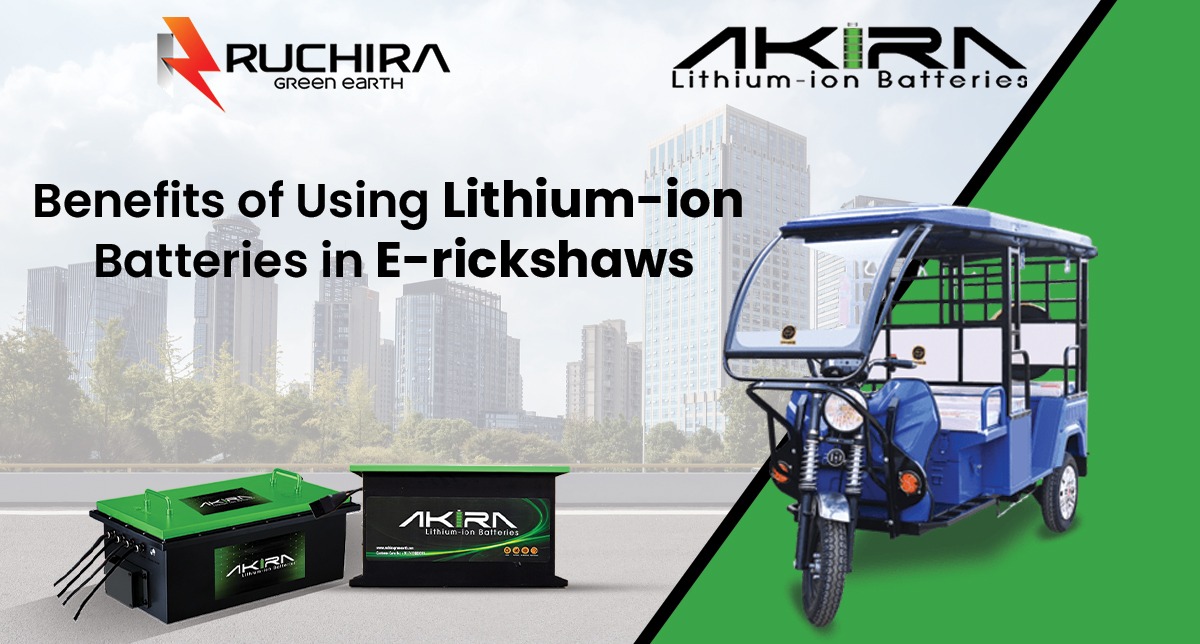
Top 7 Benefits of Using Lithium-ion Batteries in E-rickshaws

With growing times, the electric mobility wave is accelerating rapidly in India. And at the core of this change lithium-ion batteries in E-rickshaws are playing a major role. For both drivers and fleet owners, upgrading to lithium power is not just a trend — but it’s a game-changing move that boosts performance, savings, and sustainability.

Let’s discover the top 7 benefits of using lithium-ion batteries in E-rickshaw and how Akira is taking charge in this transformation.

1. Longer Battery Life

Lithium-ion batteries last longer, usually more than 5 years, significantly longer than any traditional lead-acid batteries. This extends the lifespan of the battery, which means fewer replacements and better long-term savings.

2. Faster Charging

In the life of an E-rickshaw driver time is a crucial part. For them, time is equal to money. Aligning with their needs Lithium-ion batteries can be charged 3-4 times faster than any other lead-acid batteries, which means more trips, more passengers, and more daily income. 

3. Lightweight Design

Weight matters, especially for three-wheelers. Lithium-ion batteries are far lighter than their counterparts, which improves vehicle range and reduces wear and tear on components.

4. Higher Efficiency & Range

With better energy density, lithium batteries deliver longer rides per charge. Whether it’s city commuting or rural trips, you can count on more kilometers and less downtime.

5. Low Maintenance

With lithium-ion batteries, you don’t need to take the stress of regular water top-ups or acid spills. These require very minimal maintenance, making batteries a priority choice for busy drivers.

6 Eco-Friendly and Built for Safety

When you choose a lithium-ion battery, you’re not just powering your E-rickshaw — you’re doing your bit for the planet too. These batteries are cleaner, greener, and fully recyclable, which leads to less pollution and a smaller carbon footprint.

And when it is about safety, modern lithium batteries are always ready to back you. With smart features like BMS (Battery Management System), they automatically prevent overcharging, overheating, and other common issues — so you can drive with confidence, knowing you’re in safe hands.

7. Cost-Effective in the Long Run

However, the cost at initial stages may be higher but after installation lithium-ion batteries offer a better and substantiate returns on investment done. With the smarter features of lower maintenance, faster charging and long life, it leads to significant savings over the time. 

Why Choose Akira Lithium Batteries?

Along with all this Akira offers an advanced, more reliable and a durable lithium battery solution specifically tailored for the Indian E-rickshaw market. If you’re searching for a Three wheeler lithium battery India that performs in all weather, terrain, and load conditions — Akira is the name to trust.

Akira Batteries are designed with the cutting edge technology, which is backed by excellent after-sales support and are powering E-rickshaws already around the corners of India. 

Conclusion

Switching to lithium-ion batteries leads to better business more than about better batteries. Your E-rickshaw gets transformed with a better and smarter power, which lasts longer and gets more savings. 

Ready to power your ride the Akira way?

Choose Akira – the trusted name in Three wheeler lithium battery India. 

Contact us today for a quote or dealership opportunity and drive into the future with confidence

Longer Rides, Less Worry: The Range Advantage of Lithium-ion Batteries

When it comes to electric mobility, range is everything. For 3-wheeler drivers who depend on their vehicles for daily income, a longer-lasting battery isn’t a luxury — it’s a lifeline. This is where lithium-ion batteries step in, offering a massive leap forward in terms of performance, efficiency, and most importantly, range.

In the fast-evolving world of EVs, especially E-rickshaws and cargo loaders, the shift from traditional lead-acid to lithium-ion is no longer a trend — it’s the new normal. At Akira, we understand this shift deeply, which is why we continue to invest in innovation as one of the rising 3W Battery manufacturers in the market.

⚡ Why Range Matters More Than Ever

For E-rickshaw drivers and commercial 3W users, longer battery range means:

More trips per charge

Less frequent downtime

Lower charging costs

Increased daily earnings

While a typical lead-acid battery may give 60–80 km per charge, lithium-ion batteries can stretch up to 100–140 km, depending on the load and terrain. This not only reduces anxiety about running out of charge mid-route but also empowers drivers to cover more distance in less time.

🔋 How Lithium-ion Batteries Offer a Range Advantage

1. Higher Energy Density:
Lithium-ion cells store more energy in less space, delivering higher mileage without increasing the battery size or weight.

2. Faster Charging:
Less downtime means more productivity. Lithium-ion batteries charge significantly faster — a huge plus for fleet operators.

3. Lightweight Design:
A lighter battery means less load on the motor, improving both range and ride performance.

4. Consistent Power Delivery:
Unlike lead-acid batteries, lithium-ion options maintain steady voltage, ensuring smooth performance throughout the charge cycle.

These benefits are why more and more 3W Battery manufacturers are shifting their focus to advanced lithium solutions — and Akira is proud to be at the forefront of that movement.

🌍 Better for Business, Better for the Planet

Lithium-ion batteries are not just about range — they’re also more eco-friendly. With zero emissions, no toxic leaks, and longer life cycles, they align perfectly with global sustainability goals. For cities looking to reduce pollution and for drivers wanting better income with fewer hassles, lithium-ion is a win-win.

🔧 Lower Maintenance, Higher Uptime

Another advantage that supports range is reliability. Lithium-ion batteries require minimal maintenance, eliminating the need for water top-ups or frequent replacements. This increases uptime and reduces long-term costs — a huge benefit for anyone relying on a 3-wheeler for their livelihood.

That’s why smart drivers, fleet owners, and dealers now prefer to work with reliable 3W Battery manufacturers like Akira, who offer durable, high-performance lithium solutions tailored for Indian roads and demands.

🚀 Ready to Upgrade?

Longer range, faster charging, and lower stress — that’s the Akira lithium-ion difference. Whether you’re an individual E-rickshaw driver or a fleet operator, now is the time to power up smartly.

Choose Akira — a trusted name among 3W Battery manufacturers.
Reach out today and experience longer rides with less worry.

The Power Within: How Lithium-ion Batteries Are Shaping Our Future

In today’s fast-evolving world, the demand for reliable, energy-efficient, and environmentally friendly power sources has never been higher. At the heart of this energy revolution is the lithium-ion battery—a compact powerhouse that fuels everything from smartphones to electric vehicles. As India advances towards cleaner energy and smarter mobility solutions, Lithium-ion Battery Manufacturers in Haryana are playing a crucial role in powering this transformation.

Why Lithium-ion Batteries Matter

Lithium-ion batteries have become the go-to solution for energy storage because of their high energy density, long cycle life, lightweight design, and fast charging capabilities. Unlike traditional lead-acid batteries, lithium-ion batteries offer better efficiency and require less maintenance. These features make them ideal for a wide range of applications including:

  • Electric Vehicles (EVs)
  • Solar Energy Storage Systems
  • Consumer Electronics
  • Telecom Infrastructure
  • Industrial Backup Solutions

The adaptability of lithium-ion technology has made it a key player in supporting India’s green goals and smart technology adoption.

The Rise of Lithium-ion Battery Manufacturers in Haryana

Haryana has emerged as a strategic hub for battery production due to its industrial infrastructure, skilled workforce, and proximity to major cities like Delhi and Gurugram. As industries shift towards sustainable power alternatives, several Lithium-ion Battery Manufacturers in Haryana have stepped up to meet the growing demand for energy storage solutions.

These manufacturers not only supply batteries for electric vehicles and solar systems but also invest in R&D to improve battery efficiency, safety, and longevity. By supporting local production, they contribute to the “Make in India” initiative and help reduce the country’s dependence on imported batteries.

Applications Driving Demand

The boom in electric mobility, particularly in two-wheelers and e-rickshaws, has significantly increased the demand for lithium-ion batteries. Haryana’s manufacturers cater to OEMs and distributors across India, supplying custom battery packs that meet varied technical specifications.

Another major growth driver is the renewable energy sector. With solar panel installations becoming more common in homes, factories, and offices, the need for reliable energy storage is essential. Lithium-ion Battery Manufacturers in Haryana are capitalizing on this shift by offering integrated battery solutions that complement solar power systems.

Technological Advancements and Innovation

The battery landscape is continuously evolving. Haryana-based companies are investing in cutting-edge technology to enhance energy density, reduce charging times, and improve battery management systems (BMS). Innovations such as fast-charging capabilities, thermal stability, and enhanced safety features have positioned lithium-ion as the battery of the future.

Manufacturers are also focusing on building eco-friendly processes, such as battery recycling and the use of non-toxic materials. This ensures that lithium-ion batteries are not just powerful, but also aligned with sustainable development goals.

Why Choose Local Manufacturers?

Partnering with Lithium-ion Battery Manufacturers in Haryana offers several advantages:

  • Faster Delivery & Local Support
  • Customization & Quality Control
  • Competitive Pricing
  • Compliance with Indian Safety Standards

Whether you are a solar installer, EV manufacturer, or energy consultant, choosing local partners ensures smoother operations and long-term reliability.

Conclusion

As the world shifts towards cleaner and smarter energy, lithium-ion batteries are leading the charge—literally. Haryana, with its robust manufacturing capabilities, has become a key player in this energy transformation. By supporting Lithium-ion Battery Manufacturers in Haryana, businesses and consumers alike can contribute to a sustainable future while benefiting from high-performance, made-in-India power solutions.

If you’re looking to power your innovation or energy project, now is the time to connect with reliable lithium-ion battery partners in Haryana and fuel your vision with the energy of tomorrow.

How EV Batteries Are Bringing Us Closer to a Carbon-Free Future

As the world faces the ever-growing challenges of climate change, the need for sustainable energy solutions has never been more pressing. Among the most promising technologies leading the charge is the electric vehicle (EV), and at the core of these vehicles lies the battery. Akira, a leading EV battery manufacturer, is playing a crucial role in advancing this technology, making significant strides toward a carbon-free future.

The Role of EV Batteries in Reducing Carbon Emissions

Electric vehicles, powered by advanced batteries, offer a substantial reduction in carbon emissions. Unlike conventional vehicles that rely on fossil fuels, EVs operate on electricity stored in batteries, which results in zero tailpipe emissions. As the power grid transitions to cleaner energy sources, like solar and wind, the benefits of EVs multiply, creating an even greater reduction in greenhouse gases. This makes EVs an essential part of global efforts to tackle climate change.

Akira, as an EV battery manufacturer, is working to make these batteries more efficient, ensuring that EVs become an even more viable alternative to traditional gasoline-powered cars. By focusing on improving energy density, faster charging, and longer battery life, Akira is playing a significant role in accelerating the adoption of EVs worldwide. These technological advancements not only reduce our dependence on fossil fuels but also contribute to creating cleaner, quieter cities.

Innovations by Akira in EV Battery Technology

The development of EV battery technology has made impressive progress in recent years. As a leading EV battery manufacturer, Akira has been at the forefront of this innovation. The company has developed batteries with higher energy storage capacities, faster charging times, and longer lifespans—key factors that help alleviate common concerns about EVs, such as range anxiety.

These advancements are making it easier for consumers to adopt EVs as their primary mode of transportation, whether for daily commuting or longer road trips. With Akira’s batteries, the performance of EVs has reached new levels, and their ability to meet the needs of modern drivers is stronger than ever.

Additionally, Akira is committed to sustainability in the manufacturing process. The company is continuously working to reduce the environmental impact of its batteries, ensuring that every stage of the battery’s life—from production to disposal—is eco-friendly. Through responsible sourcing and innovations in battery recycling, Akira is helping make EVs not only cleaner but also more sustainable.

EV Batteries and Renewable Energy Integration

Beyond powering vehicles, Akira’s batteries are also helping integrate renewable energy into the grid. The development of vehicle-to-grid (V2G) technology, which allows EVs to both draw power from the grid and feed it back when necessary, is a breakthrough in energy storage. As Akira continues to improve its battery technology, these batteries will become essential tools for stabilizing the energy grid, especially when renewable sources like solar and wind are not producing electricity.

With the ability to store excess energy generated by renewable sources, Akira’s batteries help make the transition to a carbon-free grid more feasible. In the future, EVs may not just be vehicles but also mobile energy storage solutions that contribute to a smarter, more sustainable energy system.

The Path to a Carbon-Free Future

As Akira and other EV battery manufacturers continue to innovate, the dream of a carbon-free future is becoming more achievable. EVs, powered by high-performance batteries, are now more accessible and reliable than ever. With lower costs and improved efficiency, these vehicles are making significant strides in reducing our collective carbon footprint.

Governments and industries worldwide are increasingly prioritizing the adoption of EVs and the infrastructure needed to support them. As more consumers choose electric vehicles, the demand for advanced, reliable batteries like those produced by Akira will continue to grow, helping to accelerate the transition to a greener, more sustainable world.

In conclusion, Akira is leading the way in the development of cutting-edge EV battery technology that is critical to achieving a carbon-free future. With more powerful, efficient, and sustainable batteries, the transition to electric vehicles is set to revolutionize the transportation sector and significantly reduce global carbon emissions.

Join the Clean Energy Revolution

Are you ready to make a positive impact on the planet? By choosing an electric vehicle powered by batteries from Akira, you’re not only making a smart choice for your transportation needs but also contributing to a cleaner, more sustainable future. With Akira driving the change in EV battery technology, the journey toward a carbon-free world is within reach. Don’t wait—make the switch to electric today and be part of the solution!

Top Benefits of Switching to Lithium-Ion Batteries for E-Rickshaws

Electric rickshaws are transforming urban transportation, offering an eco-friendly and cost-effective alternative to traditional fuel-powered vehicles. However, the type of battery used in an E-rickshaw significantly impacts its efficiency, durability, and overall performance. While lead-acid batteries have been the conventional choice for years, Lithium-ion batteries are emerging as the superior option. Switching to Lithium-ion batteries can enhance an E-rickshaw’s performance, reduce operational costs, and contribute to a cleaner environment. Let’s explore the top benefits of making the switch.

1. Longer Battery Life

One of the most significant advantages of Lithium-ion batteries is their extended lifespan. Unlike lead-acid batteries, which require frequent replacements, Lithium-ion batteries can last up to 5 times longer, making them a cost-effective investment for E-rickshaw owners. A reliable Lithium-ion battery manufacturer like Akira ensures high-quality batteries that maintain efficiency over the years, reducing the hassle of frequent battery changes.

2. Faster Charging Time

Time is money for E-rickshaw drivers, and waiting for hours to charge a battery can lead to lost income. Lithium-ion batteries charge much faster than lead-acid batteries, often reaching 80% charge in just a couple of hours. With the support of a trusted Lithium-ion battery manufacturer, Akira provides advanced battery technology that allows drivers to get back on the road quickly and maximize their earnings.

3. Lightweight and Compact

Traditional lead-acid batteries are bulky and heavy, adding unnecessary weight to the E-rickshaw. This extra weight reduces the vehicle’s efficiency and increases energy consumption. Lithium-ion batteries are significantly lighter, improving the overall efficiency of the vehicle while enhancing speed and performance. A high-quality Lithium-ion battery manufacturer like Akira designs lightweight and compact batteries without compromising on power and durability.

4. Higher Energy Efficiency

Efficiency plays a crucial role in determining how well an E-rickshaw performs on a single charge. Lithium-ion batteries offer higher energy density, meaning they store more power while consuming less energy. This translates to longer travel distances per charge, ensuring that drivers spend less time charging and more time earning. Partnering with an experienced Lithium-ion battery manufacturer, Akira ensures that E-rickshaws get the most efficient power solutions for daily operations.

5. Low Maintenance and High Durability

Lead-acid batteries require regular maintenance, including checking water levels and cleaning corrosion. In contrast, Lithium-ion batteries are virtually maintenance-free. They are designed to withstand frequent charge and discharge cycles without degrading quickly. This makes them a hassle-free and long-lasting choice for E-rickshaw owners who want a reliable power source with minimal upkeep.

Conclusion: Make the Smart Switch Today!

The advantages of Lithium-ion batteries over lead-acid batteries are undeniable. From longer lifespan and faster charging to higher efficiency and eco-friendliness, these batteries offer everything an E-rickshaw owner needs to enhance their vehicle’s performance. Choosing a reliable Lithium-ion battery manufacturer like Akira ensures that you get top-quality batteries designed for durability and efficiency.

Upgrade to Akira’s Lithium-ion batteries today and experience uninterrupted performance on the road!