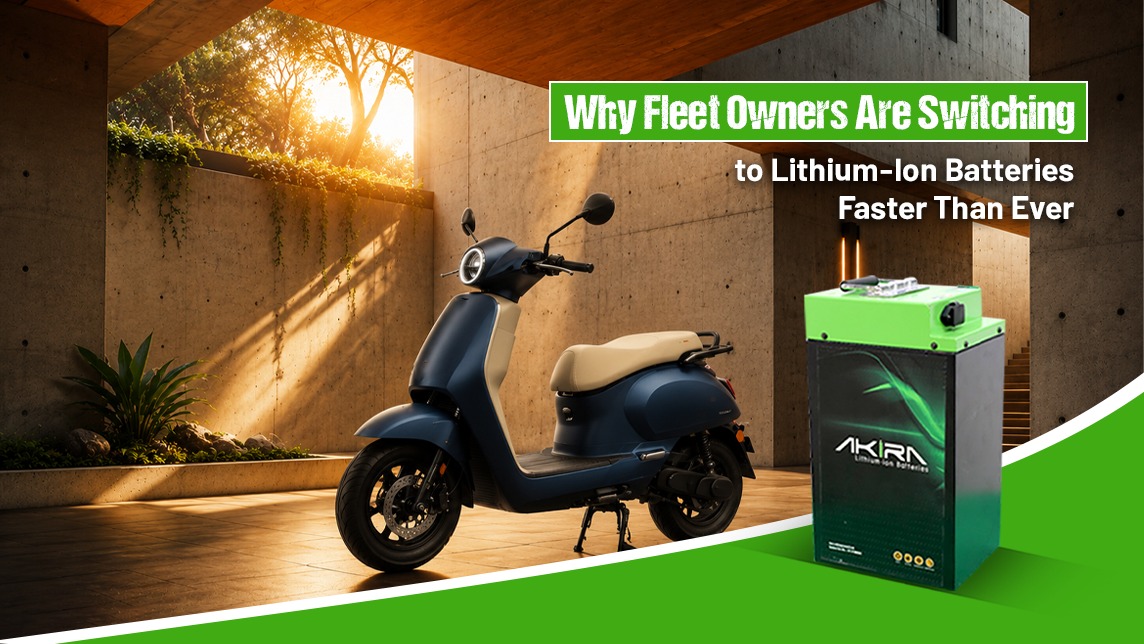
Battery selection was not complicated a few years back. Fleet operators would be concerned about their vehicle, while the battery would remain a mere element of the vehicle. However, times have now changed. In today’s world, battery has turned out to be the key determinant of a company’s bottom line when it comes to operating electric two wheelers, e-rickshaws, delivery vans or other EV fleets.
The reason is easy to understand – a battery influences operating cost, availability of the vehicle, maintenance cost and business efficiency in all cases. With the rise of electric mobility in India, a growing number of fleet operators have started preferring lithium-ion batteries.
The Hidden Cost That Many Fleet Owners Ignore
Where costs of acquiring an electric fleet are concerned, most business operators take into account the purchase price of the vehicle. While the purchase price forms one part of the cost consideration, there is still more to come.
The frequent replacement of batteries, maintenance requirements, improper charging procedures, and time spent not operating the cars may lead to increased expenditure. Not making deliveries on schedule and losing customers as a result means that companies are more interested in using lithium-ion batteries.
One difference between the two batteries is that the second one has consistently reliable performance throughout its life cycle.
Why Vehicle Downtime Is a Business Problem
Each minute that a commercial vehicle is out of operation means lost potential. This applies to all sorts of delivery service operations for e-commerce, logistics providers, and even passenger transportation services.
The use of conventional batteries typically means more frequent charge times and maintenance needs. More effort will be required to manage the condition of batteries and any problems that occur unexpectedly.
A modern solution such as lithium-ion batteries removes many of these headaches with increased speed and durability. Commercial vehicles remain idle less often, which can make a big difference in the long run.
Battery Life Is More Important Than Battery Price
However, there are many consumers who decide whether to buy something by simply looking at its upfront price. While doing so is often detrimental, since cheaper products are not always the most practical ones.
It is for this reason that experts in the field assess the worth of the battery from its lifecycle. Therefore, when comparing Lithium Ion Battery Price in India, one needs to consider charging cycles, longevity, warranties, energy consumption and more.
How Lithium Batteries Improve Operational Efficiency
There are a number of factors responsible for the rising demand for lithium-ion batteries, but their efficiency ranks among the most prominent of these. Lithium batteries usually have the ability to recharge quickly, are lighter, and produce more consistent performance than their conventional counterparts.
In this way, such batteries provide better performance and allow for higher efficiency for the fleets using them. More journeys can be completed by such vehicles, with fewer recharge times and better daily performance.
The Growing Role of Indian Battery Manufacturers
The battery industry of India has come a long way over the past few years. There are quite a few companies in India that manufacture Lithium Ion Batteries and are focusing highly on the development of manufacturing skills, safety, and battery management systems.
This will ensure that businesses have access to better batteries without having to rely too much on importing. In addition, the presence of Electric Vehicle Battery Manufacturers in India will further aid the EV market of the nation.
Looking Ahead
The viability of commercial transportation in the future depends on the quality of the batteries involved. The trend is towards a data-driven, longer-term approach to operations, with emphasis being placed on improving reliability, reducing downtime, and cutting operational costs.
For businesses looking to increase their fleet capacity using electric vehicles, the choice of battery is no longer an engineering problem alone; it is now a business problem. The firms that see this change coming will have a head start in optimizing their performance and profits within the sector.