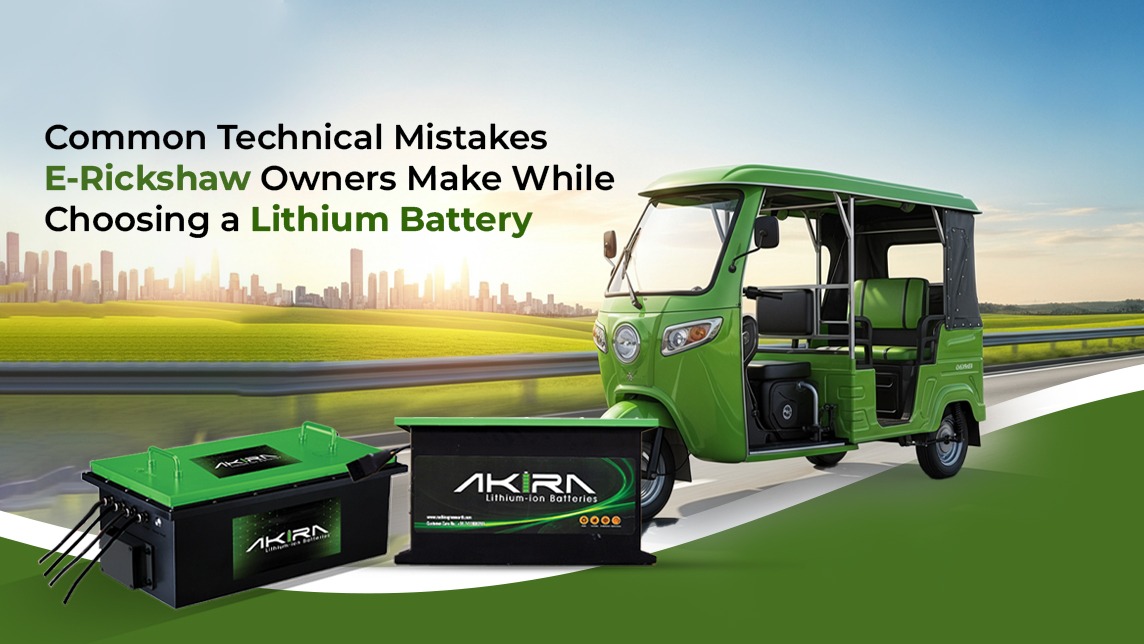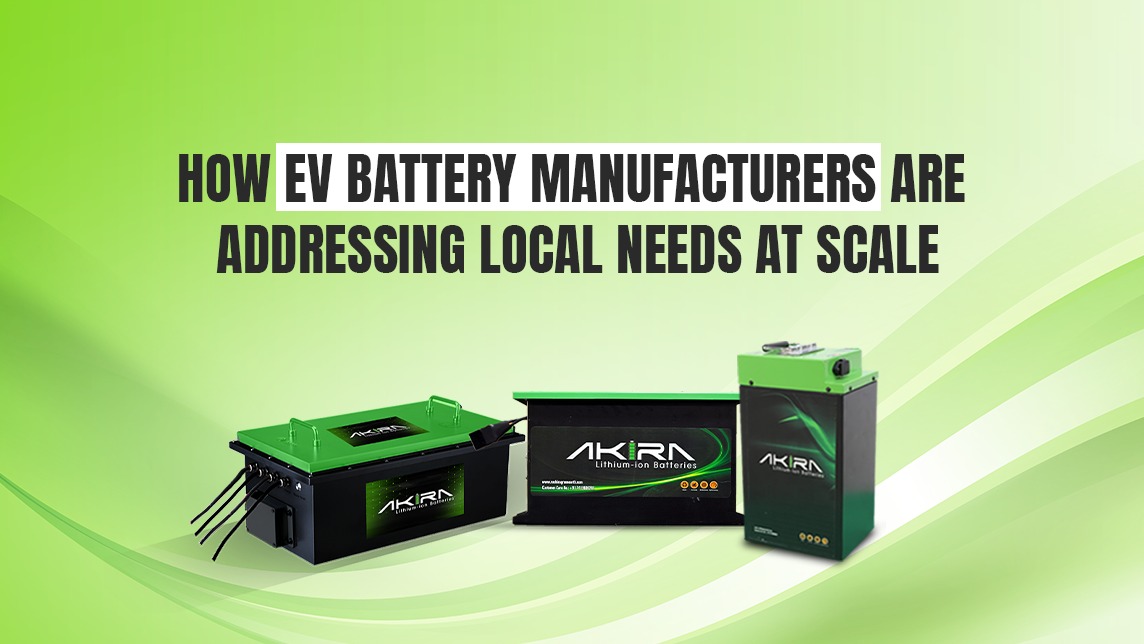
How Akira Lithium-Ion Batteries Are Changing E-Rickshaw Rides in India

Let’s deep dive into how Akira Lithium-Ion Batteries Are Revolutionizing E-Rickshaw games in India!!

Electric rickshaws are rapidly turning into a preferred mode of transport on roads all over India. Getting a smooth ride and reliable performance relies primarily on a single factor—the battery of the E-rickshaw,

Akira Lithium-Ion batteries for E-rickshaw have successfully and efficiently provided for those requirements.Making it easier for both passenger as well as E-rickshaw operators.

Problems Encountered by E-Rickshaw Drivers In India

Handling the wheel and being in charge of an E-rickshaw is not easy in India. E-Rickshaw drivers need to confront a number of challenges from pot holes on the roads to the resulting congestion of cars, trucks and auto rickshaws and unpredictable weather. The summer is hot and humid and the monsoon season brings heavy rains and muddy..

Under these conditions, it is really a challenge and test of patience and endurance to drive and operate the E-riskshaw under each of these distinct weather conditions.

Dusty winds will destroy the battery system. While conventional lead-acid batteries can function in such an environment, Akira Lithium-Ion E-rickshaw Batteries are designed to run in fluctuating conditions across India – rain or shine, dust, or heat, our batteries are designed to get the job done.

What Makes Akira Batteries Special

Akira E-Rickshaw batteries aren’t only about power — they’re designed for better performance.

Akira batteries not only offer high-power batteries; but trust, reliableability, They have been engineered to function in real-world conditions. Some of the important features of Akira E-Rickshaw batteries includes,

  • Reliable: The batteries deliver reliable power from beginning to end for longer rides, providing reliability of performance
  • Weather-tough: Between hot summer weather and rainy monsoons, Akira batteries keep delivering consistent performance.
  • Long Lasting, Less frequent Maintenance: Thousands of charges mean fewer replacements and less hassle.
  • Safety: Overcharge protection, short circuit protection, and temperature check provide safety.

All these reasons make Akira Lithium-Ion Batteries to be reliable battery partners for all e-rickshaw operators out there.

Benefits to E-Rickshaw Drivers

Switching to Akira Lithium ion battery for E-rickshaw batteries provides numerous advantages, some of those are highlighted here ;

  • Reduced Downtime: Quick recharging and longer life put e-rickshaws in operation for more time.
  • Reduced Maintenance Expense: Reduced replacement and maintenance save them money.
  • Efficiency: Lighter construction improves vehicle performance.
  •  Environment friendly: Lithium-ion technology is cleaner and less polluting than traditional batteries.

Operators can run their business at full capacity. This, in turn, allows them to provide smooth rides for passengers as well.

Innovation & Research

Akira’s Research & Development team together with the technical team  works hard to enhance battery performance, safety, and lifespan. Innovation focus enables it to remain competitive in the Indian e-rickshaw battery industry. Every battery is tested under real conditions. This ensures that it can meet the driver’s  daily requirements.and to help with their hustle. 

Conclusion

Akira Lithium-Ion E-rickshaws batteries in India beyond transportation. They are trustworthy. The batteries provide stable performance, require less frequent maintenance, and last long. This simplifies daily travel, makes it safer, and more rewarding. 

For emerging electric mobility, India has an emerging leader in Akira Lithium ion E-Rishakshaw battery manufacturers. They support drivers in realizing optimal e-rickshaw experience.

Choose Today Akira Batteries for reliable, efficient, and trouble-free transportation—every single day.

Problems Encountered by Lithium-Ion Battery manufacturer in India

The urgency of storing energy and clean mobility is increasing rapidly, and lithium-ion batteries acts as the crucial player. Right from electric cars to renewable energy storage and consumer goods, their uses are running at a pace that has never been seen before. It is not that easy, however, to be a successful lithium ion battery maker in india. The sector is plagued by a host of issues that have to be addressed to ensure long-term viability along with the sheer growth possibilities.

Foreign Raw Material Dependence

Perhaps the largest challenge for any lithium ion battery manufacturer in India would be reliance on imported foreign raw materials. India has very limited reserves of cobalt, lithium, and nickel— and they crucial in the production of lithium-ion battery. This makes not only production costly but also exposes the industry to foreign exchange fluctuations in the global market. Unless there is robust indigenous mining and supply chain development, producers will remain at a disadvantage.

High Costs of Production

Setting up advanced production units requires heavy investment in technology, R&D, and special expertise. For an Indian lithium ion battery manufacturer, the initial capital investment is high, precluding small and medium-sized enterprises from competing. In addition, the overall cost outlay includes the implementing safety measures, quality checks, and compliance with global standards.

Technology Gaps

Even as India is developing very fast, there is still a technology gap with leaders in the world. An Indian lithium-ion battery producer needs to continue to invest in research and development to enhance efficiency, energy density, and safety features. Lack of continuous research and exposure to international experts, producers cannot compete with the world market.

Recycling and Waste Management Problems

Along with augmenting battery usage, safe recycling and disposal are becoming a matter of urgent concern. Currently, India lacks a robust battery recycling network, which contributes to both an environmental waste and a financial loss, with an expensive material going waste. For lithium ion battery manufacturer in India, recycling is not just a sustainability measure but also a business loophole.

Policy and Infrastructure Challenges

While the Indian government has implemented the Production Linked Incentive (PLI) scheme, there are still infrastructural, logistics, and policy implementation mismatch issues. Lithium-ion battery manufacturer in India have to face lower level of skiiled labour, unstable environmental norms, and insubstantial charging infrastructure. These must be complemented to enable mass adoption.

Conclusion

India’s lithium-ion battery sector stands at a juncture. The opportunities are enormous, as are the challenges. India has the potential to self-sustain and emerge as an international leader in innovative energy solutions by making the right investments in raw material acquisition, recycling, and technology. As a leading Indian lithium ion battery producer, Akira assures to overcome the challenges of green process, advanced technology, and a greener tomorrow.

FAQs

Q1. Why is lithium-ion battery production challenging in India?

Due to raw material shortages, exorbitant prices, and technology disparities.

Q2. What is the biggest challenge for an Indian lithium ion battery manufacturer?

Imported inputs such as lithium, cobalt, and nickel have extremely high reliance upon them.

Q3. Can India be made independent in terms of lithium-ion battery production?

Yes, through investment in mining, recycling, and R&D.

Q4. What is Akira doing to solve these issues?

Through the use of state-of-the-art technology, sustainable practices, and innovation.

Call to Action

Ready to find out about sustainable energy options? Visit us at ruchiragreenearth.com to know more information.

Lithium-ion vs. Lead-acid: Is the Price of Which Electric Scooter Battery Worth It?

Choosing the correct power backup for your scooter plays an important role and the battery defines performance, longevity, and overall cost of you electric scooter. With Akira, our advanced lithium-ion batteries are designed to offer increased longevity, faster recharging, and consistent performance—making them the better choice for modern riders. Most customers do take into consideration the cost of the electric scooter battery, though. The market has two main options—lithium-ion and lead-acid batteries. But do either of them actually provide better value for money? Let’s see.

Initial Price Comparison

Lead-acid batteries are cheaper at cost, but this tends to be attractive to penny-pinchers. The lower cost of electric scooter batteries generally comes at the expense of efficiency, weight, and longevity. Akira’s lithium-ion batteries, although more expensive initially, enhance longevity and save replacement costs over the long term.

Performance and Efficiency

Lithium-ion batteries are denser in energy, smaller, and lighter, and thus offer longer ranges and a smoother ride. Lead-acid batteries are heavier and less efficient compared to them. So even if lithium-ion’s electric scooter battery cost may be greater, performance enhancement makes it the one that should be chosen when traveling for daily commuting.

Lifespan and Durability

A typical lead-acid battery lasts around 300–400 charge cycles, while Akira lithium-ion batteries can exceed 1000 cycles. This means riders get almost three times the lifespan. When viewed over time, the electric scooter battery price of lithium-ion turns out to be far more cost-effective than lead-acid.

Charging Time

For city commuters and daily rider, time is very crucial. Lead-acid batteries take 8–10 hours to recharge, whereas Akira lithium-ion batteries typically recharge in 3–4 hours. The additional cost of the electric scooter battery is easily justified by the convenience and reduced downtime.

Environmental Impact

Lithium-ion batteries are more environmentally friendly and recyclable than lead-acid batteries that have toxic elements. Opting for Akira’s eco-friendly lithium-ion means higher sustainability without sacrificing performance.

Conclusion

Although lead-acid batteries can look enticing with their lower initial investment cost, Akira lithium-ion battery’s higher performance, longer lifecycle, and rapid charging make them the superior long-term option. If electric scooter battery price is compared on a value basis rather than the original price, then lithium-ion battery is a sure short winner.

CTA 

Opt for Akira lithium-ion batteries for reliable performance, faster charging, and enduring value.

Smarter rides with Akira—where quality meets affordability.

FAQs

Q1. What contributes the most to electric scooter battery price?

The technology, capacity, and battery type contribute the most to the price.

Q2. How long will an Akira lithium-ion battery last?

Akira lithium-ion batteries will typically last more than 1000 charge cycles.

Q3. Is a lithium-ion battery worthy at the higher electric scooter battery price?

Yes, because they provide longer lifespan, quick charging, and enhanced efficiency.

Q4. Can I replace my lead-acid battery with an Akira lithium-ion battery?

Yes, Akira lithium-ion batteries are direct replacements in the majority of electric scooters.

Lithium-ion vs. Lead-Acid: Which Battery is Ideal for Indian Two-Wheelers?

Two-wheelers in India are not mere vehicles—a way of life for the daily commutin’ man. Choosing the ideal battery is of critical importance to ensure reliability, performance, and cost efficiency. Of all those available options, lithium-ion and lead-acid batteries dominate the market. At Akira Batteries, one of the top two wheeler battery manufacturer in India, we provide lithium-ion solutions that cater specifically to the requirements of Indian riders. Let’s dive into what really is the best option for two-wheelers in India.

Efficiency and Performance

Lithium-ion batteries offers more consistent power and energy, offering more power in a reduced, lighter weight configuration. This means better mileage after every charge and more acceleration. Lead-acid batteries have less efficiency but savings are more. For performance-oriented riders, lithium-ion batteries by a good two wheeler battery manufacturer in India are hands down the winner.

Battery Life

Lithium-ion batteries have a lifespan of two to three times that of lead-acid. While the latter needs to be changed every 2–3 years, the former can serve up to 5–7 years. By going with a reliable two wheeler battery supplier in India, you are guaranteed durability and worth for money. 

Maintenance Needs

Lead-acid batteries require regular maintenance, such as topping up distilled water and checking corrosion. Lithium-ion batteries, on the other hand, require little or no maintenance. This is optimal for busy Indian riders who prefer convenience over periodic checks. Choosing a high-tech two wheeler battery manufacturer in India such as Akira Batteries provides trouble-free performance.

Cost Factors

Lead-acid batteries are cheaper to buy upfront but shorter-lived and requiring additional maintenance that tends to add up to total expenditure. Lithium-ion batteries are more costly upfront but provide more long-term savings. With Akira Batteries, a new-age two wheeler battery manufacturer in India, riders enjoy cost-savings along with leading technology.

Environmental Impact

Lithium-ion batteries can ve recycled and releases lesser waste than lead acid batteries. In a step towards greener mobility in India, lithium-ion is the sustainable and ethical choice. When you choose Akira Batteries, you’re encouraging green innovation from a visionary Indian two wheeler battery manufacturer in India.

Choosing Akira Batteries

At Akira Batteries, we engineer and produce high-performance lithium-ion solutions that are specifically designed to ride Indian roads. Focusing firmly on safety, efficiency, and sustainability, we provide future-proof batteries that keep you riding, without compromise.

Call-to-Action

Upgrade to Akira’s advanced lithium-ion batteries today and experience unparalleled reliability for your two-wheeler. Visit us at https://ruchiragreenearth.com/ to know more.

FAQs

Q1. Are lithium-ion batteries superior to lead-acid for two-wheelers?

Yes, they provide longer life, more efficiency, and less maintenance.

Q2. How many years does a lithium-ion battery have in two-wheelers?

Generally 5–7 years with proper maintenance.

Q3. Are lithium-ion batteries enviromental friendly?

Yes, they are recyclable and releasing very less toxic waste in the environment.

Q4. Are lithium-ion batteries expensive than lead-acid?

Yes, but they create more long-term value.

Battery Management System (BMS): The Mind Behind Lithium-ion Batteries

In the modern age, where power backup is no longer an option but a need, batteries are the backbone that ensures our lives and businesses are up and running. But a battery is not merely a box to contain energy — its real worth is in how securely, efficiently, and dependably it can supply that energy.

That’s where the Battery Management System (BMS) is really needed. Consider it as the battery’s brain. While our brain regulates critical functions in the body, the BMS is responsible for monitoring and controlling all that is within the battery to ensure it operates at its optimal capacity. Our Akira Batteries, the BMS is not merely a technical specification — it is the intelligent backbone that ensures their batteries are reliable, long-lasting, and safe to use for homes, offices, and industries.

What is a Battery Management System (BMS)?

Essentially, a BMS is an electronic device that is tasked with keeping a rechargeable battery efficient, safe, and healthy. It constantly checks the performance of every individual cell in the battery pack to make sure that they are performing as a perfect unit.

Without a BMS, a battery is on its life alone. It may overcharge, overheat, get too deep a discharge, or experience cell imbalances. All this not only reduces the battery’s life but can also pose safety risks. The BMS prevents all these from happening by behaving like a guardian — keeping the battery out of harm’s way and ensuring it runs at its best, every time.

Core Functions of a BMS

Monitoring

    The BMS monitors major parameters to complement such as voltage, current, temperature, and SOC. Real-time monitoring implies that the state of the battery is continually known and any abnormalities are detected immediately.

    Protection

      It kicks in automatically to prevent overcharging, deep discharge, overheat, or short circuiting. In case there are hazardous conditions, it will cut off or limit power transfer and safeguard the battery along with the user.

      Balancing

        Cells in a battery over time may get imbalanced and some charge faster than others. BMS ensures all cells get charged at the same rate, maintaining battery health and averting early failure.

        Communication

          New generation BMS technology compliments your inverters, chargers, or monitoring software, presenting users with real-time battery performance and health. That places users in control, enabling them to use power responsibly and not be caught off guard.

          Why BMS is Important for New Batteries?

          1. Safety First – A proper BMS guards against fire risks, overheating, and short circuits.
          2. Increased Battery Life – Balanced charging and discharging leads results in longer-lasting batteries.
          3. Efficient Energy Use – Power that is used efficiently to minimize wastage.
          4. Smart Application – Knowledge of battery health enables predictive maintenance, saving money and downtime.

          The Akira Batteries Advantage with BMS

          What sets Akira Batteries apart is the focus on creating products that are not only strong but also smart and user-centric. Their cutting-edge BMS integrates several advantages:

          Exact Monitoring – Each cell is monitored for best efficiency, with no weakest link in performance.

          Solid Protection – Multi-leveled protection shields against overcharging, deep discharges, voltage spikes, and overheating.

          Optimized Balancing – Smart balancing synchronizes cells, prolonging the battery life overall. 

          User-Centric Data – Battery status in real-time allows users to plan use, conserve energy, and prevent sudden breakdowns.

          This is to say that whether it is a residential inverter, an office backup unit, or a renewable energy project, Akira Batteries bring peace of mind. Consumers understand that they’re not simply purchasing a power backup — they’re investing in a secure, effective, and future-proof energy solution.

          Conclusion

          A brainless battery is as much a car without brakes — strong but dangerous. With a cutting-edge Battery Management System, Akira Batteries turn common energy storage into a smart, safe, and efficient answer.

          In an age where power must never stop, Akira Batteries with BMS are a partner you can trust — blending power, protection, and performance for families, companies, and industries as well.

          Why battery swapping makes electric two-wheelers better

          As India’s cities grow busier and fuel prices keep climbing, both everyday people and policymakers are looking for smarter, cleaner ways to get around. In this shift toward electric mobility, two-wheelers like scooters and bikes are taking the lead. They’re easy on the pocket, perfect for narrow city lanes, and super convenient for daily rides. But as more people consider going electric, one practical solution is catching everyone’s attention — battery swapping.

          What is battery swapping?

          Battery swapping is the process where a low or discharged battery in an electric vehicle is swapped with a fully charged battery, thus getting on to the road in a few minutes. This way you don’t have to wait for hours to get the battery charge. It’s super convenient, especially for riders who can’t afford long charging breaks. Also, it keeps costs low and makes using electric two-wheelers and e-rickshaws way more practical.

           How it works:

          1. You drive your electric vehicle (like an e-bike or e-rickshaw) to a battery swapping station.
          2. Your used battery is removed.
          3. A fully charged battery is installed instantly.
          4. You pay for the energy or take it on a subscription model.

          Why Battery Swapping Works for Two-Wheelers

          By allowing the riders to exchange the drained battery with a fully charged one, this eliminates the need to wait hours for charging and tackles multiple challenges head-on.

          Faster Turnaround Time:
          For delivery riders, gig workers, and everyday commuters, time is everything. Battery swapping cuts downtime dramatically—just a few minutes and you’re back on the road. It helps the people to ride with ease without any hassles.

          Solves Charging & Parking Woes:

          As not every rider has access to home charging or safe parking with plug points, swapping stations become a hassle-free solution for them, where they don’t have to worry about the space and charging time.

          Battery Swapping: Challenges 

          Although there are multiple benefits of battery wrapping, it comes with some   hurdles. Let us go through them:

          1. Standardization Issues:
          Different EV brands use different battery designs, thus limiting the interoperability. To solve this, government-led standards and collaboration between OEMs will be important to a scalable ecosystem that works with every lithium-ion battery type.

          2. Battery Health & Safety:
          As the swapped batteries must be reliable, safe, and efficient, hence their regular testing, smart tracking, and battery lifecycle management hold importance to ensure every lithium-ion battery remains in good health.

          3. Infrastructure Investment:
          The cost of building a robust swapping network itself is very costly and requires heavy investment—in kiosks, charging hubs, and inventory. Public-private partnerships and startup-led models are crucial to scaling efficiently.

          Government Initiatives and Industry Efforts

          The Indian government is supporting battery swapping through the FAME II scheme. To help more people use it, they are offering support, running test programs, and giving special benefits. A new Battery Swapping Policy is also being planned to make sure the batteries are safe, easy to use, and follow common standards.

          Private innovators also have a key role to play. Some startups are developing real-world swapping ecosystems for electric two- and three-wheelers which focus on high-usage segments like delivery fleets. That immensely benefits from quick lithium-ion battery swaps.

          Conclusion

          Battery swapping isn’t just a convenience—it’s a transformative idea. For India’s massive two-wheeler market, it offers a faster, cleaner, and more affordable path to electrification. By removing range anxiety, reducing charging downtime, and making lithium-ion battery usage smarter, battery swapping is driving India toward a more sustainable future.

          Top 7 Benefits of Using Lithium-ion Batteries in E-rickshaws

          With growing times, the electric mobility wave is accelerating rapidly in India. And at the core of this change lithium-ion batteries in E-rickshaws are playing a major role. For both drivers and fleet owners, upgrading to lithium power is not just a trend — but it’s a game-changing move that boosts performance, savings, and sustainability.

          Let’s discover the top 7 benefits of using lithium-ion batteries in E-rickshaw and how Akira is taking charge in this transformation.

          1. Longer Battery Life

          Lithium-ion batteries last longer, usually more than 5 years, significantly longer than any traditional lead-acid batteries. This extends the lifespan of the battery, which means fewer replacements and better long-term savings.

          2. Faster Charging

          In the life of an E-rickshaw driver time is a crucial part. For them, time is equal to money. Aligning with their needs Lithium-ion batteries can be charged 3-4 times faster than any other lead-acid batteries, which means more trips, more passengers, and more daily income. 

          3. Lightweight Design

          Weight matters, especially for three-wheelers. Lithium-ion batteries are far lighter than their counterparts, which improves vehicle range and reduces wear and tear on components.

          4. Higher Efficiency & Range

          With better energy density, lithium batteries deliver longer rides per charge. Whether it’s city commuting or rural trips, you can count on more kilometers and less downtime.

          5. Low Maintenance

          With lithium-ion batteries, you don’t need to take the stress of regular water top-ups or acid spills. These require very minimal maintenance, making batteries a priority choice for busy drivers.

          6 Eco-Friendly and Built for Safety

          When you choose a lithium-ion battery, you’re not just powering your E-rickshaw — you’re doing your bit for the planet too. These batteries are cleaner, greener, and fully recyclable, which leads to less pollution and a smaller carbon footprint.

          And when it is about safety, modern lithium batteries are always ready to back you. With smart features like BMS (Battery Management System), they automatically prevent overcharging, overheating, and other common issues — so you can drive with confidence, knowing you’re in safe hands.

          7. Cost-Effective in the Long Run

          However, the cost at initial stages may be higher but after installation lithium-ion batteries offer a better and substantiate returns on investment done. With the smarter features of lower maintenance, faster charging and long life, it leads to significant savings over the time. 

          Why Choose Akira Lithium Batteries?

          Along with all this Akira offers an advanced, more reliable and a durable lithium battery solution specifically tailored for the Indian E-rickshaw market. If you’re searching for a Three wheeler lithium battery India that performs in all weather, terrain, and load conditions — Akira is the name to trust.

          Akira Batteries are designed with the cutting edge technology, which is backed by excellent after-sales support and are powering E-rickshaws already around the corners of India. 

          Conclusion

          Switching to lithium-ion batteries leads to better business more than about better batteries. Your E-rickshaw gets transformed with a better and smarter power, which lasts longer and gets more savings. 

          Ready to power your ride the Akira way?

          Choose Akira – the trusted name in Three wheeler lithium battery India. 

          Contact us today for a quote or dealership opportunity and drive into the future with confidence

          Longer Rides, Less Worry: The Range Advantage of Lithium-ion Batteries

          When it comes to electric mobility, range is everything. For 3-wheeler drivers who depend on their vehicles for daily income, a longer-lasting battery isn’t a luxury — it’s a lifeline. This is where lithium-ion batteries step in, offering a massive leap forward in terms of performance, efficiency, and most importantly, range.

          In the fast-evolving world of EVs, especially E-rickshaws and cargo loaders, the shift from traditional lead-acid to lithium-ion is no longer a trend — it’s the new normal. At Akira, we understand this shift deeply, which is why we continue to invest in innovation as one of the rising 3W Battery manufacturers in the market.

          ⚡ Why Range Matters More Than Ever

          For E-rickshaw drivers and commercial 3W users, longer battery range means:

          More trips per charge

          Less frequent downtime

          Lower charging costs

          Increased daily earnings

          While a typical lead-acid battery may give 60–80 km per charge, lithium-ion batteries can stretch up to 100–140 km, depending on the load and terrain. This not only reduces anxiety about running out of charge mid-route but also empowers drivers to cover more distance in less time.

          🔋 How Lithium-ion Batteries Offer a Range Advantage

          1. Higher Energy Density:
          Lithium-ion cells store more energy in less space, delivering higher mileage without increasing the battery size or weight.

          2. Faster Charging:
          Less downtime means more productivity. Lithium-ion batteries charge significantly faster — a huge plus for fleet operators.

          3. Lightweight Design:
          A lighter battery means less load on the motor, improving both range and ride performance.

          4. Consistent Power Delivery:
          Unlike lead-acid batteries, lithium-ion options maintain steady voltage, ensuring smooth performance throughout the charge cycle.

          These benefits are why more and more 3W Battery manufacturers are shifting their focus to advanced lithium solutions — and Akira is proud to be at the forefront of that movement.

          🌍 Better for Business, Better for the Planet

          Lithium-ion batteries are not just about range — they’re also more eco-friendly. With zero emissions, no toxic leaks, and longer life cycles, they align perfectly with global sustainability goals. For cities looking to reduce pollution and for drivers wanting better income with fewer hassles, lithium-ion is a win-win.

          🔧 Lower Maintenance, Higher Uptime

          Another advantage that supports range is reliability. Lithium-ion batteries require minimal maintenance, eliminating the need for water top-ups or frequent replacements. This increases uptime and reduces long-term costs — a huge benefit for anyone relying on a 3-wheeler for their livelihood.

          That’s why smart drivers, fleet owners, and dealers now prefer to work with reliable 3W Battery manufacturers like Akira, who offer durable, high-performance lithium solutions tailored for Indian roads and demands.

          🚀 Ready to Upgrade?

          Longer range, faster charging, and lower stress — that’s the Akira lithium-ion difference. Whether you’re an individual E-rickshaw driver or a fleet operator, now is the time to power up smartly.

          Choose Akira — a trusted name among 3W Battery manufacturers.
          Reach out today and experience longer rides with less worry.

          Signs Your E-Rickshaw Battery Needs Replacement & What to Do

          E-rickshaws have become the lifeline of sustainable last-mile transport across many Indian towns and cities. They are eco-friendly, cost-effective, and widely used by daily commuters. However, at the core of every smooth-running E-rickshaw lies one crucial component—the battery. And like all things mechanical, batteries come with a shelf life. Over time, even the most advanced batteries lose efficiency, directly affecting your vehicle’s performance, range, and profitability.

          So, how do you know when it’s time to change your battery? Recognizing the signs early can save you from unwanted breakdowns, lost income, and even safety hazards. In this blog, we’ll walk you through the most common signs your E-rickshaw battery needs replacement—and what steps to take next. Whether you’re an individual owner, a fleet operator, or a dealer, having the support of a reliable lithium-ion E-rickshaw battery manufacturer can make a world of difference.

          1. Decreased Backup Time

          If your E-rickshaw used to give you 80–100 km per charge but now struggles to complete even 40–50 km, your battery could be wearing out. This is often the first and most visible sign of battery degradation. Reduced backup time can drastically impact your earnings if your vehicle cannot complete a full day’s shift.

          2. Longer Charging Time

          Charging that once took 3–4 hours now drags on for 6–7 hours? That’s a problem. Lithium-ion batteries are known for their efficient charging cycles, and when they begin to slow down, it’s a clear indicator that internal components have degraded. Longer charging times also reduce the number of trips you can complete in a day.

          3. Frequent Need for Charging

          Is your charger plugged in more often than your vehicle is on the road? Batteries with reduced capacity require more frequent charging. This affects operational uptime, causes unnecessary delays, and eats into your productivity. It’s time to speak with a lithium-ion E-rickshaw battery manufacturer about a performance upgrade.

          4. Overheating Issues

          Overheating during charging or discharging is a serious warning sign. It can be caused by internal short circuits, damaged cells, or battery mismanagement. If you notice a swollen battery casing, odd smells, or high external temperatures, stop usage immediately and consult a technician. Overheating is not just a performance issue—it’s a safety concern.

          5. Dashboard Warnings or Fluctuating Indicator

          Most lithium-ion E-rickshaw batteries come with a Battery Management System (BMS). If your dashboard shows fluctuating charge levels, error symbols, or warning lights, there may be a fault in the battery pack. Ignoring these alerts can lead to sudden failure.

          What to Do Next?

          Stop using the faulty battery to avoid further damage or safety risks.
          Consult a trusted lithium-ion E-rickshaw battery manufacturer for an expert assessment.
          Choose a replacement battery based on your E-rickshaw’s voltage and operational demands.

          When picking a new battery, always consider:

          Charging speed and cycle life
          Warranty and after-sales service
          Battery weight and fitment
          Support from a reputed lithium-ion E-rickshaw battery manufacturer

          By choosing a reliable partner, you ensure higher performance, reduced breakdowns, and long-term savings.

          Conclusion

          Your battery is not just a component—it’s the lifeline of your E-rickshaw. Don’t wait for a total breakdown to take action. Reduced backup, longer charging, or overheating are all clear signs it’s time for a replacement. Always rely on an expert lithium-ion E-rickshaw battery manufacturer to get the right battery for your needs—built for Indian roads, heavy use, and long journeys.

          Power up smart. Ride worry-free.

          The Power Within: How Lithium-ion Batteries Are Shaping Our Future

          In today’s fast-evolving world, the demand for reliable, energy-efficient, and environmentally friendly power sources has never been higher. At the heart of this energy revolution is the lithium-ion battery—a compact powerhouse that fuels everything from smartphones to electric vehicles. As India advances towards cleaner energy and smarter mobility solutions, Lithium-ion Battery Manufacturers in Haryana are playing a crucial role in powering this transformation.

          Why Lithium-ion Batteries Matter

          Lithium-ion batteries have become the go-to solution for energy storage because of their high energy density, long cycle life, lightweight design, and fast charging capabilities. Unlike traditional lead-acid batteries, lithium-ion batteries offer better efficiency and require less maintenance. These features make them ideal for a wide range of applications including:

          • Electric Vehicles (EVs)
          • Solar Energy Storage Systems
          • Consumer Electronics
          • Telecom Infrastructure
          • Industrial Backup Solutions

          The adaptability of lithium-ion technology has made it a key player in supporting India’s green goals and smart technology adoption.

          The Rise of Lithium-ion Battery Manufacturers in Haryana

          Haryana has emerged as a strategic hub for battery production due to its industrial infrastructure, skilled workforce, and proximity to major cities like Delhi and Gurugram. As industries shift towards sustainable power alternatives, several Lithium-ion Battery Manufacturers in Haryana have stepped up to meet the growing demand for energy storage solutions.

          These manufacturers not only supply batteries for electric vehicles and solar systems but also invest in R&D to improve battery efficiency, safety, and longevity. By supporting local production, they contribute to the “Make in India” initiative and help reduce the country’s dependence on imported batteries.

          Applications Driving Demand

          The boom in electric mobility, particularly in two-wheelers and e-rickshaws, has significantly increased the demand for lithium-ion batteries. Haryana’s manufacturers cater to OEMs and distributors across India, supplying custom battery packs that meet varied technical specifications.

          Another major growth driver is the renewable energy sector. With solar panel installations becoming more common in homes, factories, and offices, the need for reliable energy storage is essential. Lithium-ion Battery Manufacturers in Haryana are capitalizing on this shift by offering integrated battery solutions that complement solar power systems.

          Technological Advancements and Innovation

          The battery landscape is continuously evolving. Haryana-based companies are investing in cutting-edge technology to enhance energy density, reduce charging times, and improve battery management systems (BMS). Innovations such as fast-charging capabilities, thermal stability, and enhanced safety features have positioned lithium-ion as the battery of the future.

          Manufacturers are also focusing on building eco-friendly processes, such as battery recycling and the use of non-toxic materials. This ensures that lithium-ion batteries are not just powerful, but also aligned with sustainable development goals.

          Why Choose Local Manufacturers?

          Partnering with Lithium-ion Battery Manufacturers in Haryana offers several advantages:

          • Faster Delivery & Local Support
          • Customization & Quality Control
          • Competitive Pricing
          • Compliance with Indian Safety Standards

          Whether you are a solar installer, EV manufacturer, or energy consultant, choosing local partners ensures smoother operations and long-term reliability.

          Conclusion

          As the world shifts towards cleaner and smarter energy, lithium-ion batteries are leading the charge—literally. Haryana, with its robust manufacturing capabilities, has become a key player in this energy transformation. By supporting Lithium-ion Battery Manufacturers in Haryana, businesses and consumers alike can contribute to a sustainable future while benefiting from high-performance, made-in-India power solutions.

          If you’re looking to power your innovation or energy project, now is the time to connect with reliable lithium-ion battery partners in Haryana and fuel your vision with the energy of tomorrow.