How India’s Different Weather Affect Your Scooty Battery: Two Wheeler Battery Manufacturer in India

Why does the same scooty that starts instantly in summer suddenly struggle on a cold December morning? Indian weather swings can be at extremes at times; sometimes extreme heat, cold, and humidity hit batteries differently, and riders feel the impact almost immediately.

From slow cranking in winter to water loss in peak summer, every season leaves a mark. As a long-standing two wheeler battery manufacturer in India, Akira Batteries, we see these patterns repeat across regions every year.

In this blog, here’s the simplest breakdown of how weather actually affects battery behavior.

Summer Heat Speeds Up Water Loss and Damages Plates

Indian summers can be brutal. Once temperatures rise past the mid-30s, internal battery heat also rises. This speeds up evaporation inside the battery and exposes the plates. Exposed plates lead to sulfation, which is a common cause of sudden battery failure. A simple periodic check in summer recommended by Akira Batteries, two wheeler battery manufacturer in India, prevents most of this damage.

Monsoon Moisture Encourages Rust and Current Drop

High moisture in the air settles on battery terminals during the monsoon. That thin layer of moisture slowly forms rust and reduces proper current flow. Plus, water splashes from the road reach the battery area, making insulation weaker. Scooty riders often notice random misfires or delayed ignition on rainy days because of this.

As a two wheeler battery manufacturer in India, Akira batteries, we see monsoon-related battery complaints increase every year due to excessive humidity

Winter Slows the Battery and Reduces Morning Starting Power

December–January temperatures, especially in North India, drop low enough to slow the chemical reaction inside lead-acid batteries. When the reaction slows, the battery simply can’t deliver enough power to crank the engine quickly. Add thicker winter engine oil, and the starter needs even more effort; hence, the sluggish morning starts. A warm-up or short idle time usually brings things back to normal.

Seasonal Short Rides Prevent the Battery from Recharging Properly

Winter also brings shorter scooty rides, foggy mornings, late starts, early evenings, and heavy jackets, which mean people ride less and for shorter distances. Because the alternator needs continuous running time to recharge the battery, these winter riding habits prevent full charging. As a result, the battery enters a “low-charge cycle,” making cold starts even harder and increasing the strain on the cells.

According to Akira Batteries, a leading two wheeler battery manufacturer in India, incomplete charging is one of the biggest reasons behind winter battery failures.

Last Thought

Indian weather affects two-wheeler batteries in different ways—winter weakens cranking power, summer accelerates wear and monsoon brings rust and moisture issues. But with small seasonal habits, most of this damage is easily avoidable. At Akira Batteries, a trusted two wheeler battery manufacturer in India, our products are tested specifically for these everyday Indian conditions, so riders get stable performance no matter the season.

FAQs

Q1. Why does my scooty feel heavier to start in winter?

Cold slows the battery’s internal reaction and thickens engine oil, so more power is needed.

Q2. Why does my scooty hesitate during rains?

Moisture around the terminals reduces current flow.

Q3. Are Akira Batteries suitable for Indian weather?

Yes, they’re tested for heat, vibration, humidity and cold starts common in Indian cities.
Why Lithium Inverter Batteries Are Becoming India’s First Choice

Look around, and you will find how the conversations about home power backup are changing rapidly. Gone are the days when everyone wanted heavy, maintenance filled batteries with quick drainage. We all want something more that is smarter, faster, and reliable. It is due to this growing demand that the Lithium battery for inverter has become one of the most talked about technologies Keeping all these points in mind, Akira, one of the leading Lithium inverter battery manufacturers in India, provides lithium batteries for inverters.

Why India is Moving towards Lithium Power

Akira batteries, one of the leading Lithium inverter battery manufacturers in India, provides Lithium inverter batteries which have multiple benefits, some of them are lightweight, fast charging, and it consistently provides power compared to lead-acid batteries.

Top Reasons Lithium inverter Batteries Are Winning Choices 

It is not just 1 or 2  incidents that make lithium inverter batteries popular. Real advantages that consumers can experience each day after switching to lithium inverter batteries for their inverter:

  •  charges almost three times faster.
  •  supplies constant output with no voltage drop.
  •  requires zero maintenance.
  •  lasts 8 to 10 years, reducing replacements.
  •  uses advanced technology that supports smart inverters.

Understanding Lithium inverter Battery Prices in India

Speaking of the Lithium inverter battery price in India, users first notice a far higher upfront price. When it comes to long-term savings, though, lithium inverter batteries win hands down.

Akira batteries, one of the leading Lithium inverter battery manufacturers in India, provides lithium batteries for inverters to replace 3 to 4 lead-acid batteries over its useful life. It also saves money spent on the cost of maintenance, electricity bills, and replacement cycles. It is because of this that more and more consumers prefer to pay a little extra upfront to enjoy years of worry free performance.

Growing Role of Indian Manufacturers in Power Backup Innovation

Most of the Lithium inverter battery brands today work with deep investments in R&D, advanced testing, and automation. All this is gradually helping in offering much-improved safety, longevity, and performance to batteries. In due course, lithium inverter batteries will become more economical and accessible for households across the Indian sub-continent.

With more local manufacturing, the consumer benefits from an increase in technology at competitive pricing.

Smart Energy Taking off in India With Akira Batteries 

Akira, a leading battery manufacturer in India, provides Lithium batteries for inverters leading the switch towards cleaner energy and a modern home power system in India. Their compatibility with solar panels, smart energy apps, and hybrid inverters makes them highly apt for modern homes.

The Lithium inverter battery for the inverter is an epitome of reliable, long-lasting, and energy-efficient backup power. As India moves to smarter energy solutions, Lithium technology will only get stronger.

FAQs

Q1. Do Akira lithium inverter batteries really last longer?

Yes. Most users notice they hold power better and stay stable for years without slowing down.

Q2.. Does  Akira Lithium inverter battery support long power cuts?

Lithium handles repeated charging well, so it performs better during frequent outages.

Q3.. Can  Akira Lithium inverter batteries run heavy appliances?

It can handle essentials easily; larger loads depend on your inverter capacity.

Let Akira Lithium-Ion Batteries Keep Your 3-Wheeler Rolling Strong

Have you ever experienced an instance where your battery-powered vehicle completely loses power on the trip? Slow rides, constant stops to charge, and battery failures seem to be a daily struggle for multiple drivers. All of these circumstances are annoying, time-consuming, and negatively impact your income.

This is where Akira Lithium Ion Batteries come in the picture. Akira Lithium Ion Batteries are specifically designed for 3 wheeled vehicles, last longer, charge quicker, and are a reliable power source with no worries about stopping  your vehicle when you need it the most.

Opt for Akira batteries, one of the leading Lithium-ion battery manufacturers in Haryana for your 3 wheeler, and watch your 3-wheeler transform. Passenger pickups, veggie deliveries, school runs everything stays on track. It’s cutting-edge tech packed with unbreakable dependability.

Why Kick Old Batteries to the Curb?

Regular lead-acid packs? Total drags heavy as bricks, painfully slow to charge, and forever begging for water refills. Akira, one of the leading Lithium-ion battery manufacturers in Haryana offers Lithium-Ion batteries for 3 wheeler that flips the script. Swap it in, and suddenly your ride:

  • Flies farther on one charge—no more “low battery” freakouts.
  • Recharges in a blink—plug in over lunch, zoom out fully juiced.
  • Demands zero babysitting—skip the water checks and rusty headaches.

Going for a lithium ion battery isn’t just fancy; it’s straight up smart for anyone whose daily bread rolls on three wheels.

What You Really Get with Akira

1. Rock-Steady Power

No sputters, no surprises. Akira, one of the leading Lithium-ion battery manufacturers in Haryana, keeps the throttle snappy on marathon routes or steep climbs.

2. Safety You Can Bank On

Every cell is torture-tested for heat, jolts, vibrations, and short circuits. Monsoon splashes, pothole parties, 45°C scorchers-Akira remains chill and secure.

3. Wallet-Friendly in the Longer Run

Yeah, a little more expensive upfront. But when it outlives old batteries 3-4 times and avoids workshop bills, the savings add up fast. It’s peace of mind, ride after ride.

Why 3-Wheeler Owners Can’t Stop Raving About Akira

  • Built for Real Indian Chaos Lightweight yet beast-tough perfect for overloaded autos, dusty backroads, and post-rain puddles.
  • Grab It Anywhere From your neighborhood mechanic to metro dealers, Akira, is a quick call away via trusted lithium-ion battery suppliers in India.
  • Pro-Backed Quality We’re among the leading lithium-ion battery manufacturers in Haryana and EV battery manufacturers in Haryana. Every pack rolls out of our Yamuna Nagar plant only after surviving brutal, real-world beatdowns.

Ready to Level Up? Swap Smart with Akira

Akira Lithium-Ion Batteries mean longer life, quicker charging, zero drama and a happier planet. Wondering about the lithium ion battery price in India? Hit up any reliable lithium ion battery supplier in India; they’ll sort you with fresh rates and perfect fitment.

One simple swap, and your 3-wheeler turns faster, cheaper to run, and 100% reliable. That’s Akira, one of the leading Lithium-ion battery manufacturers in Haryana.

FAQ – Akira 3-Wheeler Batteries

Q1: Why pick Akira for my e-rickshaw?

A: Insane range, turbo charging, and almost no maintenance. Your daily hustle just got effortless..

Q3: Do they actually save cash?

A: Higher start cost, but 3-4× lifespan + zero service tabs = massive wins over time.

Q4: Available across India?

A: Yep! Nationwide network of lithium ion battery companies in India—your city’s covered.

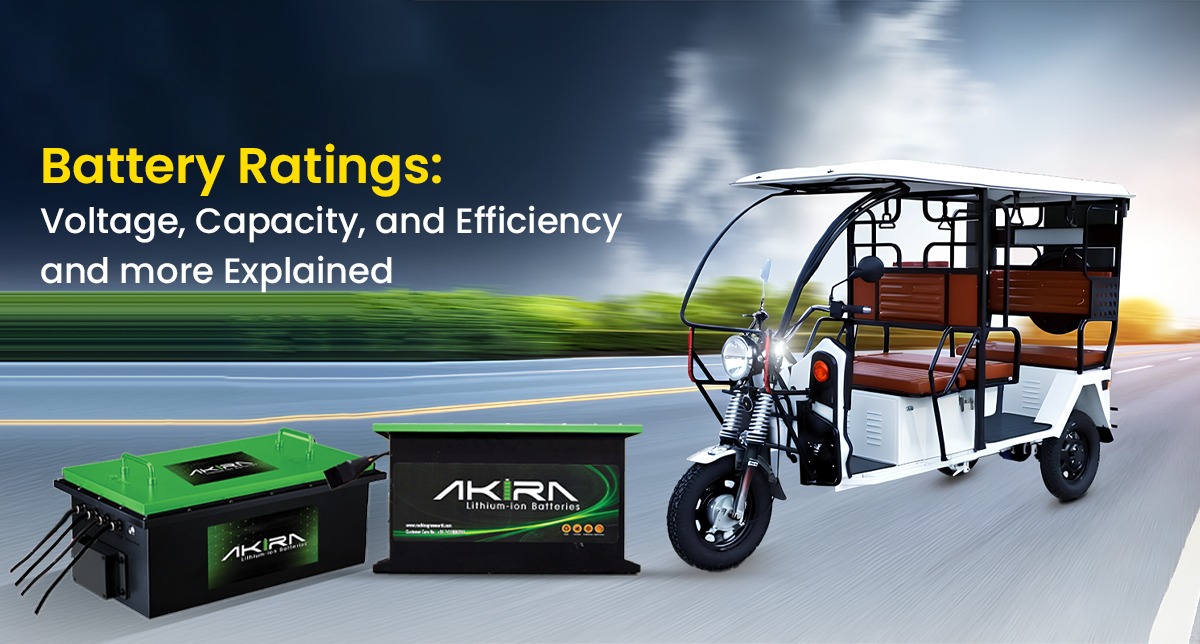
Battery Ratings: Voltage, Capacity, and Efficiency and more Explained

12V, 100 Ah or 80% DOD. Have you come across these terms? Must have. But you must not have paid much attention to it. These are the terms we see on the batteries. Be it lead acid or lithium ion batteries. These are very important terms. That tells us about how strong the battery is and how long they can work. Learning about these terms is important to be a well informed consumer. In this blog, from Akira, a reliable Lithium ion battery manufacturer in India, let us understand these terms in detail.

1. Voltage

Voltage is how strong a battery pushes electricity. Imagine water pressure in a pipe—the more pressure, the faster it flows. Big machines need bigger volts, small gadgets need less. Voltage shows what a battery can handle.

2. Capacity

Capacity basically shows how long a battery can keep going. Measured in Ah, a 100Ah battery can give 1 amp for 100 hours—or 10 amps for 10 hours. Bigger capacity means longer power, kind of like a big water tank—super handy for inverters or solar systems!

3. Efficiency

Efficiency basically tells us how much energy from a battery we can actually use. As we know, some energy is always kind of lost as heat, so no battery ever gives a full 100%. But, a battery with 90% efficiency gives back most of its power, which is really great! At Akira, a dependable Lithium ion battery manufacturer in India, we make sure our batteries use energy super smartly, so they last longer and basically keep you powered up without any worries!

4. BMS

BMS or Battery Management System, is like a battery’s helper. It keeps your battery safe and healthy. It makes sure the battery doesn’t get too hot or too full. The BMS helps the battery work better.

5. Discharge

Discharge is when the battery gives out its energy to run devices, like water flowing out of a tank to fill cups.

6. DOD

Depth of Discharge (DOD) shows how much energy a battery has used. If a battery is full and you use half, then the DOD which is a short form of Depth of discharge is 50%. Keeping DOD low makes the battery last longer.

7. Cycle Life

Cycle life is how many times a battery can be charged before it starts losing power. The more cycles, for the longer time the battery lasts.

8. Self-Discharge

Self-discharge is when a battery loses a little energy even if it isn’t being used. Some energy disappears over time, like a leaky water bottle.

Why Battery Ratings Are Important

Knowing voltage, capacity, and efficiency is like having a battery superpower! Big machines need batteries with a strong “push” (more voltage), while tiny gadgets are happy with a smaller push. Capacity shows how long your battery can keep going, and efficiency makes sure none of its energy goes to waste!

Akira Batteries: Power You Can Trust

At Akira, a trusted Lithium ion battery manufacturer in India, every battery is made to have the perfect mix of voltage, capacity, and efficiency. Our batteries are strong, long-lasting. They work great for home inverters, solar panels, or big machines, giving power you can trust.

Conclusion

Learning about battery ratings makes picking the right battery simple! Voltage shows the battery’s strength, capacity tells how long it can last, and efficiency shows how well it works. With Akira, one of the trusted Lithium ion battery manufacturers in India, every charge is strong and useful!

How Akira Lithium-Ion Batteries Are Changing E-Rickshaw Rides in India

Let’s deep dive into how Akira Lithium-Ion Batteries Are Revolutionizing E-Rickshaw games in India!!

Electric rickshaws are rapidly turning into a preferred mode of transport on roads all over India. Getting a smooth ride and reliable performance relies primarily on a single factor—the battery of the E-rickshaw,

Akira Lithium-Ion batteries for E-rickshaw have successfully and efficiently provided for those requirements.Making it easier for both passenger as well as E-rickshaw operators.

Problems Encountered by E-Rickshaw Drivers In India

Handling the wheel and being in charge of an E-rickshaw is not easy in India. E-Rickshaw drivers need to confront a number of challenges from pot holes on the roads to the resulting congestion of cars, trucks and auto rickshaws and unpredictable weather. The summer is hot and humid and the monsoon season brings heavy rains and muddy..

Under these conditions, it is really a challenge and test of patience and endurance to drive and operate the E-riskshaw under each of these distinct weather conditions.

Dusty winds will destroy the battery system. While conventional lead-acid batteries can function in such an environment, Akira Lithium-Ion E-rickshaw Batteries are designed to run in fluctuating conditions across India – rain or shine, dust, or heat, our batteries are designed to get the job done.

What Makes Akira Batteries Special

Akira E-Rickshaw batteries aren’t only about power — they’re designed for better performance.

Akira batteries not only offer high-power batteries; but trust, reliableability, They have been engineered to function in real-world conditions. Some of the important features of Akira E-Rickshaw batteries includes,

  • Reliable: The batteries deliver reliable power from beginning to end for longer rides, providing reliability of performance
  • Weather-tough: Between hot summer weather and rainy monsoons, Akira batteries keep delivering consistent performance.
  • Long Lasting, Less frequent Maintenance: Thousands of charges mean fewer replacements and less hassle.
  • Safety: Overcharge protection, short circuit protection, and temperature check provide safety.

All these reasons make Akira Lithium-Ion Batteries to be reliable battery partners for all e-rickshaw operators out there.

Benefits to E-Rickshaw Drivers

Switching to Akira Lithium ion battery for E-rickshaw batteries provides numerous advantages, some of those are highlighted here ;

  • Reduced Downtime: Quick recharging and longer life put e-rickshaws in operation for more time.
  • Reduced Maintenance Expense: Reduced replacement and maintenance save them money.
  • Efficiency: Lighter construction improves vehicle performance.
  •  Environment friendly: Lithium-ion technology is cleaner and less polluting than traditional batteries.

Operators can run their business at full capacity. This, in turn, allows them to provide smooth rides for passengers as well.

Innovation & Research

Akira’s Research & Development team together with the technical team  works hard to enhance battery performance, safety, and lifespan. Innovation focus enables it to remain competitive in the Indian e-rickshaw battery industry. Every battery is tested under real conditions. This ensures that it can meet the driver’s  daily requirements.and to help with their hustle. 

Conclusion

Akira Lithium-Ion E-rickshaws batteries in India beyond transportation. They are trustworthy. The batteries provide stable performance, require less frequent maintenance, and last long. This simplifies daily travel, makes it safer, and more rewarding. 

For emerging electric mobility, India has an emerging leader in Akira Lithium ion E-Rishakshaw battery manufacturers. They support drivers in realizing optimal e-rickshaw experience.

Choose Today Akira Batteries for reliable, efficient, and trouble-free transportation—every single day.

Problems Encountered by Lithium-Ion Battery manufacturer in India

The urgency of storing energy and clean mobility is increasing rapidly, and lithium-ion batteries acts as the crucial player. Right from electric cars to renewable energy storage and consumer goods, their uses are running at a pace that has never been seen before. It is not that easy, however, to be a successful lithium ion battery maker in india. The sector is plagued by a host of issues that have to be addressed to ensure long-term viability along with the sheer growth possibilities.

Foreign Raw Material Dependence

Perhaps the largest challenge for any lithium ion battery manufacturer in India would be reliance on imported foreign raw materials. India has very limited reserves of cobalt, lithium, and nickel— and they crucial in the production of lithium-ion battery. This makes not only production costly but also exposes the industry to foreign exchange fluctuations in the global market. Unless there is robust indigenous mining and supply chain development, producers will remain at a disadvantage.

High Costs of Production

Setting up advanced production units requires heavy investment in technology, R&D, and special expertise. For an Indian lithium ion battery manufacturer, the initial capital investment is high, precluding small and medium-sized enterprises from competing. In addition, the overall cost outlay includes the implementing safety measures, quality checks, and compliance with global standards.

Technology Gaps

Even as India is developing very fast, there is still a technology gap with leaders in the world. An Indian lithium-ion battery producer needs to continue to invest in research and development to enhance efficiency, energy density, and safety features. Lack of continuous research and exposure to international experts, producers cannot compete with the world market.

Recycling and Waste Management Problems

Along with augmenting battery usage, safe recycling and disposal are becoming a matter of urgent concern. Currently, India lacks a robust battery recycling network, which contributes to both an environmental waste and a financial loss, with an expensive material going waste. For lithium ion battery manufacturer in India, recycling is not just a sustainability measure but also a business loophole.

Policy and Infrastructure Challenges

While the Indian government has implemented the Production Linked Incentive (PLI) scheme, there are still infrastructural, logistics, and policy implementation mismatch issues. Lithium-ion battery manufacturer in India have to face lower level of skiiled labour, unstable environmental norms, and insubstantial charging infrastructure. These must be complemented to enable mass adoption.

Conclusion

India’s lithium-ion battery sector stands at a juncture. The opportunities are enormous, as are the challenges. India has the potential to self-sustain and emerge as an international leader in innovative energy solutions by making the right investments in raw material acquisition, recycling, and technology. As a leading Indian lithium ion battery producer, Akira assures to overcome the challenges of green process, advanced technology, and a greener tomorrow.

FAQs

Q1. Why is lithium-ion battery production challenging in India?

Due to raw material shortages, exorbitant prices, and technology disparities.

Q2. What is the biggest challenge for an Indian lithium ion battery manufacturer?

Imported inputs such as lithium, cobalt, and nickel have extremely high reliance upon them.

Q3. Can India be made independent in terms of lithium-ion battery production?

Yes, through investment in mining, recycling, and R&D.

Q4. What is Akira doing to solve these issues?

Through the use of state-of-the-art technology, sustainable practices, and innovation.

Call to Action

Ready to find out about sustainable energy options? Visit us at ruchiragreenearth.com to know more information.

Lithium-ion vs. Lead-acid: Is the Price of Which Electric Scooter Battery Worth It?

Choosing the correct power backup for your scooter plays an important role and the battery defines performance, longevity, and overall cost of you electric scooter. With Akira, our advanced lithium-ion batteries are designed to offer increased longevity, faster recharging, and consistent performance—making them the better choice for modern riders. Most customers do take into consideration the cost of the electric scooter battery, though. The market has two main options—lithium-ion and lead-acid batteries. But do either of them actually provide better value for money? Let’s see.

Initial Price Comparison

Lead-acid batteries are cheaper at cost, but this tends to be attractive to penny-pinchers. The lower cost of electric scooter batteries generally comes at the expense of efficiency, weight, and longevity. Akira’s lithium-ion batteries, although more expensive initially, enhance longevity and save replacement costs over the long term.

Performance and Efficiency

Lithium-ion batteries are denser in energy, smaller, and lighter, and thus offer longer ranges and a smoother ride. Lead-acid batteries are heavier and less efficient compared to them. So even if lithium-ion’s electric scooter battery cost may be greater, performance enhancement makes it the one that should be chosen when traveling for daily commuting.

Lifespan and Durability

A typical lead-acid battery lasts around 300–400 charge cycles, while Akira lithium-ion batteries can exceed 1000 cycles. This means riders get almost three times the lifespan. When viewed over time, the electric scooter battery price of lithium-ion turns out to be far more cost-effective than lead-acid.

Charging Time

For city commuters and daily rider, time is very crucial. Lead-acid batteries take 8–10 hours to recharge, whereas Akira lithium-ion batteries typically recharge in 3–4 hours. The additional cost of the electric scooter battery is easily justified by the convenience and reduced downtime.

Environmental Impact

Lithium-ion batteries are more environmentally friendly and recyclable than lead-acid batteries that have toxic elements. Opting for Akira’s eco-friendly lithium-ion means higher sustainability without sacrificing performance.

Conclusion

Although lead-acid batteries can look enticing with their lower initial investment cost, Akira lithium-ion battery’s higher performance, longer lifecycle, and rapid charging make them the superior long-term option. If electric scooter battery price is compared on a value basis rather than the original price, then lithium-ion battery is a sure short winner.

CTA 

Opt for Akira lithium-ion batteries for reliable performance, faster charging, and enduring value.

Smarter rides with Akira—where quality meets affordability.

FAQs

Q1. What contributes the most to electric scooter battery price?

The technology, capacity, and battery type contribute the most to the price.

Q2. How long will an Akira lithium-ion battery last?

Akira lithium-ion batteries will typically last more than 1000 charge cycles.

Q3. Is a lithium-ion battery worthy at the higher electric scooter battery price?

Yes, because they provide longer lifespan, quick charging, and enhanced efficiency.

Q4. Can I replace my lead-acid battery with an Akira lithium-ion battery?

Yes, Akira lithium-ion batteries are direct replacements in the majority of electric scooters.

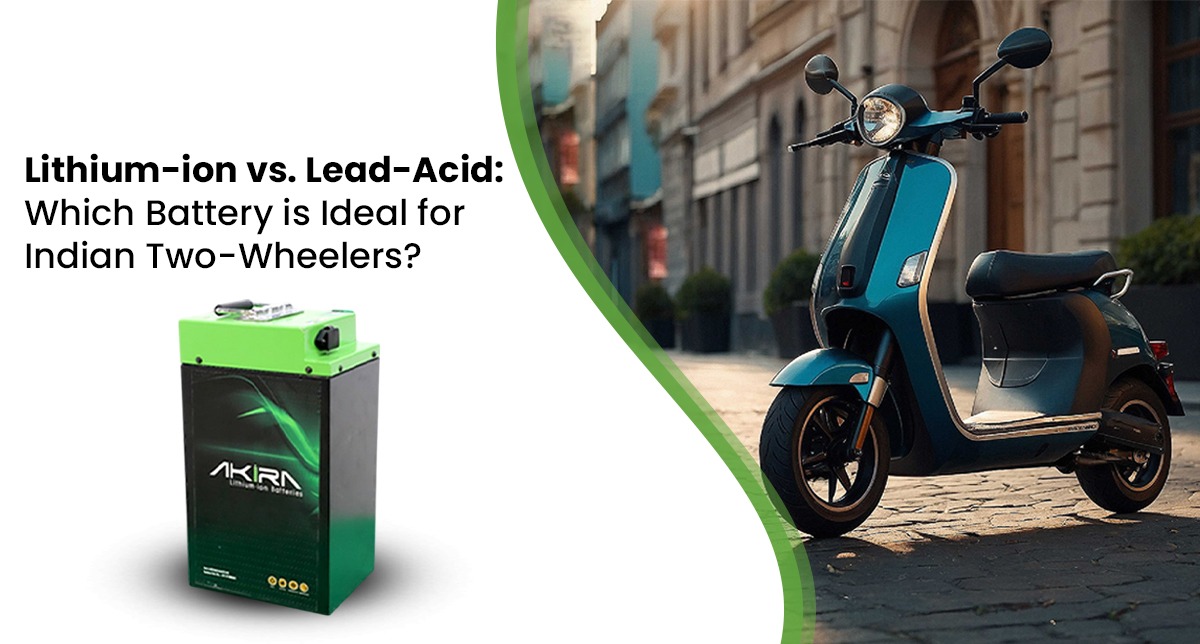
Lithium-ion vs. Lead-Acid: Which Battery is Ideal for Indian Two-Wheelers?

Two-wheelers in India are not mere vehicles—a way of life for the daily commutin’ man. Choosing the ideal battery is of critical importance to ensure reliability, performance, and cost efficiency. Of all those available options, lithium-ion and lead-acid batteries dominate the market. At Akira Batteries, one of the top two wheeler battery manufacturer in India, we provide lithium-ion solutions that cater specifically to the requirements of Indian riders. Let’s dive into what really is the best option for two-wheelers in India.

Efficiency and Performance

Lithium-ion batteries offers more consistent power and energy, offering more power in a reduced, lighter weight configuration. This means better mileage after every charge and more acceleration. Lead-acid batteries have less efficiency but savings are more. For performance-oriented riders, lithium-ion batteries by a good two wheeler battery manufacturer in India are hands down the winner.

Battery Life

Lithium-ion batteries have a lifespan of two to three times that of lead-acid. While the latter needs to be changed every 2–3 years, the former can serve up to 5–7 years. By going with a reliable two wheeler battery supplier in India, you are guaranteed durability and worth for money. 

Maintenance Needs

Lead-acid batteries require regular maintenance, such as topping up distilled water and checking corrosion. Lithium-ion batteries, on the other hand, require little or no maintenance. This is optimal for busy Indian riders who prefer convenience over periodic checks. Choosing a high-tech two wheeler battery manufacturer in India such as Akira Batteries provides trouble-free performance.

Cost Factors

Lead-acid batteries are cheaper to buy upfront but shorter-lived and requiring additional maintenance that tends to add up to total expenditure. Lithium-ion batteries are more costly upfront but provide more long-term savings. With Akira Batteries, a new-age two wheeler battery manufacturer in India, riders enjoy cost-savings along with leading technology.

Environmental Impact

Lithium-ion batteries can ve recycled and releases lesser waste than lead acid batteries. In a step towards greener mobility in India, lithium-ion is the sustainable and ethical choice. When you choose Akira Batteries, you’re encouraging green innovation from a visionary Indian two wheeler battery manufacturer in India.

Choosing Akira Batteries

At Akira Batteries, we engineer and produce high-performance lithium-ion solutions that are specifically designed to ride Indian roads. Focusing firmly on safety, efficiency, and sustainability, we provide future-proof batteries that keep you riding, without compromise.

Call-to-Action

Upgrade to Akira’s advanced lithium-ion batteries today and experience unparalleled reliability for your two-wheeler. Visit us at https://ruchiragreenearth.com/ to know more.

FAQs

Q1. Are lithium-ion batteries superior to lead-acid for two-wheelers?

Yes, they provide longer life, more efficiency, and less maintenance.

Q2. How many years does a lithium-ion battery have in two-wheelers?

Generally 5–7 years with proper maintenance.

Q3. Are lithium-ion batteries enviromental friendly?

Yes, they are recyclable and releasing very less toxic waste in the environment.

Q4. Are lithium-ion batteries expensive than lead-acid?

Yes, but they create more long-term value.

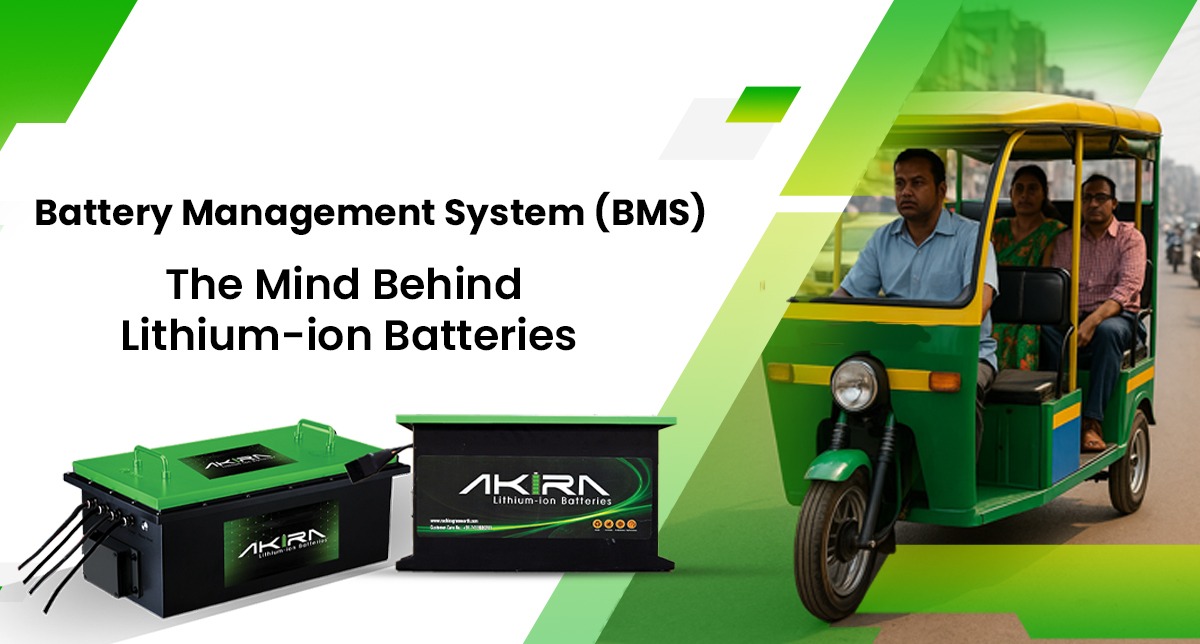
Battery Management System (BMS): The Mind Behind Lithium-ion Batteries

In the modern age, where power backup is no longer an option but a need, batteries are the backbone that ensures our lives and businesses are up and running. But a battery is not merely a box to contain energy — its real worth is in how securely, efficiently, and dependably it can supply that energy.

That’s where the Battery Management System (BMS) is really needed. Consider it as the battery’s brain. While our brain regulates critical functions in the body, the BMS is responsible for monitoring and controlling all that is within the battery to ensure it operates at its optimal capacity. Our Akira Batteries, the BMS is not merely a technical specification — it is the intelligent backbone that ensures their batteries are reliable, long-lasting, and safe to use for homes, offices, and industries.

What is a Battery Management System (BMS)?

Essentially, a BMS is an electronic device that is tasked with keeping a rechargeable battery efficient, safe, and healthy. It constantly checks the performance of every individual cell in the battery pack to make sure that they are performing as a perfect unit.

Without a BMS, a battery is on its life alone. It may overcharge, overheat, get too deep a discharge, or experience cell imbalances. All this not only reduces the battery’s life but can also pose safety risks. The BMS prevents all these from happening by behaving like a guardian — keeping the battery out of harm’s way and ensuring it runs at its best, every time.

Core Functions of a BMS

Monitoring

    The BMS monitors major parameters to complement such as voltage, current, temperature, and SOC. Real-time monitoring implies that the state of the battery is continually known and any abnormalities are detected immediately.

    Protection

      It kicks in automatically to prevent overcharging, deep discharge, overheat, or short circuiting. In case there are hazardous conditions, it will cut off or limit power transfer and safeguard the battery along with the user.

      Balancing

        Cells in a battery over time may get imbalanced and some charge faster than others. BMS ensures all cells get charged at the same rate, maintaining battery health and averting early failure.

        Communication

          New generation BMS technology compliments your inverters, chargers, or monitoring software, presenting users with real-time battery performance and health. That places users in control, enabling them to use power responsibly and not be caught off guard.

          Why BMS is Important for New Batteries?

          1. Safety First – A proper BMS guards against fire risks, overheating, and short circuits.
          2. Increased Battery Life – Balanced charging and discharging leads results in longer-lasting batteries.
          3. Efficient Energy Use – Power that is used efficiently to minimize wastage.
          4. Smart Application – Knowledge of battery health enables predictive maintenance, saving money and downtime.

          The Akira Batteries Advantage with BMS

          What sets Akira Batteries apart is the focus on creating products that are not only strong but also smart and user-centric. Their cutting-edge BMS integrates several advantages:

          Exact Monitoring – Each cell is monitored for best efficiency, with no weakest link in performance.

          Solid Protection – Multi-leveled protection shields against overcharging, deep discharges, voltage spikes, and overheating.

          Optimized Balancing – Smart balancing synchronizes cells, prolonging the battery life overall. 

          User-Centric Data – Battery status in real-time allows users to plan use, conserve energy, and prevent sudden breakdowns.

          This is to say that whether it is a residential inverter, an office backup unit, or a renewable energy project, Akira Batteries bring peace of mind. Consumers understand that they’re not simply purchasing a power backup — they’re investing in a secure, effective, and future-proof energy solution.

          Conclusion

          A brainless battery is as much a car without brakes — strong but dangerous. With a cutting-edge Battery Management System, Akira Batteries turn common energy storage into a smart, safe, and efficient answer.

          In an age where power must never stop, Akira Batteries with BMS are a partner you can trust — blending power, protection, and performance for families, companies, and industries as well.

          Why battery swapping makes electric two-wheelers better

          As India’s cities grow busier and fuel prices keep climbing, both everyday people and policymakers are looking for smarter, cleaner ways to get around. In this shift toward electric mobility, two-wheelers like scooters and bikes are taking the lead. They’re easy on the pocket, perfect for narrow city lanes, and super convenient for daily rides. But as more people consider going electric, one practical solution is catching everyone’s attention — battery swapping.

          What is battery swapping?

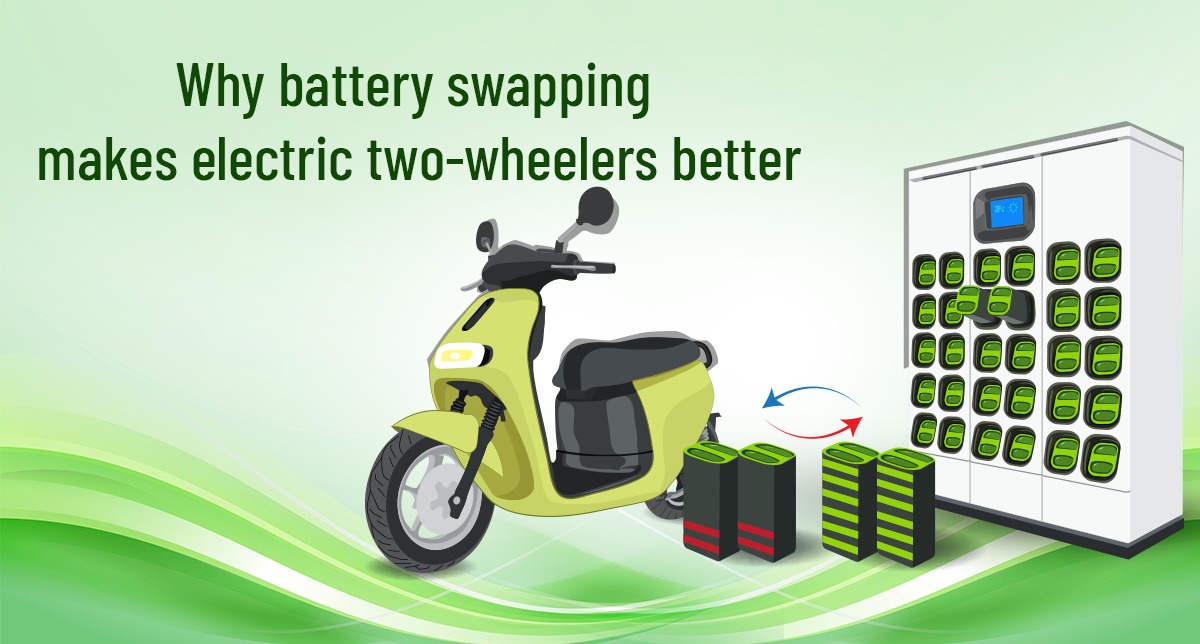
          Battery swapping is the process where a low or discharged battery in an electric vehicle is swapped with a fully charged battery, thus getting on to the road in a few minutes. This way you don’t have to wait for hours to get the battery charge. It’s super convenient, especially for riders who can’t afford long charging breaks. Also, it keeps costs low and makes using electric two-wheelers and e-rickshaws way more practical.

           How it works:

          1. You drive your electric vehicle (like an e-bike or e-rickshaw) to a battery swapping station.
          2. Your used battery is removed.
          3. A fully charged battery is installed instantly.
          4. You pay for the energy or take it on a subscription model.

          Why Battery Swapping Works for Two-Wheelers

          By allowing the riders to exchange the drained battery with a fully charged one, this eliminates the need to wait hours for charging and tackles multiple challenges head-on.

          Faster Turnaround Time:
          For delivery riders, gig workers, and everyday commuters, time is everything. Battery swapping cuts downtime dramatically—just a few minutes and you’re back on the road. It helps the people to ride with ease without any hassles.

          Solves Charging & Parking Woes:

          As not every rider has access to home charging or safe parking with plug points, swapping stations become a hassle-free solution for them, where they don’t have to worry about the space and charging time.

          Battery Swapping: Challenges 

          Although there are multiple benefits of battery wrapping, it comes with some   hurdles. Let us go through them:

          1. Standardization Issues:
          Different EV brands use different battery designs, thus limiting the interoperability. To solve this, government-led standards and collaboration between OEMs will be important to a scalable ecosystem that works with every lithium-ion battery type.

          2. Battery Health & Safety:
          As the swapped batteries must be reliable, safe, and efficient, hence their regular testing, smart tracking, and battery lifecycle management hold importance to ensure every lithium-ion battery remains in good health.

          3. Infrastructure Investment:
          The cost of building a robust swapping network itself is very costly and requires heavy investment—in kiosks, charging hubs, and inventory. Public-private partnerships and startup-led models are crucial to scaling efficiently.

          Government Initiatives and Industry Efforts

          The Indian government is supporting battery swapping through the FAME II scheme. To help more people use it, they are offering support, running test programs, and giving special benefits. A new Battery Swapping Policy is also being planned to make sure the batteries are safe, easy to use, and follow common standards.

          Private innovators also have a key role to play. Some startups are developing real-world swapping ecosystems for electric two- and three-wheelers which focus on high-usage segments like delivery fleets. That immensely benefits from quick lithium-ion battery swaps.

          Conclusion

          Battery swapping isn’t just a convenience—it’s a transformative idea. For India’s massive two-wheeler market, it offers a faster, cleaner, and more affordable path to electrification. By removing range anxiety, reducing charging downtime, and making lithium-ion battery usage smarter, battery swapping is driving India toward a more sustainable future.