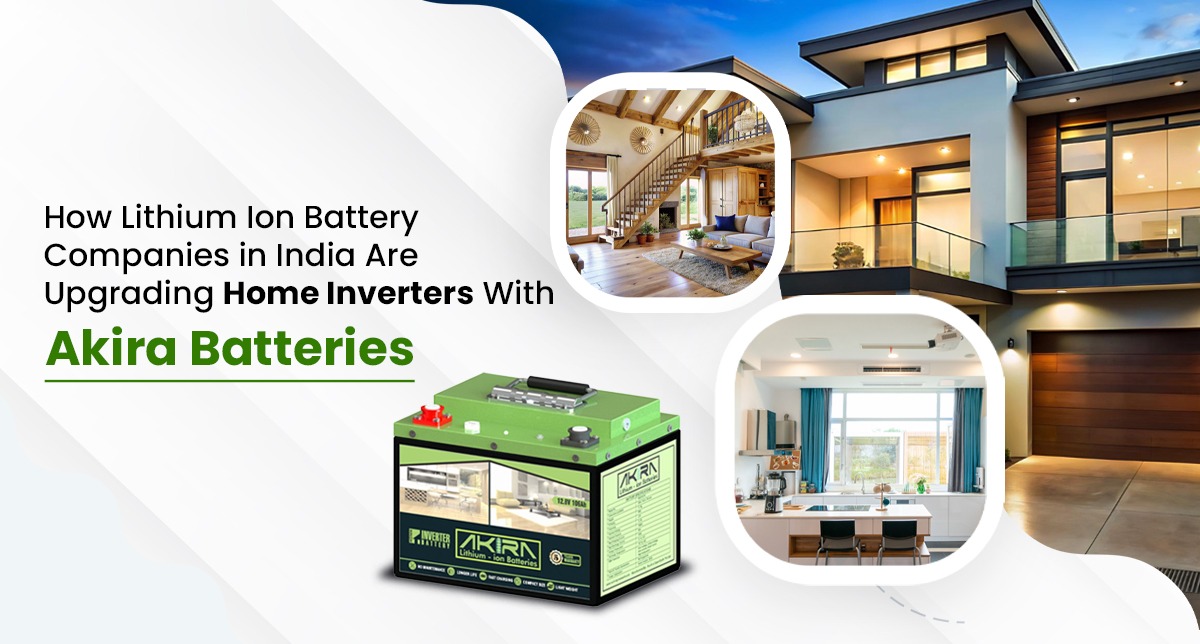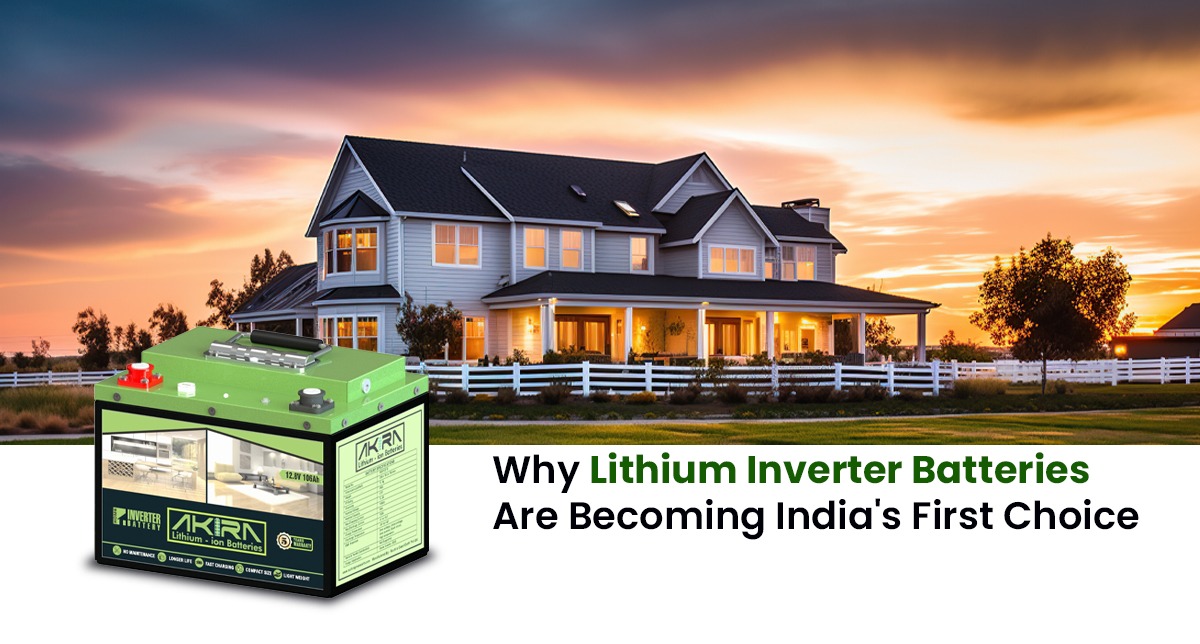
Power cuts still catch us off guard, don’t they? One minute everything’s fine, the next you’re scrambling for the inverter switch while the fan slows to a lazy stop. For years, most of us have relied on the same heavy, water-guzzling lead-acid batteries. They do the job. With Akira batteries, more families are making the switch to lithium-ion inverter batteries. Based on real usage patterns across Indian homes dealing with frequent voltage fluctuations and long summer outages, lithium-ion inverter batteries are proving to be a long-term upgrade, not a luxury. Let’s see in this blog how Lithium Ion Battery for Inverter is winning the backup game.
What Actually Feels Different Day-to-Day
A good lithium-ion battery for your inverter saves time and money. It offers many other benefits too.
Quick Comparison: Lead-Acid vs. Lithium-Ion for Inverters
- Usable Power: Lead-acid: ~50% | Lithium-ion: 80–90%
- Charging Time: Lead-acid: 6–10 hours | Lithium-ion: 2–4 hours
- Maintenance: Lead-acid: Regular water top-ups | Lithium-ion: Less maintenance.
- Typical Lifespan: Lead-acid: 4–5 years | Lithium-ion: 8–12 years
The Stuff You Stop Worrying About
Weight drops by half or more. Moving or repositioning the battery isn’t a two-person job that could result in a slipped disc. No more shining a torch into cells. No more trips to buy distilled water. No more cleaning corrosion every few months.
Lifespan follows the same logic. A well-cared-for lead-acid battery may last 4–5 years. In contrast, top lithium models often last 8–12 years with proper care and handle several thousand deep cycles. One lithium-ion battery for inverter can replace three conventional ones in ten years. They accumulate over time.
Efficiency feels good too. You lose far less energy going in and out of the battery, usually only 5–8% instead of 20% or worse. That small change leads to lower electricity bills. It also keeps things cooler during long backups.
Why Akira’s Approach Makes Sense Right Now
Akira lithium solutions for inverters are designed specifically for Indian power conditions. They handle voltage swings, heat over 45 °C, and the daily cycling that homes face. Our lithium batteries focus on inverters. They have strong built-in protection that stops damage before it starts. They recharge in a short time and fit snugly in tight utility spaces.
Many users say the same thing: they often forget about the battery. It only comes to mind during a power outage, which shows it’s still working well. That kind of quiet reliability is hard to put a price on.
Picking the Right One Without Overthinking It
Check your inverter first; most modern ones operate effectively with a lithium-ion battery for inverter after you adjust a couple of settings.
Capacity-wise, 100–200 Ah usually covers a typical 2–3 BHK nicely. Yes, the initial price tag looks higher. But when you factor in zero upkeep, deeper usable power, and years before the next replacement, the story changes.
Last Thought
You don’t buy inverter batteries because we love shopping for them. You buy them so the fridge keeps running, the Wi-Fi stays up for work calls, and the kids’ study table doesn’t turn into a candlelit zone.
A premium lithium ion battery for inverter, especially well-designed solutions like Akira’s, eliminates most of the old headaches and provides hours of reliable performance.
Ready for a smarter backup? Explore Akira’s lithium ion battery for inverter.
FAQs
Q1. Does a lithium ion battery for inverter really last that much longer?
Yes, most good ones give 8–12+ years or 3000–5000 cycles. That’s often 2–3× the real-world life of even a solid lead-acid.
Q2. Will my existing inverter work with lithium?
Usually yes, especially newer models. Just confirm the voltage settings and whether it supports lithium profiles. A quick call to the installer normally sorts it.
Q3. Are Akira batteries safe indoors?
They’re designed to be. Advanced BMS protection handles overcharge, deep discharge, temperature extremes, and short circuits, all built for Indian homes.