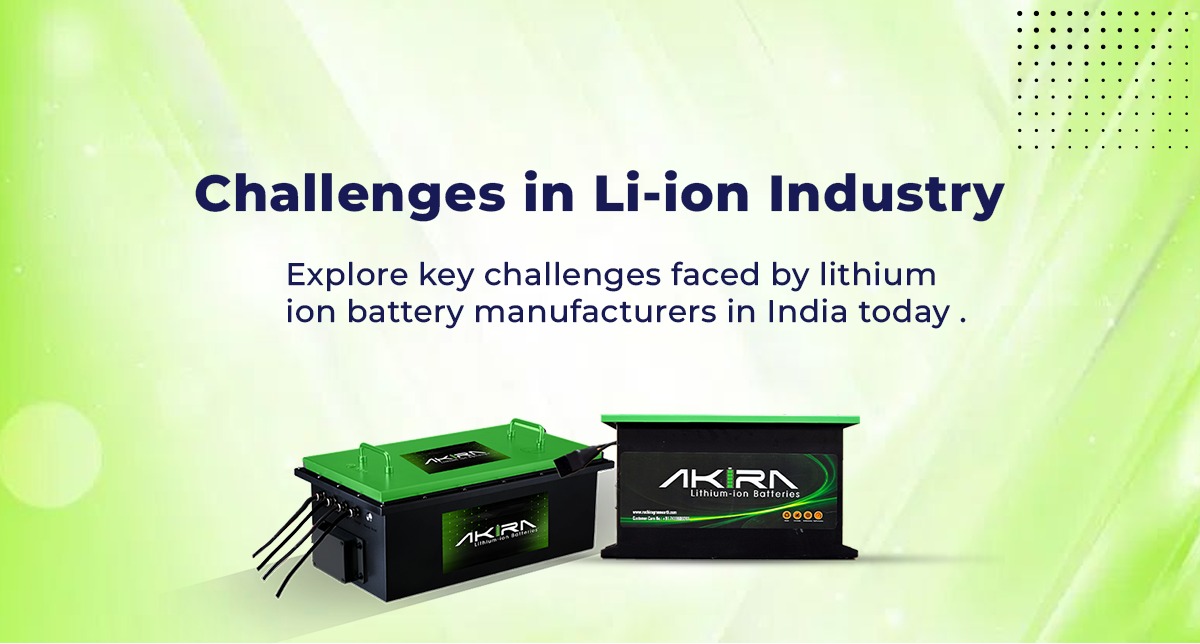
The urgency of storing energy and clean mobility is increasing rapidly, and lithium-ion batteries acts as the crucial player. Right from electric cars to renewable energy storage and consumer goods, their uses are running at a pace that has never been seen before. It is not that easy, however, to be a successful lithium ion battery maker in india. The sector is plagued by a host of issues that have to be addressed to ensure long-term viability along with the sheer growth possibilities.
Foreign Raw Material Dependence
Perhaps the largest challenge for any lithium ion battery manufacturer in India would be reliance on imported foreign raw materials. India has very limited reserves of cobalt, lithium, and nickel— and they crucial in the production of lithium-ion battery. This makes not only production costly but also exposes the industry to foreign exchange fluctuations in the global market. Unless there is robust indigenous mining and supply chain development, producers will remain at a disadvantage.
High Costs of Production
Setting up advanced production units requires heavy investment in technology, R&D, and special expertise. For an Indian lithium ion battery manufacturer, the initial capital investment is high, precluding small and medium-sized enterprises from competing. In addition, the overall cost outlay includes the implementing safety measures, quality checks, and compliance with global standards.
Technology Gaps
Even as India is developing very fast, there is still a technology gap with leaders in the world. An Indian lithium-ion battery producer needs to continue to invest in research and development to enhance efficiency, energy density, and safety features. Lack of continuous research and exposure to international experts, producers cannot compete with the world market.
Recycling and Waste Management Problems
Along with augmenting battery usage, safe recycling and disposal are becoming a matter of urgent concern. Currently, India lacks a robust battery recycling network, which contributes to both an environmental waste and a financial loss, with an expensive material going waste. For lithium ion battery manufacturer in India, recycling is not just a sustainability measure but also a business loophole.
Policy and Infrastructure Challenges
While the Indian government has implemented the Production Linked Incentive (PLI) scheme, there are still infrastructural, logistics, and policy implementation mismatch issues. Lithium-ion battery manufacturer in India have to face lower level of skiiled labour, unstable environmental norms, and insubstantial charging infrastructure. These must be complemented to enable mass adoption.
Conclusion
India’s lithium-ion battery sector stands at a juncture. The opportunities are enormous, as are the challenges. India has the potential to self-sustain and emerge as an international leader in innovative energy solutions by making the right investments in raw material acquisition, recycling, and technology. As a leading Indian lithium ion battery producer, Akira assures to overcome the challenges of green process, advanced technology, and a greener tomorrow.
FAQs
Q1. Why is lithium-ion battery production challenging in India?
Due to raw material shortages, exorbitant prices, and technology disparities.
Q2. What is the biggest challenge for an Indian lithium ion battery manufacturer?
Imported inputs such as lithium, cobalt, and nickel have extremely high reliance upon them.
Q3. Can India be made independent in terms of lithium-ion battery production?
Yes, through investment in mining, recycling, and R&D.
Q4. What is Akira doing to solve these issues?
Through the use of state-of-the-art technology, sustainable practices, and innovation.
Call to Action
Ready to find out about sustainable energy options? Visit us at ruchiragreenearth.com to know more information.