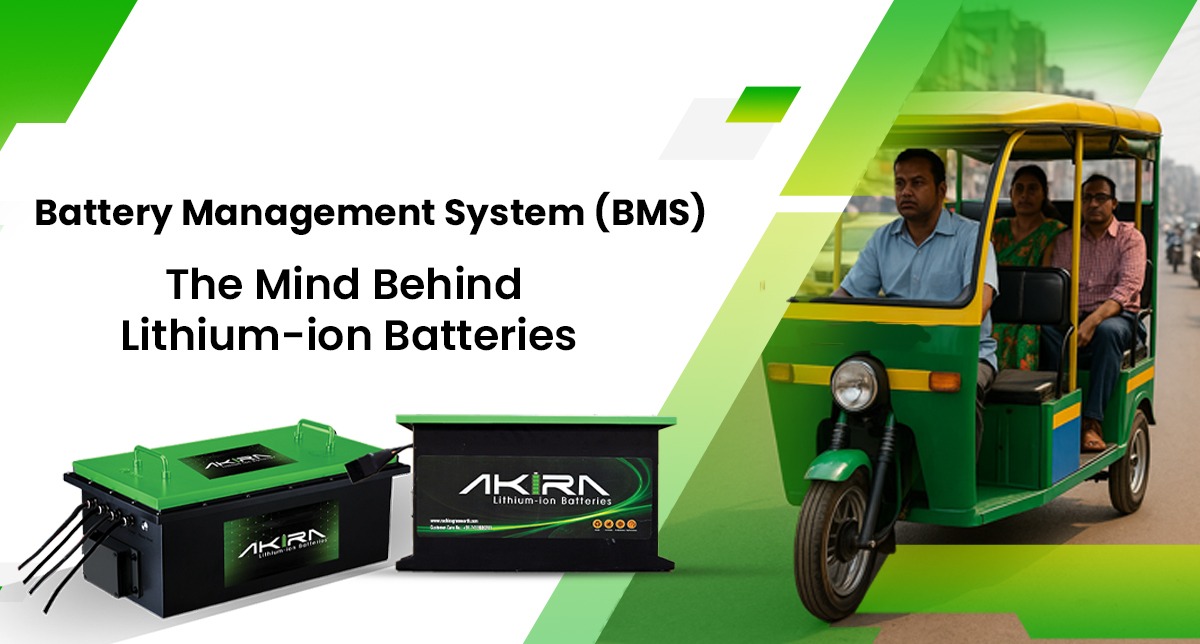
Battery Management System (BMS): The Mind Behind Lithium-ion Batteries

In the modern age, where power backup is no longer an option but a need, batteries are the backbone that ensures our lives and businesses are up and running. But a battery is not merely a box to contain energy — its real worth is in how securely, efficiently, and dependably it can supply that energy.

That’s where the Battery Management System (BMS) is really needed. Consider it as the battery’s brain. While our brain regulates critical functions in the body, the BMS is responsible for monitoring and controlling all that is within the battery to ensure it operates at its optimal capacity. Our Akira Batteries, the BMS is not merely a technical specification — it is the intelligent backbone that ensures their batteries are reliable, long-lasting, and safe to use for homes, offices, and industries.

What is a Battery Management System (BMS)?

Essentially, a BMS is an electronic device that is tasked with keeping a rechargeable battery efficient, safe, and healthy. It constantly checks the performance of every individual cell in the battery pack to make sure that they are performing as a perfect unit.

Without a BMS, a battery is on its life alone. It may overcharge, overheat, get too deep a discharge, or experience cell imbalances. All this not only reduces the battery’s life but can also pose safety risks. The BMS prevents all these from happening by behaving like a guardian — keeping the battery out of harm’s way and ensuring it runs at its best, every time.

Core Functions of a BMS

Monitoring

    The BMS monitors major parameters to complement such as voltage, current, temperature, and SOC. Real-time monitoring implies that the state of the battery is continually known and any abnormalities are detected immediately.

    Protection

      It kicks in automatically to prevent overcharging, deep discharge, overheat, or short circuiting. In case there are hazardous conditions, it will cut off or limit power transfer and safeguard the battery along with the user.

      Balancing

        Cells in a battery over time may get imbalanced and some charge faster than others. BMS ensures all cells get charged at the same rate, maintaining battery health and averting early failure.

        Communication

          New generation BMS technology compliments your inverters, chargers, or monitoring software, presenting users with real-time battery performance and health. That places users in control, enabling them to use power responsibly and not be caught off guard.

          Why BMS is Important for New Batteries?

          1. Safety First – A proper BMS guards against fire risks, overheating, and short circuits.
          2. Increased Battery Life – Balanced charging and discharging leads results in longer-lasting batteries.
          3. Efficient Energy Use – Power that is used efficiently to minimize wastage.
          4. Smart Application – Knowledge of battery health enables predictive maintenance, saving money and downtime.

          The Akira Batteries Advantage with BMS

          What sets Akira Batteries apart is the focus on creating products that are not only strong but also smart and user-centric. Their cutting-edge BMS integrates several advantages:

          Exact Monitoring – Each cell is monitored for best efficiency, with no weakest link in performance.

          Solid Protection – Multi-leveled protection shields against overcharging, deep discharges, voltage spikes, and overheating.

          Optimized Balancing – Smart balancing synchronizes cells, prolonging the battery life overall. 

          User-Centric Data – Battery status in real-time allows users to plan use, conserve energy, and prevent sudden breakdowns.

          This is to say that whether it is a residential inverter, an office backup unit, or a renewable energy project, Akira Batteries bring peace of mind. Consumers understand that they’re not simply purchasing a power backup — they’re investing in a secure, effective, and future-proof energy solution.

          Conclusion

          A brainless battery is as much a car without brakes — strong but dangerous. With a cutting-edge Battery Management System, Akira Batteries turn common energy storage into a smart, safe, and efficient answer.

          In an age where power must never stop, Akira Batteries with BMS are a partner you can trust — blending power, protection, and performance for families, companies, and industries as well.
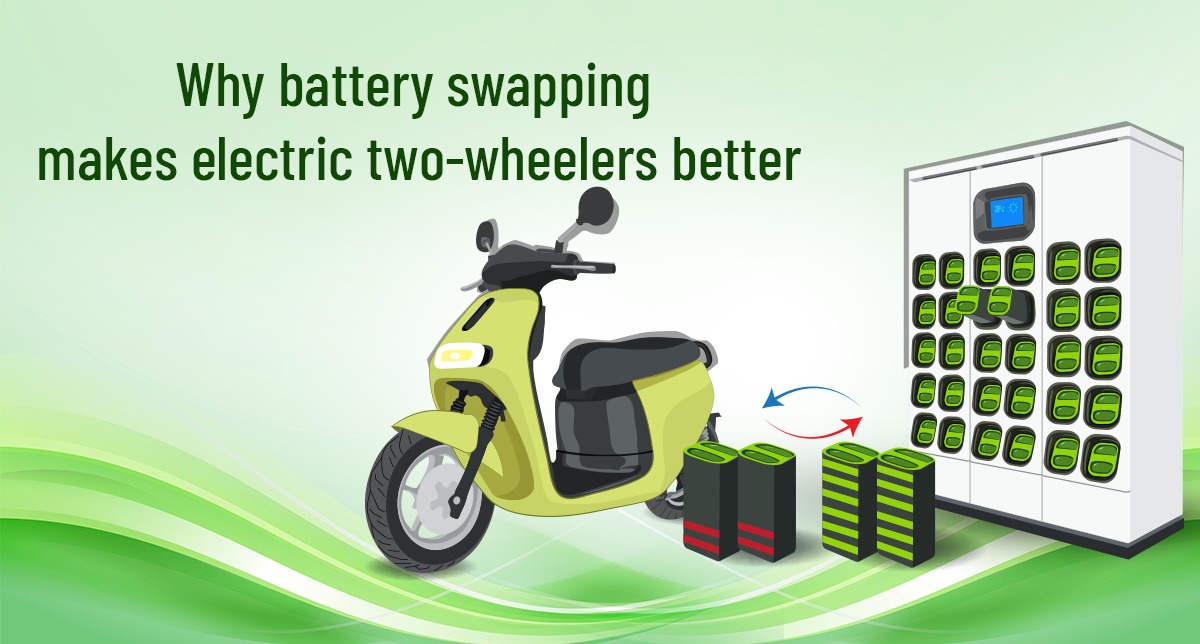
          Why battery swapping makes electric two-wheelers better

          As India’s cities grow busier and fuel prices keep climbing, both everyday people and policymakers are looking for smarter, cleaner ways to get around. In this shift toward electric mobility, two-wheelers like scooters and bikes are taking the lead. They’re easy on the pocket, perfect for narrow city lanes, and super convenient for daily rides. But as more people consider going electric, one practical solution is catching everyone’s attention — battery swapping.

          What is battery swapping?

          Battery swapping is the process where a low or discharged battery in an electric vehicle is swapped with a fully charged battery, thus getting on to the road in a few minutes. This way you don’t have to wait for hours to get the battery charge. It’s super convenient, especially for riders who can’t afford long charging breaks. Also, it keeps costs low and makes using electric two-wheelers and e-rickshaws way more practical.

           How it works:

          1. You drive your electric vehicle (like an e-bike or e-rickshaw) to a battery swapping station.
          2. Your used battery is removed.
          3. A fully charged battery is installed instantly.
          4. You pay for the energy or take it on a subscription model.

          Why Battery Swapping Works for Two-Wheelers

          By allowing the riders to exchange the drained battery with a fully charged one, this eliminates the need to wait hours for charging and tackles multiple challenges head-on.

          Faster Turnaround Time:
          For delivery riders, gig workers, and everyday commuters, time is everything. Battery swapping cuts downtime dramatically—just a few minutes and you’re back on the road. It helps the people to ride with ease without any hassles.

          Solves Charging & Parking Woes:

          As not every rider has access to home charging or safe parking with plug points, swapping stations become a hassle-free solution for them, where they don’t have to worry about the space and charging time.

          Battery Swapping: Challenges 

          Although there are multiple benefits of battery wrapping, it comes with some   hurdles. Let us go through them:

          1. Standardization Issues:
          Different EV brands use different battery designs, thus limiting the interoperability. To solve this, government-led standards and collaboration between OEMs will be important to a scalable ecosystem that works with every lithium-ion battery type.

          2. Battery Health & Safety:
          As the swapped batteries must be reliable, safe, and efficient, hence their regular testing, smart tracking, and battery lifecycle management hold importance to ensure every lithium-ion battery remains in good health.

          3. Infrastructure Investment:
          The cost of building a robust swapping network itself is very costly and requires heavy investment—in kiosks, charging hubs, and inventory. Public-private partnerships and startup-led models are crucial to scaling efficiently.

          Government Initiatives and Industry Efforts

          The Indian government is supporting battery swapping through the FAME II scheme. To help more people use it, they are offering support, running test programs, and giving special benefits. A new Battery Swapping Policy is also being planned to make sure the batteries are safe, easy to use, and follow common standards.

          Private innovators also have a key role to play. Some startups are developing real-world swapping ecosystems for electric two- and three-wheelers which focus on high-usage segments like delivery fleets. That immensely benefits from quick lithium-ion battery swaps.

          Conclusion

          Battery swapping isn’t just a convenience—it’s a transformative idea. For India’s massive two-wheeler market, it offers a faster, cleaner, and more affordable path to electrification. By removing range anxiety, reducing charging downtime, and making lithium-ion battery usage smarter, battery swapping is driving India toward a more sustainable future.