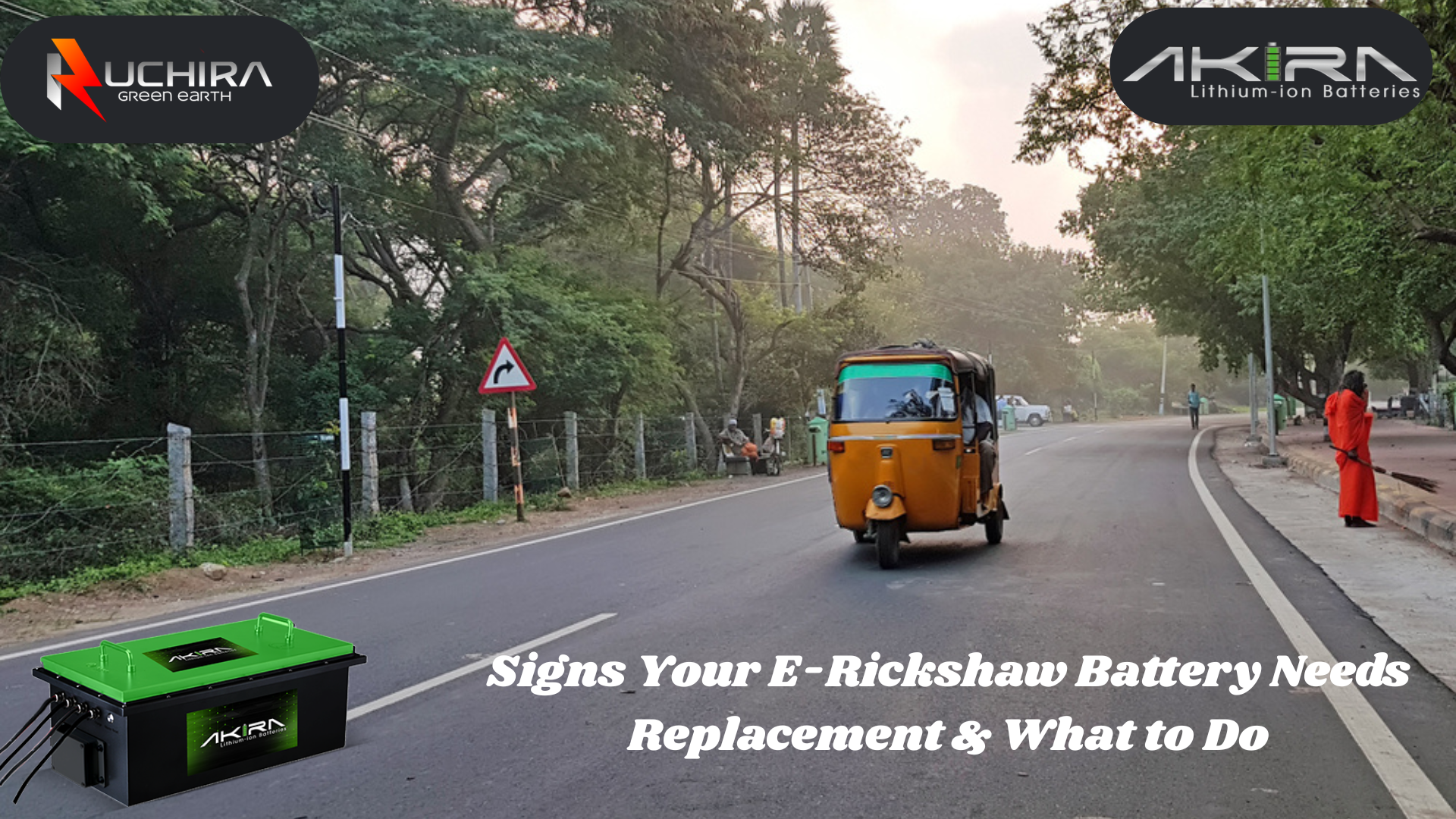
E-rickshaws have become the lifeline of sustainable last-mile transport across many Indian towns and cities. They are eco-friendly, cost-effective, and widely used by daily commuters. However, at the core of every smooth-running E-rickshaw lies one crucial component—the battery. And like all things mechanical, batteries come with a shelf life. Over time, even the most advanced batteries lose efficiency, directly affecting your vehicle’s performance, range, and profitability.
So, how do you know when it’s time to change your battery? Recognizing the signs early can save you from unwanted breakdowns, lost income, and even safety hazards. In this blog, we’ll walk you through the most common signs your E-rickshaw battery needs replacement—and what steps to take next. Whether you’re an individual owner, a fleet operator, or a dealer, having the support of a reliable lithium-ion E-rickshaw battery manufacturer can make a world of difference.
1. Decreased Backup Time
If your E-rickshaw used to give you 80–100 km per charge but now struggles to complete even 40–50 km, your battery could be wearing out. This is often the first and most visible sign of battery degradation. Reduced backup time can drastically impact your earnings if your vehicle cannot complete a full day’s shift.
2. Longer Charging Time
Charging that once took 3–4 hours now drags on for 6–7 hours? That’s a problem. Lithium-ion batteries are known for their efficient charging cycles, and when they begin to slow down, it’s a clear indicator that internal components have degraded. Longer charging times also reduce the number of trips you can complete in a day.
3. Frequent Need for Charging
Is your charger plugged in more often than your vehicle is on the road? Batteries with reduced capacity require more frequent charging. This affects operational uptime, causes unnecessary delays, and eats into your productivity. It’s time to speak with a lithium-ion E-rickshaw battery manufacturer about a performance upgrade.
4. Overheating Issues
Overheating during charging or discharging is a serious warning sign. It can be caused by internal short circuits, damaged cells, or battery mismanagement. If you notice a swollen battery casing, odd smells, or high external temperatures, stop usage immediately and consult a technician. Overheating is not just a performance issue—it’s a safety concern.
5. Dashboard Warnings or Fluctuating Indicator
Most lithium-ion E-rickshaw batteries come with a Battery Management System (BMS). If your dashboard shows fluctuating charge levels, error symbols, or warning lights, there may be a fault in the battery pack. Ignoring these alerts can lead to sudden failure.
What to Do Next?
Stop using the faulty battery to avoid further damage or safety risks.
Consult a trusted lithium-ion E-rickshaw battery manufacturer for an expert assessment.
Choose a replacement battery based on your E-rickshaw’s voltage and operational demands.
When picking a new battery, always consider:
Charging speed and cycle life
Warranty and after-sales service
Battery weight and fitment
Support from a reputed lithium-ion E-rickshaw battery manufacturer
By choosing a reliable partner, you ensure higher performance, reduced breakdowns, and long-term savings.
Conclusion
Your battery is not just a component—it’s the lifeline of your E-rickshaw. Don’t wait for a total breakdown to take action. Reduced backup, longer charging, or overheating are all clear signs it’s time for a replacement. Always rely on an expert lithium-ion E-rickshaw battery manufacturer to get the right battery for your needs—built for Indian roads, heavy use, and long journeys.
Power up smart. Ride worry-free.