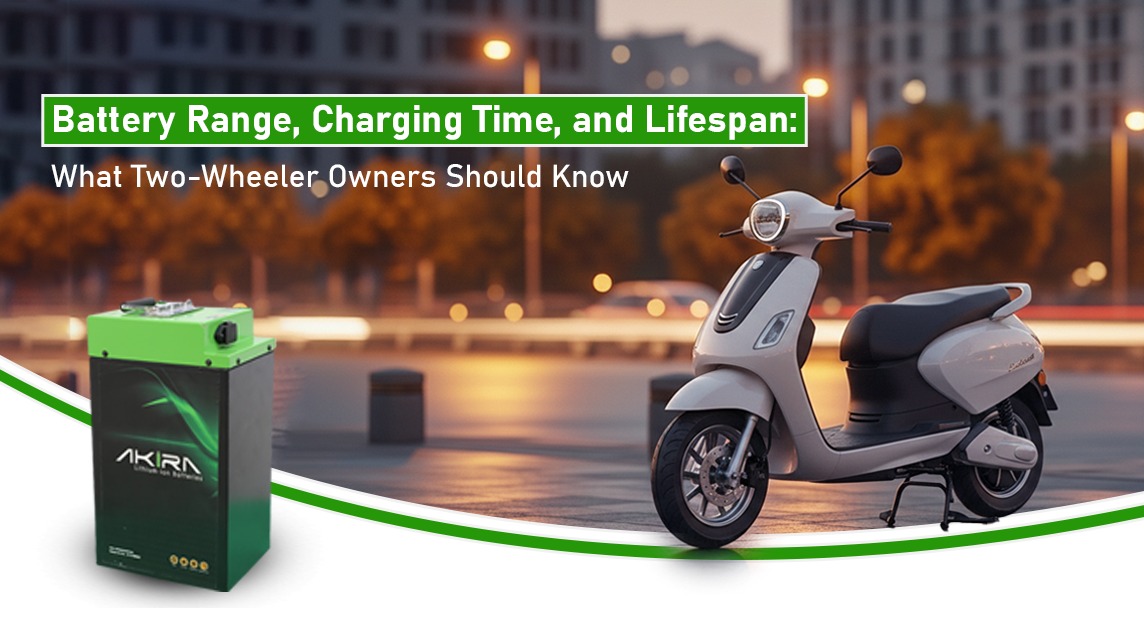
Battery Range, Charging Time, and Lifespan: What Two-Wheeler Owners Should Know

Electric scooters and bikes are now part of daily life. They are quiet. They are easy to ride. And they save money on fuel. But one thing matters more than anything else. The battery. If the battery is good, the ride feels smooth. If the battery is weak, everything feels stressful. So let us talk about three simple things. Range. Charging time. And lifespan.

1. Battery range

Range means how many kilometers your scooter can run on one full charge. This depends on battery size, riding speed, traffic, and even road condition. If you ride calmly, you get better range. If you speed up quickly again and again, range drops. Heavy load also affects it.

Many people only look at the number written in the brochure. But real roads are different. Traffic, signals, and flyovers change things.

That is why choosing the right Two wheeler battery manufacturer in India is important. A good battery should perform well in daily city riding, not just in test conditions.

At Akira, we focus on stable power. Because daily riders need consistency, not big promises.

2. Charging time

No one likes waiting too long for charging. Most lithium batteries for two-wheelers take around 3 to 5 hours for a full charge. Some systems offer faster charging. That sounds nice. But fast charging must be safe too. If heat is not controlled, battery life can be reduced. Charging should feel simple. Plug in. Relax. And get ready for the next ride.

As a reliable Two wheeler battery manufacturer in India, Akira designs durable and fast charging batteries.

3. Lifespan

This is a big question. A good lithium battery can last many years if used properly. It can handle hundreds of charge cycles. One charge cycle means full use from 0 to 100 percent. If you charge from half to full, that counts as half a cycle. Over time, every battery slowly loses some capacity. That is normal. But quality batteries lose it slowly.

As a trusted Two wheeler battery manufacturer in India, Akira uses strong cells and smart battery management systems. These systems protect from overcharging and overheating. At Akira, we design batteries that are built for Indian weather and roads. Heat, dust, traffic. We keep these things in mind.

Simple tips for riders

Try not to drain the battery to zero often. Charge it before it becomes too low. Use the charger recommended by the company. Keep the scooter in shade when possible. Do not only compare prices. A cheaper battery may need replacement sooner. That costs more in the long run.

Always check warranty and service support. Being a reliable Two wheeler battery manufacturer in India, Akira offer proper after sales help.

Final words

Battery range, charging time, and lifespan are all connected. You need balance. Enough range for daily travel. Charging time that fits your routine. And a battery that lasts for years.

Akira believes power should feel easy and stress free. As a growing Two wheeler battery manufacturer in India, we aim to support riders with batteries that work quietly and reliably. Because riding electric should feel simple. Just charge. Ride. And enjoy the journey.
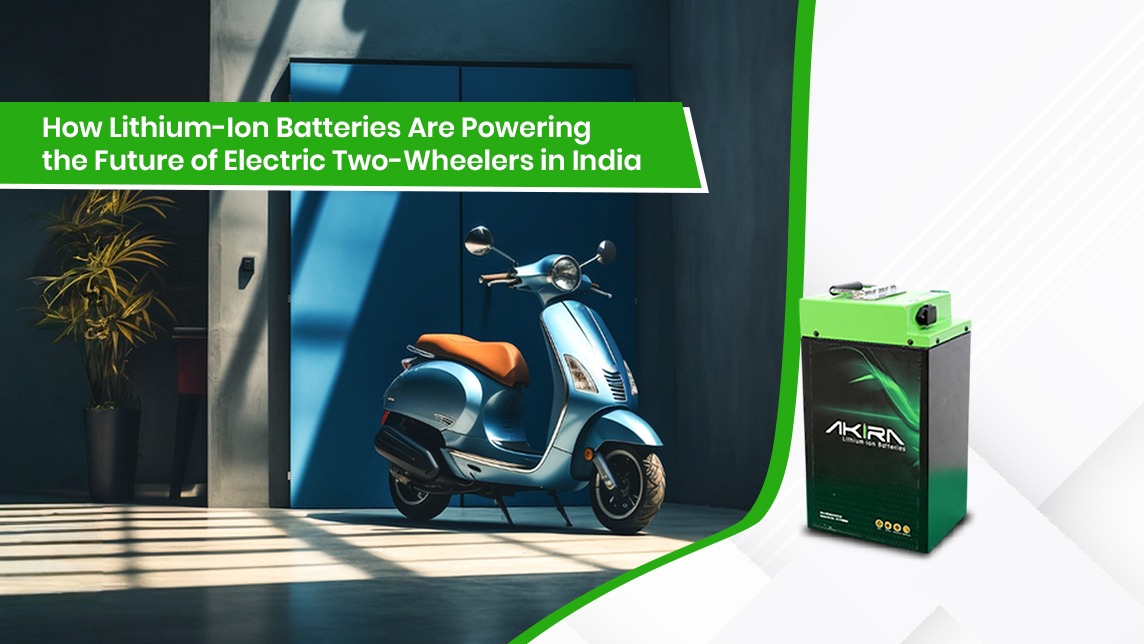
How Lithium-Ion Batteries Are Powering the Future of Electric Two-Wheelers in India

Electric two-wheelers did not succeed in India because people changed their habits suddenly. They succeeded when the machines stopped demanding patience. When range became predictable. When charging fit into real life. When riders stopped thinking about the battery altogether. That change came quietly. And it came through lithium-ion technology. The battery has changed from a simple add-on to a key part of the vehicle. It now shapes the car’s design, affecting its weight, price, and durability over time. Akira Batteries India, a top two-wheeler battery manufacturer in India, sees this trend. They focus on lithium-ion batteries and have included them in their business model.

Why Lithium-Ion Became the Only Practical Option

Earlier battery technologies showed their limits quickly. Vehicles felt heavy. Range dropped without warning. Charging cycles disrupted daily routines. These weren’t minor issues, they directly affected adoption.

Lithium-ion batteries changed that equation. Higher energy density reduced weight. Discharge became stable. Charging times shortened. The riding experience stopped feeling conditional.

But chemistry alone isn’t the story. Execution is. Akira Batteries designs lithium-ion systems around Indian realities, heat that doesn’t forgive, roads that aren’t smooth, and users who don’t always charge perfectly. The assumptions are grounded. That’s where reliability begins.

Performance Is a Long-Term Conversation

Battery performance doesn’t reveal itself on launch day. It shows up months later. After repeated charging. After summers and monsoons. After usage patterns settle into something real.

Lithium-ion batteries hold up in that long view:

  • Over 1,000 charge cycles without sudden decline
  • Lower system weight, improving efficiency and handling
  • Faster charging, reducing everyday friction
  • Minimal maintenance intervention
  • Stable output, even under thermal stress

Akira, an experienced two-wheeler battery manufacturer in India, focuses on how these characteristics age. For OEMs planning scale, gradual, predictable aging matters more than early performance peaks.

Why the Manufacturer Matters More Than the Specification

As electric two-wheelers scale, tolerance for uncertainty drops. Battery problems rarely fail loudly. They appear quietly, range fades earlier than expected, service calls increase, confidence slips.

As a dependable two-wheeler battery manufacturer in India, Akira Batteries is designed to prevent these outcomes. Safety systems manage electrical and thermal risk. Mechanical design supports durability on poor roads. Battery management logic prioritizes longevity over short-term optimization.

This approach creates predictability. And predictability is what allows electric mobility to scale.

Where the Market Is Headed

India’s electric two-wheeler market is entering a more disciplined phase. Decisions are becoming data-led. Lifecycle costs matter more than novelty. Supplier reliability matters more than claims.

Lithium-ion batteries will remain central to this phase. Akira Batteries continues to align development with regulatory direction, scale requirements, and real-world performance expectations. The goal isn’t rapid expansion. It’s sustainable growth.

Conclusion

Lithium-ion batteries didn’t just boost electric two-wheelers; they built trust.

Akira is a dependable two-wheeler battery manufacturer in India in India’s battery landscape. They deliver lithium-ion solutions that champion reliability, safety, and exceptional performance. These cornerstones are vital for winning the electric mobility race.

Planning electric two-wheeler platforms for scale requires battery partners who understand long-term performance, not just specifications.

Akira Batteries works closely with OEMs to design lithium-ion systems that perform consistently across real Indian operating conditions, from thermal stress to high-cycle usage.

FAQ

Q1. Why are lithium-ion batteries preferred for electric two-wheelers today?

Because they remove uncertainty. They offer better range without adding weight, charge faster, and deliver consistent performance over time. Riders trust what behaves predictably.

Q2. Do these batteries actually handle Indian conditions well?

They’re built for them. High temperatures, vibration, uneven roads, inconsistent charging. These aren’t edge cases. They’re the baseline Akira designs for.

Q3. Why do OEMs choose Akira Batteries as a partner?

Because consistency matters at scale. Akira combines engineering discipline, safety focus, and real-world understanding as a reliable two-wheeler battery manufacturer in India.

The Physics of Vibration: How Indian Roads Redefine Two-Wheeler Battery Durability

Indian roads tell a story. Sometimes smooth, often unpredictable, and always demanding. Every pothole, speed breaker, and uneven stretch sends vibrations straight through a two-wheeler’s frame. Riders feel it in their wrists. Batteries feel it inside their core. Most battery failures blamed on “poor quality” actually begin with vibration stress. Over time, these micro-shocks weaken internal components. Engineers at Akira have studied this closely. As a trusted Two wheeler battery manufacturer in India, Akira understands how road physics quietly decides battery lifespan.

Why Vibration Matters More Than You Think

Vibration is not just movement. It is repeated mechanical stress. When a scooter moves over rough terrain, energy transfers from the chassis into the battery casing. Inside, plates shift, weld joints strain, and electrolyte levels fluctuate.

Initially, performance feels normal. However, over thousands of kilometers, alignment drifts. Internal resistance increases. Eventually, starting power drops without warning.

Indian riding conditions amplify this effect. Urban traffic, rural roads, and overloaded rides create continuous low-frequency and high-frequency vibrations. Therefore, batteries designed for smoother environments struggle here. This is where a capable Two wheeler battery manufacturer in India makes a difference.

Internal Plate Damage: The Silent Breakdown

Battery plates store and release energy. They must remain stable. Under constant vibration, thin or poorly supported plates flex. Over time, active material sheds from the grid. Capacity declines.

Akira addresses this by using reinforced plate structures and optimized grid design. This ensures plates remain stable even under prolonged vibration exposure. Consequently, power delivery stays consistent for longer periods.

Electrolyte Imbalance and Vibration Stress

Vibration also affects electrolyte distribution. Repeated shaking causes uneven concentration. Some areas overwork, while others underperform. This imbalance accelerates sulfation and corrosion.

Akira batteries use precisely controlled electrolyte formulation and internal separators. As a result, chemical stability remains intact despite rough riding conditions. This attention to detail defines a responsible Two wheeler battery manufacturer in India.

Casing Strength: The First Line of Defense

A weak casing transfers vibration inward. A strong casing absorbs and disperses energy. Indian roads demand the latter.

Akira designs battery casings with vibration-resistant polymers and reinforced ribs. These features reduce internal shock transmission. Therefore, sensitive components remain protected even on long, uneven rides.

Real-World Riding Patterns Shape Durability

Stop-start traffic, sudden braking, heavy loads, and poor road surfaces combine into a harsh operating environment. Laboratory tests alone cannot predict this stress.

Akira tests batteries under simulated Indian road conditions. This approach ensures alignment between design and reality. It also explains why Akira earns trust as a Two wheeler battery manufacturer in India focused on durability, not just specifications.

How Engineering Converts Physics into Reliability

Battery longevity improves when physics guides design. Akira focuses on:

  • Reinforced internal plate support
  • Vibration-absorbing casing architecture
  • Stable electrolyte distribution
  • Secure terminal and weld structures

Each element works together. Consequently, vibration no longer shortens battery life prematurely.

Conclusion: Indian Roads Demand Smarter Batteries

Vibration never stops on Indian roads. It quietly reshapes battery durability every single day. However, when manufacturers engineer with this reality in mind, performance remains predictable.

Akira builds batteries that respect physics, road conditions, and rider expectations. Through focused engineering and field-tested design, Akira continues to stand strong as a dependable Two wheeler battery manufacturer in India.

Choose batteries engineered for real Indian roads. Discover Akira’s vibration-resistant two-wheeler batteries built for longer life and reliable performance

FAQs

Q1. Why do scooter batteries fail early on rough roads?

Continuous vibration damages internal plates, welds, and electrolyte balance over time.

Q2. Can vibration really affect starting power?

Yes. Internal damage increases resistance, reducing cranking performance..

Q3. Why choose Akira batteries?

Akira designs for Indian road realities, making it a reliable Two wheeler battery manufacturer in India focused on long-term durability.

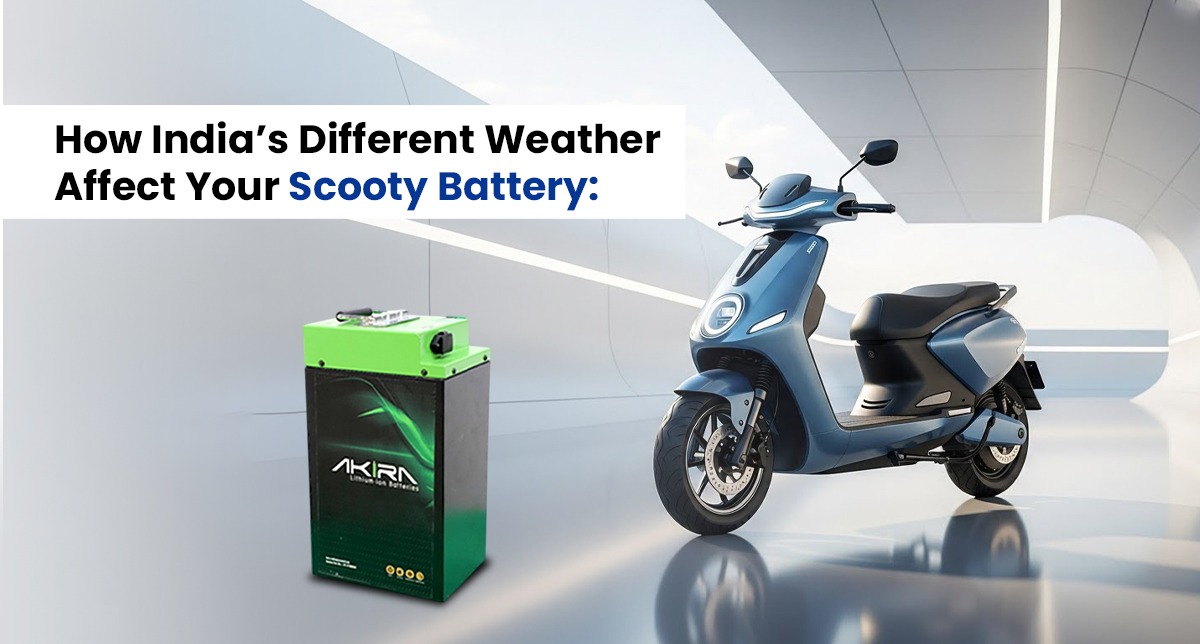
How India’s Different Weather Affect Your Scooty Battery: Two Wheeler Battery Manufacturer in India

Why does the same scooty that starts instantly in summer suddenly struggle on a cold December morning? Indian weather swings can be at extremes at times; sometimes extreme heat, cold, and humidity hit batteries differently, and riders feel the impact almost immediately.

From slow cranking in winter to water loss in peak summer, every season leaves a mark. As a long-standing two wheeler battery manufacturer in India, Akira Batteries, we see these patterns repeat across regions every year.

In this blog, here’s the simplest breakdown of how weather actually affects battery behavior.

Summer Heat Speeds Up Water Loss and Damages Plates

Indian summers can be brutal. Once temperatures rise past the mid-30s, internal battery heat also rises. This speeds up evaporation inside the battery and exposes the plates. Exposed plates lead to sulfation, which is a common cause of sudden battery failure. A simple periodic check in summer recommended by Akira Batteries, two wheeler battery manufacturer in India, prevents most of this damage.

Monsoon Moisture Encourages Rust and Current Drop

High moisture in the air settles on battery terminals during the monsoon. That thin layer of moisture slowly forms rust and reduces proper current flow. Plus, water splashes from the road reach the battery area, making insulation weaker. Scooty riders often notice random misfires or delayed ignition on rainy days because of this.

As a two wheeler battery manufacturer in India, Akira batteries, we see monsoon-related battery complaints increase every year due to excessive humidity

Winter Slows the Battery and Reduces Morning Starting Power

December–January temperatures, especially in North India, drop low enough to slow the chemical reaction inside lead-acid batteries. When the reaction slows, the battery simply can’t deliver enough power to crank the engine quickly. Add thicker winter engine oil, and the starter needs even more effort; hence, the sluggish morning starts. A warm-up or short idle time usually brings things back to normal.

Seasonal Short Rides Prevent the Battery from Recharging Properly

Winter also brings shorter scooty rides, foggy mornings, late starts, early evenings, and heavy jackets, which mean people ride less and for shorter distances. Because the alternator needs continuous running time to recharge the battery, these winter riding habits prevent full charging. As a result, the battery enters a “low-charge cycle,” making cold starts even harder and increasing the strain on the cells.

According to Akira Batteries, a leading two wheeler battery manufacturer in India, incomplete charging is one of the biggest reasons behind winter battery failures.

Last Thought

Indian weather affects two-wheeler batteries in different ways—winter weakens cranking power, summer accelerates wear and monsoon brings rust and moisture issues. But with small seasonal habits, most of this damage is easily avoidable. At Akira Batteries, a trusted two wheeler battery manufacturer in India, our products are tested specifically for these everyday Indian conditions, so riders get stable performance no matter the season.

FAQs

Q1. Why does my scooty feel heavier to start in winter?

Cold slows the battery’s internal reaction and thickens engine oil, so more power is needed.

Q2. Why does my scooty hesitate during rains?

Moisture around the terminals reduces current flow.

Q3. Are Akira Batteries suitable for Indian weather?

Yes, they’re tested for heat, vibration, humidity and cold starts common in Indian cities.

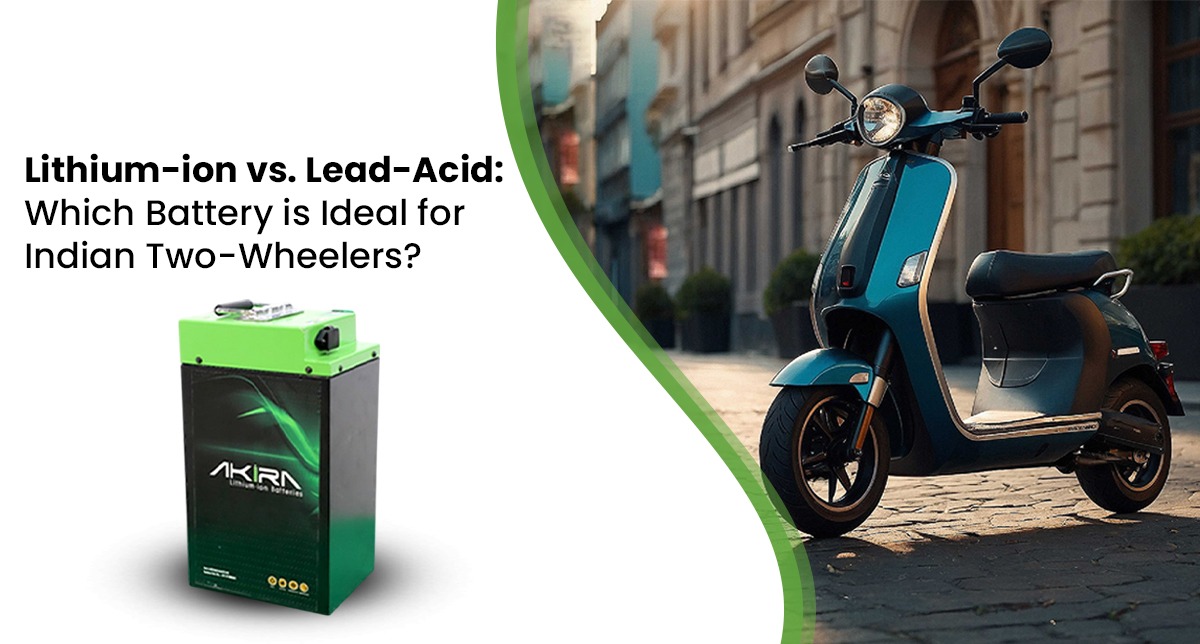
Lithium-ion vs. Lead-Acid: Which Battery is Ideal for Indian Two-Wheelers?

Two-wheelers in India are not mere vehicles—a way of life for the daily commutin’ man. Choosing the ideal battery is of critical importance to ensure reliability, performance, and cost efficiency. Of all those available options, lithium-ion and lead-acid batteries dominate the market. At Akira Batteries, one of the top two wheeler battery manufacturer in India, we provide lithium-ion solutions that cater specifically to the requirements of Indian riders. Let’s dive into what really is the best option for two-wheelers in India.

Efficiency and Performance

Lithium-ion batteries offers more consistent power and energy, offering more power in a reduced, lighter weight configuration. This means better mileage after every charge and more acceleration. Lead-acid batteries have less efficiency but savings are more. For performance-oriented riders, lithium-ion batteries by a good two wheeler battery manufacturer in India are hands down the winner.

Battery Life

Lithium-ion batteries have a lifespan of two to three times that of lead-acid. While the latter needs to be changed every 2–3 years, the former can serve up to 5–7 years. By going with a reliable two wheeler battery supplier in India, you are guaranteed durability and worth for money. 

Maintenance Needs

Lead-acid batteries require regular maintenance, such as topping up distilled water and checking corrosion. Lithium-ion batteries, on the other hand, require little or no maintenance. This is optimal for busy Indian riders who prefer convenience over periodic checks. Choosing a high-tech two wheeler battery manufacturer in India such as Akira Batteries provides trouble-free performance.

Cost Factors

Lead-acid batteries are cheaper to buy upfront but shorter-lived and requiring additional maintenance that tends to add up to total expenditure. Lithium-ion batteries are more costly upfront but provide more long-term savings. With Akira Batteries, a new-age two wheeler battery manufacturer in India, riders enjoy cost-savings along with leading technology.

Environmental Impact

Lithium-ion batteries can ve recycled and releases lesser waste than lead acid batteries. In a step towards greener mobility in India, lithium-ion is the sustainable and ethical choice. When you choose Akira Batteries, you’re encouraging green innovation from a visionary Indian two wheeler battery manufacturer in India.

Choosing Akira Batteries

At Akira Batteries, we engineer and produce high-performance lithium-ion solutions that are specifically designed to ride Indian roads. Focusing firmly on safety, efficiency, and sustainability, we provide future-proof batteries that keep you riding, without compromise.

Call-to-Action

Upgrade to Akira’s advanced lithium-ion batteries today and experience unparalleled reliability for your two-wheeler. Visit us at https://ruchiragreenearth.com/ to know more.

FAQs

Q1. Are lithium-ion batteries superior to lead-acid for two-wheelers?

Yes, they provide longer life, more efficiency, and less maintenance.

Q2. How many years does a lithium-ion battery have in two-wheelers?

Generally 5–7 years with proper maintenance.

Q3. Are lithium-ion batteries enviromental friendly?

Yes, they are recyclable and releasing very less toxic waste in the environment.

Q4. Are lithium-ion batteries expensive than lead-acid?

Yes, but they create more long-term value.

Why battery swapping makes electric two-wheelers better

As India’s cities grow busier and fuel prices keep climbing, both everyday people and policymakers are looking for smarter, cleaner ways to get around. In this shift toward electric mobility, two-wheelers like scooters and bikes are taking the lead. They’re easy on the pocket, perfect for narrow city lanes, and super convenient for daily rides. But as more people consider going electric, one practical solution is catching everyone’s attention — battery swapping.

What is battery swapping?

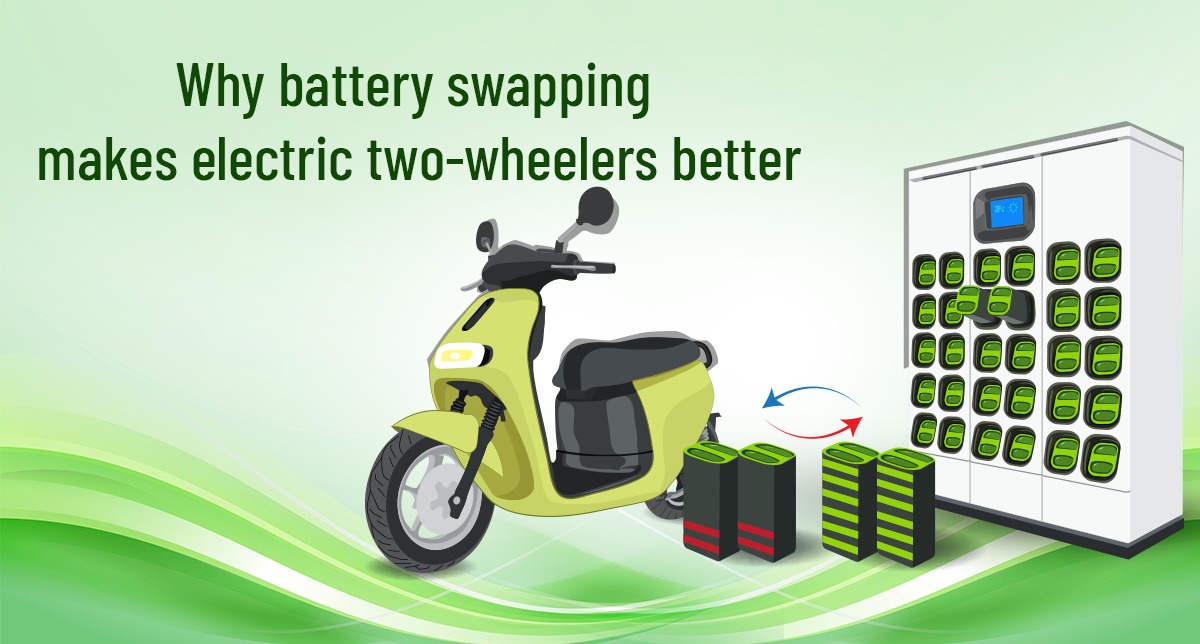
Battery swapping is the process where a low or discharged battery in an electric vehicle is swapped with a fully charged battery, thus getting on to the road in a few minutes. This way you don’t have to wait for hours to get the battery charge. It’s super convenient, especially for riders who can’t afford long charging breaks. Also, it keeps costs low and makes using electric two-wheelers and e-rickshaws way more practical.

 How it works:

  1. You drive your electric vehicle (like an e-bike or e-rickshaw) to a battery swapping station.
  2. Your used battery is removed.
  3. A fully charged battery is installed instantly.
  4. You pay for the energy or take it on a subscription model.

Why Battery Swapping Works for Two-Wheelers

By allowing the riders to exchange the drained battery with a fully charged one, this eliminates the need to wait hours for charging and tackles multiple challenges head-on.

Faster Turnaround Time:
For delivery riders, gig workers, and everyday commuters, time is everything. Battery swapping cuts downtime dramatically—just a few minutes and you’re back on the road. It helps the people to ride with ease without any hassles.

Solves Charging & Parking Woes:

As not every rider has access to home charging or safe parking with plug points, swapping stations become a hassle-free solution for them, where they don’t have to worry about the space and charging time.

Battery Swapping: Challenges 

Although there are multiple benefits of battery wrapping, it comes with some   hurdles. Let us go through them:

1. Standardization Issues:
Different EV brands use different battery designs, thus limiting the interoperability. To solve this, government-led standards and collaboration between OEMs will be important to a scalable ecosystem that works with every lithium-ion battery type.

2. Battery Health & Safety:
As the swapped batteries must be reliable, safe, and efficient, hence their regular testing, smart tracking, and battery lifecycle management hold importance to ensure every lithium-ion battery remains in good health.

3. Infrastructure Investment:
The cost of building a robust swapping network itself is very costly and requires heavy investment—in kiosks, charging hubs, and inventory. Public-private partnerships and startup-led models are crucial to scaling efficiently.

Government Initiatives and Industry Efforts

The Indian government is supporting battery swapping through the FAME II scheme. To help more people use it, they are offering support, running test programs, and giving special benefits. A new Battery Swapping Policy is also being planned to make sure the batteries are safe, easy to use, and follow common standards.

Private innovators also have a key role to play. Some startups are developing real-world swapping ecosystems for electric two- and three-wheelers which focus on high-usage segments like delivery fleets. That immensely benefits from quick lithium-ion battery swaps.

Conclusion

Battery swapping isn’t just a convenience—it’s a transformative idea. For India’s massive two-wheeler market, it offers a faster, cleaner, and more affordable path to electrification. By removing range anxiety, reducing charging downtime, and making lithium-ion battery usage smarter, battery swapping is driving India toward a more sustainable future.

The Power Within: How Lithium-ion Batteries Are Shaping Our Future

In today’s fast-evolving world, the demand for reliable, energy-efficient, and environmentally friendly power sources has never been higher. At the heart of this energy revolution is the lithium-ion battery—a compact powerhouse that fuels everything from smartphones to electric vehicles. As India advances towards cleaner energy and smarter mobility solutions, Lithium-ion Battery Manufacturers in Haryana are playing a crucial role in powering this transformation.

Why Lithium-ion Batteries Matter

Lithium-ion batteries have become the go-to solution for energy storage because of their high energy density, long cycle life, lightweight design, and fast charging capabilities. Unlike traditional lead-acid batteries, lithium-ion batteries offer better efficiency and require less maintenance. These features make them ideal for a wide range of applications including:

  • Electric Vehicles (EVs)
  • Solar Energy Storage Systems
  • Consumer Electronics
  • Telecom Infrastructure
  • Industrial Backup Solutions

The adaptability of lithium-ion technology has made it a key player in supporting India’s green goals and smart technology adoption.

The Rise of Lithium-ion Battery Manufacturers in Haryana

Haryana has emerged as a strategic hub for battery production due to its industrial infrastructure, skilled workforce, and proximity to major cities like Delhi and Gurugram. As industries shift towards sustainable power alternatives, several Lithium-ion Battery Manufacturers in Haryana have stepped up to meet the growing demand for energy storage solutions.

These manufacturers not only supply batteries for electric vehicles and solar systems but also invest in R&D to improve battery efficiency, safety, and longevity. By supporting local production, they contribute to the “Make in India” initiative and help reduce the country’s dependence on imported batteries.

Applications Driving Demand

The boom in electric mobility, particularly in two-wheelers and e-rickshaws, has significantly increased the demand for lithium-ion batteries. Haryana’s manufacturers cater to OEMs and distributors across India, supplying custom battery packs that meet varied technical specifications.

Another major growth driver is the renewable energy sector. With solar panel installations becoming more common in homes, factories, and offices, the need for reliable energy storage is essential. Lithium-ion Battery Manufacturers in Haryana are capitalizing on this shift by offering integrated battery solutions that complement solar power systems.

Technological Advancements and Innovation

The battery landscape is continuously evolving. Haryana-based companies are investing in cutting-edge technology to enhance energy density, reduce charging times, and improve battery management systems (BMS). Innovations such as fast-charging capabilities, thermal stability, and enhanced safety features have positioned lithium-ion as the battery of the future.

Manufacturers are also focusing on building eco-friendly processes, such as battery recycling and the use of non-toxic materials. This ensures that lithium-ion batteries are not just powerful, but also aligned with sustainable development goals.

Why Choose Local Manufacturers?

Partnering with Lithium-ion Battery Manufacturers in Haryana offers several advantages:

  • Faster Delivery & Local Support
  • Customization & Quality Control
  • Competitive Pricing
  • Compliance with Indian Safety Standards

Whether you are a solar installer, EV manufacturer, or energy consultant, choosing local partners ensures smoother operations and long-term reliability.

Conclusion

As the world shifts towards cleaner and smarter energy, lithium-ion batteries are leading the charge—literally. Haryana, with its robust manufacturing capabilities, has become a key player in this energy transformation. By supporting Lithium-ion Battery Manufacturers in Haryana, businesses and consumers alike can contribute to a sustainable future while benefiting from high-performance, made-in-India power solutions.

If you’re looking to power your innovation or energy project, now is the time to connect with reliable lithium-ion battery partners in Haryana and fuel your vision with the energy of tomorrow.

Change the Way You Ride with Akira’s Two-Wheeler Batteries

In 2020, when India entered its first lockdown, something astonishing happened. The sky, once veiled in a heavy blanket of smog, cleared. The roads, which were normally filled with the noise of vehicles, fell silent. What emerged was a serene world—clear skies, clean air, and a brief glimpse of the environment’s true potential. For a short while, the planet could breathe. And that’s when the message became loud and clear: the way we drive must change if we want to protect the environment for future generations.

As the world slowly emerged from the lockdown, the question remained: How do we prevent this pollution from returning? The answer lies in changing the way we commute.

The Silent Killer: Vehicular Emissions

It’s no secret that vehicles are among the primary contributors to urban air pollution. As much as 27% of global pollution comes from transportation. But banning vehicles altogether is not a feasible solution. Instead, the way we drive needs to evolve. This is where electric vehicles (EVs) come into play.

Electric two-wheelers, in particular, are quickly gaining traction, and for good reason. Not only do they offer an eco-friendly alternative to traditional fuel-powered bikes, but they also promise a quieter, cleaner, and more sustainable way of commuting.

Akira: Powering the Future of Two-Wheeler Transportation

As a leading 2 wheeler battery manufacturer, Akira is dedicated to transforming the electric vehicle space in India. Our high-quality, durable lithium-ion batteries power a wide range of electric two-wheelers, from e-bikes to e-scooters, ensuring that your ride is not just smooth, but also environmentally friendly.

The shift to electric two-wheelers is not just a passing trend; it is part of a larger, more pressing movement towards sustainable transportation. With rising fuel prices and increasing pollution, more people are recognizing the need for alternatives. And at Akira, we are proud to be a key player in this transition.

Why Akira Batteries?

  1. Long-Lasting Power: Akira’s lithium-ion batteries offer exceptional performance, ensuring that your electric two-wheeler runs smoothly for longer distances on a single charge. Say goodbye to frequent stops and hello to more time on the road.
  2. Eco-Friendly Choice: By switching to Akira’s electric batteries, you’re choosing to be part of the solution. No emissions, no pollution—just clean energy powering your ride.
  3. Designed for Indian Roads: India’s roads come with unique challenges. Akira’s batteries are specifically designed to endure the rugged conditions of Indian roads, ensuring longevity and reliability even in the most demanding environments.
  4. Faster Charging: With Akira, you don’t have to worry about long wait times. Our fast-charging technology ensures that your battery is ready to go when you are—less waiting, more riding.

A Cleaner, Greener Future with Akira

As we continue to strive for cleaner air and reduced emissions, it’s important to recognize the significant role that electric vehicles, especially electric two-wheelers, play in reducing our carbon footprint. Akira, a trusted 2 wheeler battery manufacturer,  is proud to be part of the movement, supplying high-performance batteries that make the shift to electric transportation easier, more accessible, and more sustainable.

We understand the importance of innovation and reliability. That’s why Akira is committed to providing cutting-edge battery technology that powers not just vehicles but a cleaner future for all. Whether you’re an eco-conscious rider or simply looking for a cost-effective, sustainable way to commute, Akira’s lithium-ion batteries are the solution.

The Future of Mobility is Electric

The future of transportation is undeniably electric, and Akira is leading the charge in India. By choosing Akira, you’re choosing more than just a battery; you’re choosing to be part of a larger movement towards sustainable urban mobility. Together, we can create a cleaner, greener future—one ride at a time.

Let’s make the world a better place, starting with the way we ride. With Akira’s lithium-ion batteries, the future is not only brighter, it’s also cleaner.