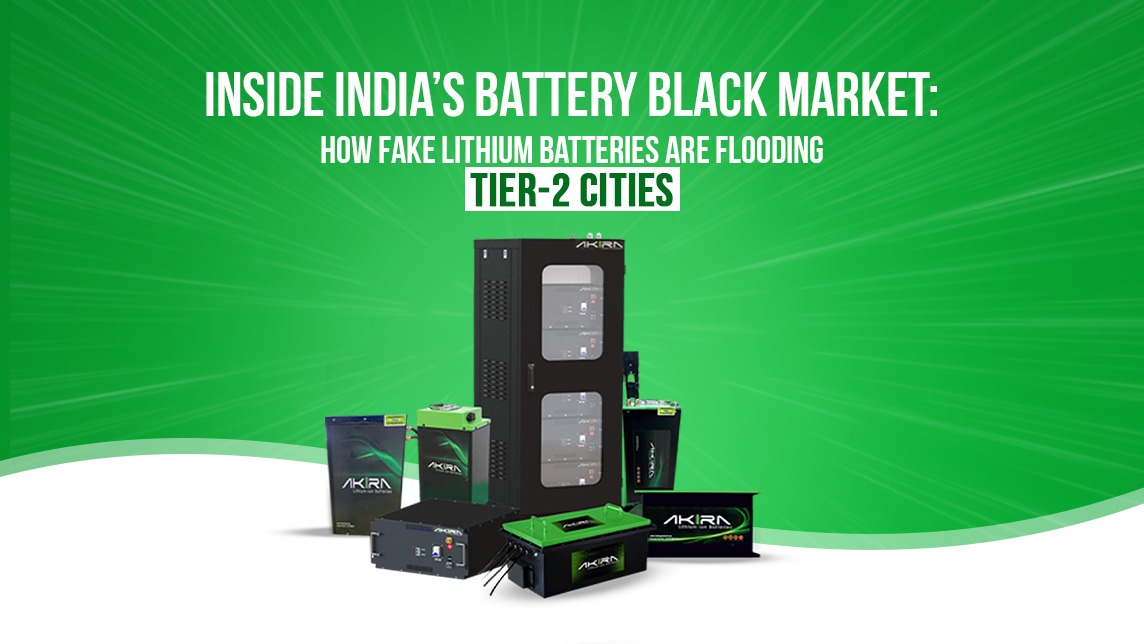
Inside India’s Battery Black Market: How Fake Lithium Batteries Are Flooding Tier-2 Cities

Walk into a small EV repair shop in a Tier-2 city and, at first glance, nothing feels unusual.

Batteries are stacked neatly, labels look familiar, and the pricing seems reasonable enough to not raise suspicion. But spend a little more time there ask a few questions and things start to feel slightly off.

You’ll hear lines like, “same spec, but this one lasts longer,” or “this is cheaper, but works fine.” That’s usually where the difference begins. Because what looks like a normal, functioning market on the surface is, in many places, a mix of genuine products and questionable ones.

It Didn’t Start as a Black Market

The situation didn’t begin this way. It built up over time.

Lithium batteries became mainstream faster than most supply chains could handle. EV adoption increased, solar installations picked up, and backup systems started shifting toward lithium. Demand moved quickly, but supply didn’t always follow in a structured way.

Globally, lithium-ion demand has grown into a massive industry. In India, that pressure shows up more clearly in smaller cities, where access to verified supply is limited and pricing plays a bigger role in decision-making.

And when demand grows faster than organized supply, informal markets tend to fill the gap.

What’s Already Happening on the Ground

In cities like Chennai, there have already been reports of unregulated electric vehicles using low-quality or recycled lithium batteries entering the market at scale. In some cases, estimates suggest tens of thousands of such units are being sold every month.

Looking closely, the pattern is fairly consistent.

Many of these setups rely on reused or low-grade cells, poorly implemented battery management systems, and assembly practices that cut corners. At the same time, India still depends heavily on imported lithium cells and components, which creates fluctuations in availability and pricing.

When supply becomes uncertain but demand stays high, the market doesn’t slow down it adapts. And not always in a structured way.

“Fake” Doesn’t Always Look Fake

One of the biggest challenges is that counterfeit batteries don’t always look suspicious.

Some are simply repackaged. Others carry branding that closely resembles known Lithium ion battery manufacturers in India. In a few cases, even the labeling and packaging are convincing enough to pass a basic inspection.

The difference usually lies inside the battery, not outside.

Lower-grade cells, missing safety layers, and inconsistent assembly aren’t visible when you’re making the purchase. By the time the issue becomes noticeable, the damage is already done.

Why Tier-2 Cities See More of This

This isn’t happening randomly, and it’s not just about awareness.

In larger cities, buyers often have access to authorized dealers or direct connections to verified Lithium ion battery suppliers in India. There’s some level of accountability built into the process.

In Tier-2 and Tier-3 cities, the situation is different. Dealers often source from multiple channels, product verification isn’t always straightforward, and pricing becomes the deciding factor more often than it should.

From a buyer’s perspective, the logic is simple: if something works and costs less, it feels like a reasonable choice. That’s enough for lower-quality products to move quickly through the market.

The Price Factor Changes Everything

Batteries make up a significant portion of an EV’s cost, often around 40–50 percent. That alone makes pricing a sensitive factor.

Even a small difference in cost can influence decisions.

Cheaper batteries tend to sell faster, especially in price-sensitive markets. Over time, this creates a cycle where demand starts favoring lower-cost options, even if quality is compromised. And once that cycle sets in, it reinforces itself.

The Risks Don’t Show Up Immediately

Another reason this problem persists is timing.

These batteries don’t usually fail right away. For the first few weeks or even months they might perform normally. That’s what makes them harder to judge at the start.

Gradually, though, issues begin to surface. Charging becomes inconsistent, backup drops, and in some cases, overheating becomes noticeable.

The bigger concern isn’t just reduced performance it’s unpredictability. Without proper internal safety mechanisms, the margin for error becomes much smaller.

Even Experienced Buyers Get It Wrong

It’s not always easy to identify a counterfeit product, even for someone with experience.

Many of these batteries replicate branding from established Lithium ion battery manufacturers in India, sometimes down to small details. Packaging looks right, labels seem correct, and there may even be codes that appear legitimate.

At that point, the product itself doesn’t provide enough information. The reliability of the supplier becomes more important than the appearance of the battery.

Where the System Starts Breaking

The issue isn’t limited to counterfeit manufacturing it’s also about how the supply chain is structured.

Not all sellers are connected to verified Lithium ion battery suppliers in India. Many rely on intermediaries or unverified sources, where traceability becomes weaker at each step.

Once traceability is lost, maintaining consistent quality becomes difficult. That’s where most of these problems begin, long before the product reaches the end buyer.

Why Brand Reliability Starts to Matter More

In this kind of environment, brand reliability becomes more important than usual.

Companies like Akira are focusing on consistent supply chains and dependable performance, making sure that what reaches the customer matches what’s promised.

For buyers, choosing a brand like Akira is less about marketing and more about reducing uncertainty. In a mixed market, that distinction matters.

What Needs to Change

The situation isn’t likely to correct itself without changes at multiple levels.

Stronger enforcement against counterfeit products would help, but so would better awareness among buyers. Easier access to verified Lithium ion battery suppliers in India and more transparent distribution systems could also reduce the problem.

Until then, the responsibility often falls on buyers and dealers to be more cautious.

Final Thoughts

India’s battery market is expanding quickly, but that growth isn’t always structured.

The presence of counterfeit lithium batteries reflects a gap between demand and organized supply. And until that gap narrows, the risk remains.

In this market, appearances can be convincing. What actually matters is what’s behind them and that’s not always easy to see at the start.

FAQs

1. Why are fake lithium batteries increasing in India?

Rapid demand, supply gaps, and price sensitivity are allowing counterfeit products to enter the market more easily.

2. Are counterfeit lithium batteries dangerous?

Yes. Many lack proper safety systems, increasing the risk of overheating, failure, or fire.

3. Why are Tier-2 cities more affected?

Limited access to verified Lithium ion battery suppliers in India and less structured distribution make these markets more vulnerable.

4. Can fake batteries look genuine?

Yes. Many copy branding from Lithium ion battery manufacturers in India, making them difficult to identify visually.

5. How can buyers avoid fake batteries?

Buy from trusted suppliers, verify documentation, and choose reliable brands like Akira with consistent quality and support.
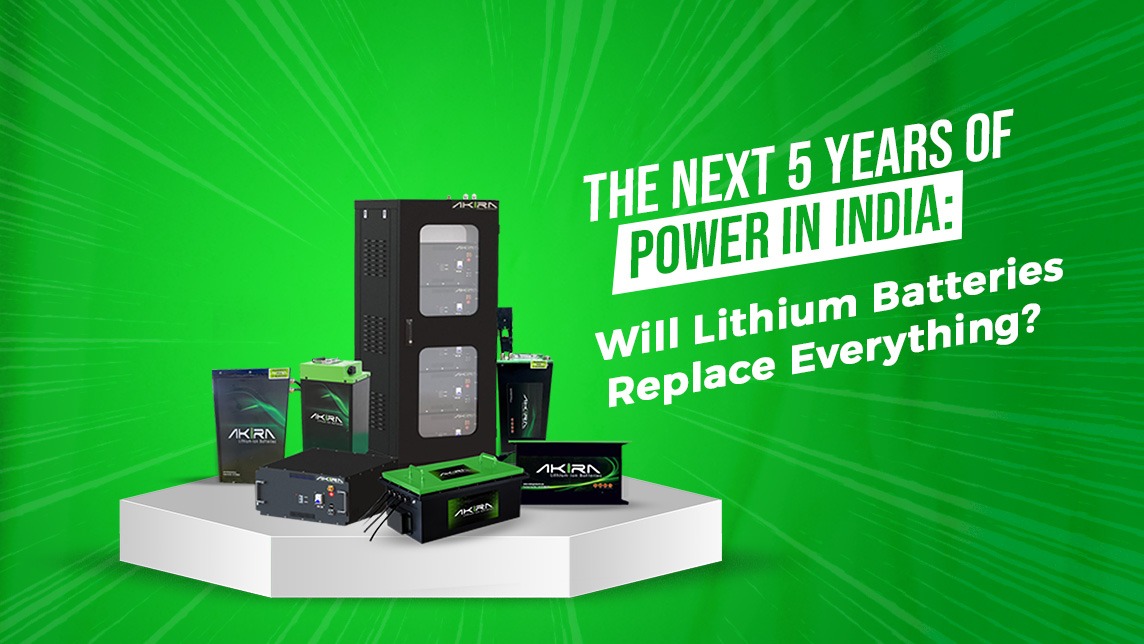
The Next 5 Years of Power in India: Will Lithium Batteries Replace Everything?

India’s energy shift isn’t something we need to predict anymore we can already see it happening around us. There is a clear trend where electric scooters can be seen everywhere, while roof-mounted solar panels can now also be found in greater numbers. Even the alternative energy sources have changed their form.

But the question remains: will lithium-ion batteries rule over all other batteries in the next five years?

Not entirely. But they’re definitely moving into a position where they’ll dominate most of the important use cases.

What’s Actually Changing on the Ground

If we look at how things have evolved over the last few years, lithium-ion batteries have quietly moved from being “advanced tech” to something much more practical.

Today, they’re used in vehicles, homes, and even small commercial setups. That shift has pushed many Lithium ion battery manufacturers in India to expand faster than expected, especially in assembly, battery management systems, and localized performance improvements.

What’s interesting is that this growth isn’t just demand-driven. Policy support like FAME incentives and PLI schemes has also played a role in nudging the ecosystem forward.

Why EVs Are Driving Most of This Change

If there’s one area where the impact is most visible, it’s electric mobility.

The rise of EV battery manufacturers in India isn’t happening in isolation. It’s directly tied to how quickly two-wheelers, three-wheelers, and delivery fleets are switching to electric. In many cities, this shift already feels normal.

And from a practical standpoint, lithium-ion batteries just make more sense for EVs:

  • They hold more energy, which means better range
  • Charging is quicker compared to older options
  • Maintenance tends to be lower over time

Of course, infrastructure still has to catch up in some places but the direction is already set.

Lithium Ion Battery Price in India: Still a Barrier?

This is where things get a bit more real.

The Lithium ion battery price in India is still higher than lead-acid, and that’s often the first thing buyers notice. For someone making a short-term decision, that upfront difference matters.

But over time, the equation shifts. Lithium batteries last longer, perform more consistently, and don’t need the same level of maintenance.

Even so, pricing isn’t going to drop overnight. It depends on raw material imports, global supply chains, and how quickly Lithium ion battery manufacturers in India can scale domestic production.

It’s Not Just About EVs Anymore

One thing that often gets overlooked is how lithium batteries are spreading beyond vehicles.

We’re starting to see them in:

Solar storage systems

As more homes and businesses install solar panels, storing that energy efficiently becomes important and lithium fits well here.

Residential backup setups

There’s a slow but noticeable shift from traditional inverters to lithium-based systems, mainly for reliability.

Commercial use

Small businesses and offices are also exploring lithium options for uninterrupted operations.

This wider adoption changes the conversation. It’s no longer just about EVs it’s about energy in general.

So, Will Lithium Replace Lead-Acid Completely?

Not immediately and probably not everywhere.

Lead-acid batteries still have one clear advantage: lower upfront cost. That keeps them relevant, especially in price-sensitive markets and basic applications.

What we’re more likely to see is a gradual shift:

  • Lithium taking over where performance and long-term value matter
  • Lead-acid continuing where cost is the deciding factor

Over time, that balance will keep changing but it won’t flip overnight.

Where Indian Manufacturers Fit In

Another important piece of the puzzle is local manufacturing.

The growth of EV battery manufacturers in India and other domestic players shows that India isn’t just importing technology anymore we’re adapting it.

Companies are working on making batteries that actually suit Indian conditions, whether that’s heat, usage patterns, or inconsistent power environments.

Brands like Akira are part of this shift, focusing on solutions that aren’t just technically sound but also practical to use. And as adoption increases, players like Akira will likely have a bigger role in making lithium more accessible across different segments.

The Challenges That Still Matter

Even with all this momentum, a few issues haven’t gone away.

  • A lot of raw materials are still imported
  • Prices can fluctuate depending on global supply
  • Recycling infrastructure is still developing
  • Not everyone fully understands lithium technology yet

None of these are deal-breakers but they do slow things down.

What the Next 5 Years Might Actually Look Like

Instead of a complete replacement, the next five years will probably be about steady expansion.

We’ll likely see:

  • Lithium becoming the default choice for EVs
  • More adoption in solar and backup systems
  • A gradual shift in the Lithium ion battery price in India
  • Continued growth from domestic manufacturers

The key word here is “gradual.” The change is happening but in phases.

Final Thoughts

If there’s one thing that stands out, it’s this: lithium batteries aren’t just an upgrade they’re becoming a foundation for how energy is stored and used.

They won’t replace everything overnight. But in most high-growth areas, they’re already becoming the preferred option.

And as the ecosystem matures with better pricing, stronger local manufacturing, and more awareness companies like Akira will be in a position to bridge the gap between technology and everyday use.

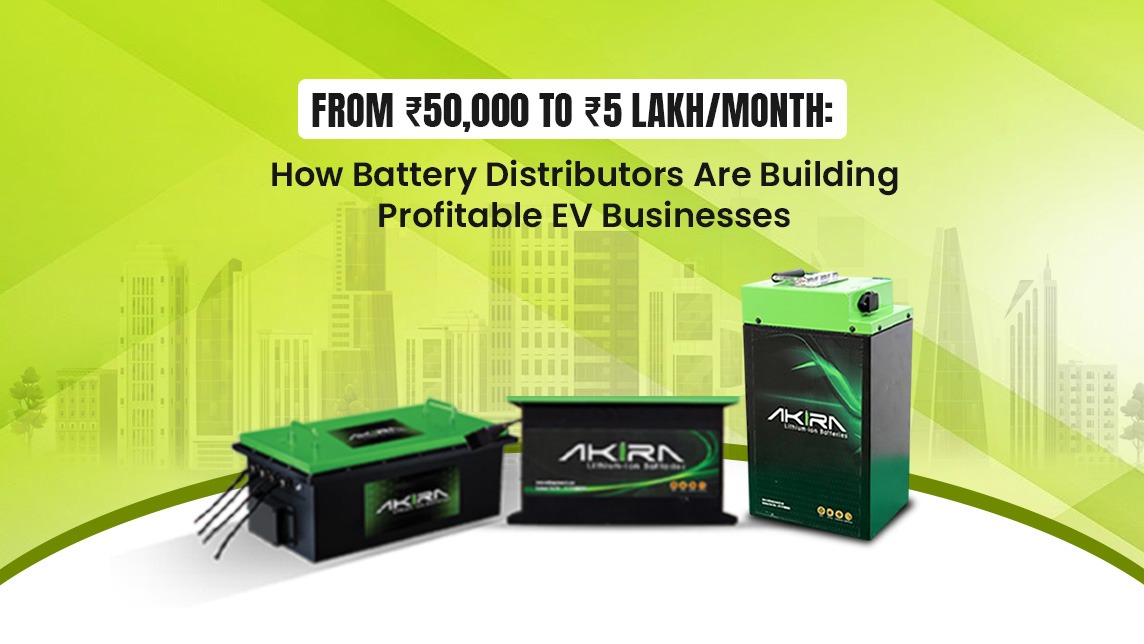
From ₹50,000 to ₹5 Lakh/Month: How Battery Distributors Are Building Profitable EV Businesses

India’s EV market is growing fast and we don’t have to look far to notice it. From electric scooters moving through city streets to e-rickshaws handling short routes, the shift is already visible around us. For small business owners, this is opening up practical, on-ground opportunities.

One group that’s quietly benefiting from this growth is battery distributors. And a big part of this comes down to how we work with Lithium Ion Battery Suppliers In India who can provide consistent quality and supply.

In this article by Akira Batteries, a particularly promising battery manufacturer in India we explore the very reason why the change is happening and what is affected by this change.

What’s Driving EV Growth in India

It’s not only because there is only one reason for this EV craze; there are several reasons that have culminated into this craze.

We’re seeing fuel prices stay unpredictable, government incentives making EVs more accessible, and a growing awareness of environmental concerns. In cities and even smaller towns, electric vehicles are becoming a common part of daily life.

As demand increases, we’re also seeing more distributors partner with Lithium Ion Battery Suppliers In India to keep up with orders and avoid stock gaps.

Why Lithium-Ion Batteries Are Gaining Attention

If we talk to EV users today, lithium-ion batteries often come up as the preferred choice. They charge faster, last longer, and perform more reliably over time.

That said, lead-acid batteries are still widely used, especially in cost-sensitive segments like e-rickshaws.

As a distributor, keeping in touch with good Lithium Ion Battery Suppliers In India helps us to be able to provide both products.

How the Distribution Business Actually Works

At a glance, the distribution model seems simple but we know it requires consistency to run smoothly.

Distributors source batteries and supply them to:

  • EV dealerships and local shops
  • Fleet operators
  • Small assemblers
  • Individual vehicle owners

The real challenge isn’t just selling it’s maintaining steady inventory. That’s where strong relationships with Lithium Ion Battery Suppliers In India such as Akira become important, especially since many components are still dependent on imports.

What Helps Distributors Grow Over Time

Growth in this business doesn’t happen overnight, but certain patterns become clear when we look closely.

Demand continues to rise as more EVs come onto the roads. Offering a variety of battery options helps attract different types of customers. Some distributors also expand their income by providing installation and basic maintenance services.

At the same time, working consistently with dependable Lithium Ion Battery Suppliers In India helps us avoid delays that could disrupt business.

Over time, these factors can gradually increase monthly earnings from smaller amounts to much higher levels.

Costs and Ground Reality

While lithium-ion batteries offer better long-term value, we often see that the upfront cost is still a key concern for many buyers.

Another reality is pricing fluctuation. Even when sourcing from Lithium Ion Battery Suppliers In India, changes in import costs or raw material availability can impact pricing and supply.

Because of this, planning inventory and staying flexible becomes important for distributors.

Using Digital Tools to Find Customers

We’re no longer limited to offline sales. Many distributors now use WhatsApp, Google listings, and local directories to connect with customers.

It’s a small shift, but it makes a real difference especially in a competitive market where multiple Lithium Ion Battery Suppliers In India and distributors are trying to stand out.

Being visible online often leads to more inquiries and better sales opportunities.

Common Challenges in the Business

Like any growing industry, this one has its challenges.

We see strong price competition in local markets, occasional supply delays, and some hesitation from customers who are still unsure about lithium-ion technology.

In most cases, handling these challenges comes down to clear communication, realistic expectations, and having a reliable supplier network.

What the Future Looks Like

If current trends continue, we can expect the EV market in India to grow even further. Naturally, that means battery demand will keep increasing as well.

For distributors, the long-term opportunity is clear but consistency will matter. Those who build strong relationships and continue working closely with trusted suppliers will be in a better position to grow steadily over time.

And Akira is always happy welcoming distributors looking forward to grow their businesses.

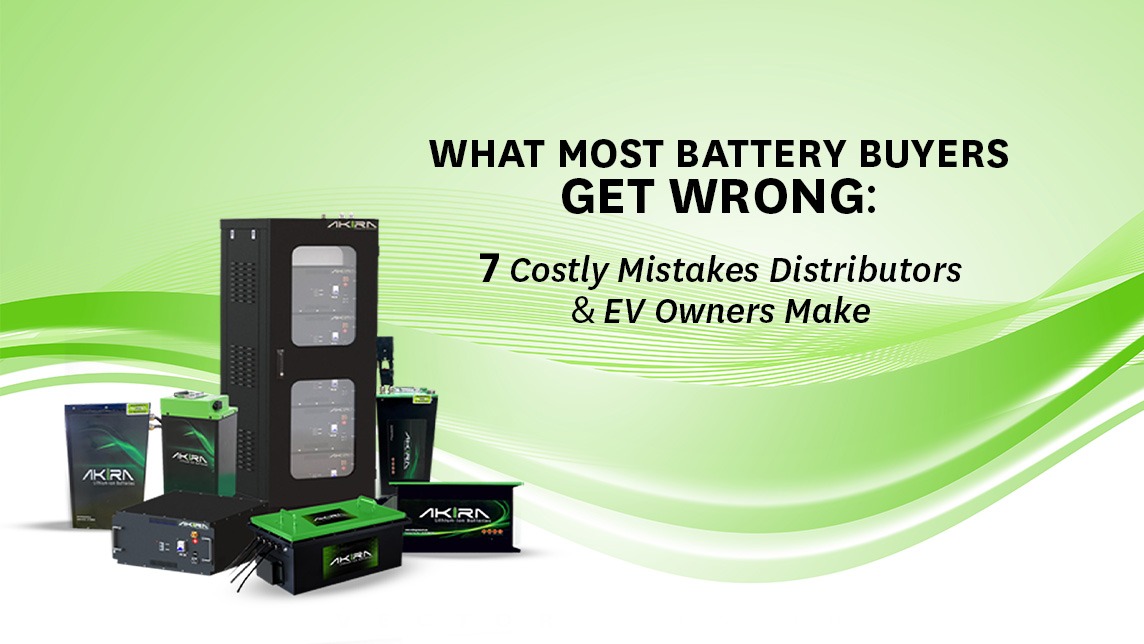
What Most Battery Buyers Get Wrong: 7 Costly Mistakes Distributors & EV Owners Make

Buying a battery should be straightforward, right? You check specs, compare prices, done. But somehow, a lot of buyers and distributors included end up making the same mistakes. Not big obvious ones, but small decisions that quietly cost more over time.

At Akira, we’ve seen this play out again and again. Here are a few things people tend to get wrong (and usually realize a bit too late).

1. Focusing Only on Price

Most searches start with Lithium ion battery price in India. That’s fair. But stopping there? Not ideal.

Lower-priced batteries often cut corners, cell quality, build, or safety features. They may work fine initially, but performance drops faster than expected. Then replacement costs come in and suddenly the “cheap” option isn’t cheap anymore.

2. Assuming All Lithium Batteries Are the Same

They’re not. Different chemistries behave differently. 

For example, LFP batteries are generally safer and last longer compared to some alternatives. But many buyers don’t check this at all. They just see “lithium” and move on. That lack of detail can matter more than people think.

3. Choosing the Wrong Battery for the Application

A Lithium battery for electric scooter is built for mobility, frequent charging, and compact design. That’s very different from a stationary backup system.

Still, people mix these use cases. The result? Lower efficiency, reduced lifespan, and sometimes compatibility issues. It’s not always obvious at first, but it shows up over time.

4. Overlooking After-Sales Support

This part gets ignored more than it should.

Batteries are long-term products. Issues can come up with installation, performance, warranty claims. Without proper support, even a good product becomes frustrating to deal with.

That’s why brands like Akira emphasize service along with product quality.

5. Not Checking Cycle Life

Cycle life is one of the most important factors and one of the least discussed.

It basically tells you how long the battery will remain usable. A battery with higher cycle life might cost more upfront but lasts significantly longer. Skipping this detail often leads to earlier replacements.

6. Undersizing for Inverter Use

When selecting a Lithium ion battery for inverters, buyers often underestimate their actual power needs.

The system works, but backup duration is shorter than expected. Frequent deep discharges then reduce battery life further. It’s a small miscalculation that creates ongoing inconvenience.

7. Ignoring Safety Standards

Not all batteries come with a proper protection system. A good Battery Management System (BMS) is a must for controlling temperature, voltage, etc.

If not installed, it increases the chances of overheating, short circuits, etc. It is not something you want to compromise on.

Final Thoughts

Most battery buying mistakes don’t look serious in the beginning. The product works, things seem fine. It’s only after a few months or a year that the gaps start showing.

A slightly more informed decision at the start usually saves both money and effort later. It’s less about spending more, and more about choosing correctly.

FAQs

1. What is the average lithium ion battery price in India?

Prices vary depending on capacity, brand, and chemistry. Lower-cost options are available, but higher-quality batteries tend to offer better long-term value.

2. Which lithium battery is best for electric scooters?

LFP batteries are commonly preferred due to their safety, stability, and longer lifespan.

3. Can I use a lithium ion battery for inverter systems?

Yes, lithium batteries are well-suited for inverter use. They charge faster, last longer, and are more efficient provided they are properly sized for the load.

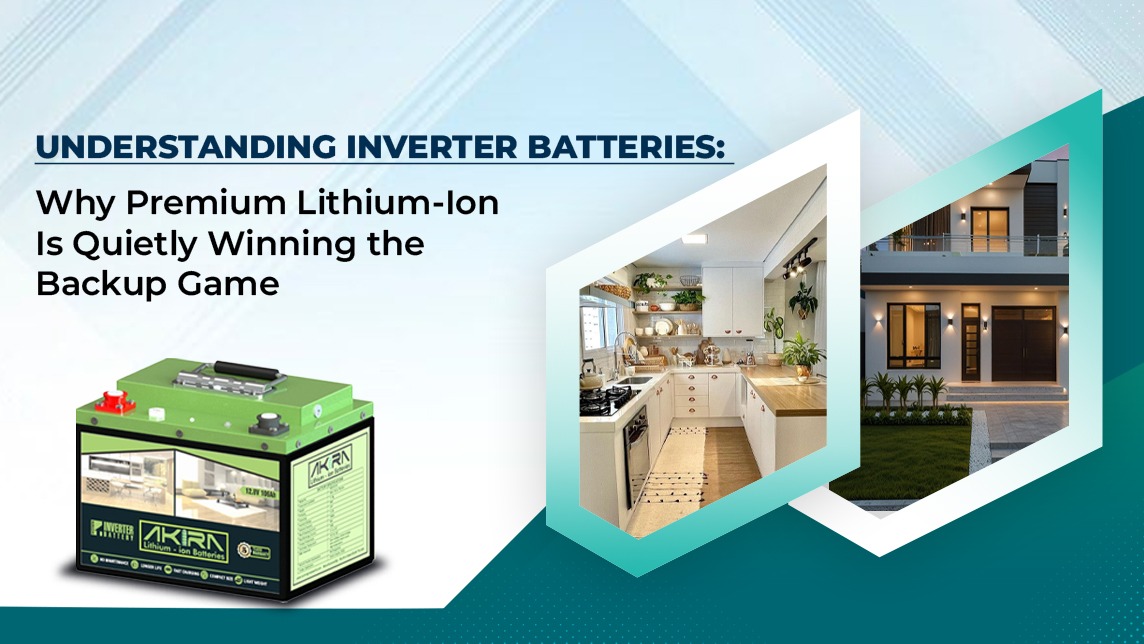
Understanding Inverter Batteries: Why Premium Lithium-Ion Is Quietly Winning the Backup Game

Power cuts still catch us off guard, don’t they? One minute everything’s fine, the next you’re scrambling for the inverter switch while the fan slows to a lazy stop. For years, most of us have relied on the same heavy, water-guzzling lead-acid batteries. They do the job. With Akira batteries, more families are making the switch to lithium-ion inverter batteries. Based on real usage patterns across Indian homes dealing with frequent voltage fluctuations and long summer outages, lithium-ion inverter batteries are proving to be a long-term upgrade, not a luxury. Let’s see in this blog how Lithium Ion Battery for Inverter is winning the backup game.

What Actually Feels Different Day-to-Day

A good lithium-ion battery for your inverter saves time and money. It offers many other benefits too.

Quick Comparison: Lead-Acid vs. Lithium-Ion for Inverters

  • Usable Power: Lead-acid: ~50% | Lithium-ion: 80–90%
  • Charging Time: Lead-acid: 6–10 hours | Lithium-ion: 2–4 hours
  • Maintenance: Lead-acid: Regular water top-ups | Lithium-ion: Less maintenance.
  • Typical Lifespan: Lead-acid: 4–5 years | Lithium-ion: 8–12 years

The Stuff You Stop Worrying About

Weight drops by half or more. Moving or repositioning the battery isn’t a two-person job that could result in a slipped disc. No more shining a torch into cells. No more trips to buy distilled water. No more cleaning corrosion every few months.

Lifespan follows the same logic. A well-cared-for lead-acid battery may last 4–5 years. In contrast, top lithium models often last 8–12 years with proper care and handle several thousand deep cycles. One lithium-ion battery for inverter can replace three conventional ones in ten years. They accumulate over time.

Efficiency feels good too. You lose far less energy going in and out of the battery, usually only 5–8% instead of 20% or worse. That small change leads to lower electricity bills. It also keeps things cooler during long backups.

Why Akira’s Approach Makes Sense Right Now

Akira lithium solutions for inverters are designed specifically for Indian power conditions. They handle voltage swings, heat over 45 °C, and the daily cycling that homes face. Our lithium batteries focus on inverters. They have strong built-in protection that stops damage before it starts. They recharge in a short time and fit snugly in tight utility spaces.

Many users say the same thing: they often forget about the battery. It only comes to mind during a power outage, which shows it’s still working well. That kind of quiet reliability is hard to put a price on.

Picking the Right One Without Overthinking It

Check your inverter first; most modern ones operate effectively with a lithium-ion battery for inverter after you adjust a couple of settings.

Capacity-wise, 100–200 Ah usually covers a typical 2–3 BHK nicely. Yes, the initial price tag looks higher. But when you factor in zero upkeep, deeper usable power, and years before the next replacement, the story changes.

Last Thought

You don’t buy inverter batteries because we love shopping for them. You buy them so the fridge keeps running, the Wi-Fi stays up for work calls, and the kids’ study table doesn’t turn into a candlelit zone.

A premium lithium ion battery for inverter, especially well-designed solutions like Akira’s, eliminates most of the old headaches and provides hours of reliable performance.

Ready for a smarter backup? Explore Akira’s lithium ion battery for inverter.

FAQs

Q1. Does a lithium ion battery for inverter really last that much longer?

Yes, most good ones give 8–12+ years or 3000–5000 cycles. That’s often 2–3× the real-world life of even a solid lead-acid.

Q2. Will my existing inverter work with lithium?

Usually yes, especially newer models. Just confirm the voltage settings and whether it supports lithium profiles. A quick call to the installer normally sorts it.

Q3. Are Akira batteries safe indoors?

They’re designed to be. Advanced BMS protection handles overcharge, deep discharge, temperature extremes, and short circuits, all built for Indian homes.

The Physics of Vibration: How Indian Roads Redefine Two-Wheeler Battery Durability

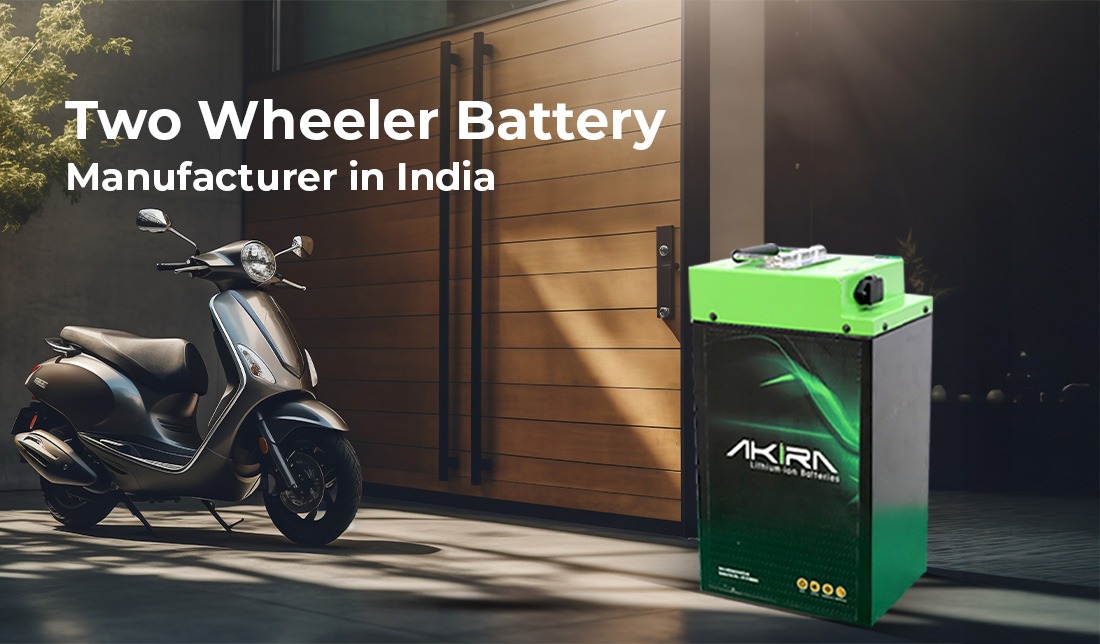
Indian roads tell a story. Sometimes smooth, often unpredictable, and always demanding. Every pothole, speed breaker, and uneven stretch sends vibrations straight through a two-wheeler’s frame. Riders feel it in their wrists. Batteries feel it inside their core. Most battery failures blamed on “poor quality” actually begin with vibration stress. Over time, these micro-shocks weaken internal components. Engineers at Akira have studied this closely. As a trusted Two wheeler battery manufacturer in India, Akira understands how road physics quietly decides battery lifespan.

Why Vibration Matters More Than You Think

Vibration is not just movement. It is repeated mechanical stress. When a scooter moves over rough terrain, energy transfers from the chassis into the battery casing. Inside, plates shift, weld joints strain, and electrolyte levels fluctuate.

Initially, performance feels normal. However, over thousands of kilometers, alignment drifts. Internal resistance increases. Eventually, starting power drops without warning.

Indian riding conditions amplify this effect. Urban traffic, rural roads, and overloaded rides create continuous low-frequency and high-frequency vibrations. Therefore, batteries designed for smoother environments struggle here. This is where a capable Two wheeler battery manufacturer in India makes a difference.

Internal Plate Damage: The Silent Breakdown

Battery plates store and release energy. They must remain stable. Under constant vibration, thin or poorly supported plates flex. Over time, active material sheds from the grid. Capacity declines.

Akira addresses this by using reinforced plate structures and optimized grid design. This ensures plates remain stable even under prolonged vibration exposure. Consequently, power delivery stays consistent for longer periods.

Electrolyte Imbalance and Vibration Stress

Vibration also affects electrolyte distribution. Repeated shaking causes uneven concentration. Some areas overwork, while others underperform. This imbalance accelerates sulfation and corrosion.

Akira batteries use precisely controlled electrolyte formulation and internal separators. As a result, chemical stability remains intact despite rough riding conditions. This attention to detail defines a responsible Two wheeler battery manufacturer in India.

Casing Strength: The First Line of Defense

A weak casing transfers vibration inward. A strong casing absorbs and disperses energy. Indian roads demand the latter.

Akira designs battery casings with vibration-resistant polymers and reinforced ribs. These features reduce internal shock transmission. Therefore, sensitive components remain protected even on long, uneven rides.

Real-World Riding Patterns Shape Durability

Stop-start traffic, sudden braking, heavy loads, and poor road surfaces combine into a harsh operating environment. Laboratory tests alone cannot predict this stress.

Akira tests batteries under simulated Indian road conditions. This approach ensures alignment between design and reality. It also explains why Akira earns trust as a Two wheeler battery manufacturer in India focused on durability, not just specifications.

How Engineering Converts Physics into Reliability

Battery longevity improves when physics guides design. Akira focuses on:

  • Reinforced internal plate support
  • Vibration-absorbing casing architecture
  • Stable electrolyte distribution
  • Secure terminal and weld structures

Each element works together. Consequently, vibration no longer shortens battery life prematurely.

Conclusion: Indian Roads Demand Smarter Batteries

Vibration never stops on Indian roads. It quietly reshapes battery durability every single day. However, when manufacturers engineer with this reality in mind, performance remains predictable.

Akira builds batteries that respect physics, road conditions, and rider expectations. Through focused engineering and field-tested design, Akira continues to stand strong as a dependable Two wheeler battery manufacturer in India.

Choose batteries engineered for real Indian roads. Discover Akira’s vibration-resistant two-wheeler batteries built for longer life and reliable performance

FAQs

Q1. Why do scooter batteries fail early on rough roads?

Continuous vibration damages internal plates, welds, and electrolyte balance over time.

Q2. Can vibration really affect starting power?

Yes. Internal damage increases resistance, reducing cranking performance..

Q3. Why choose Akira batteries?

Akira designs for Indian road realities, making it a reliable Two wheeler battery manufacturer in India focused on long-term durability.

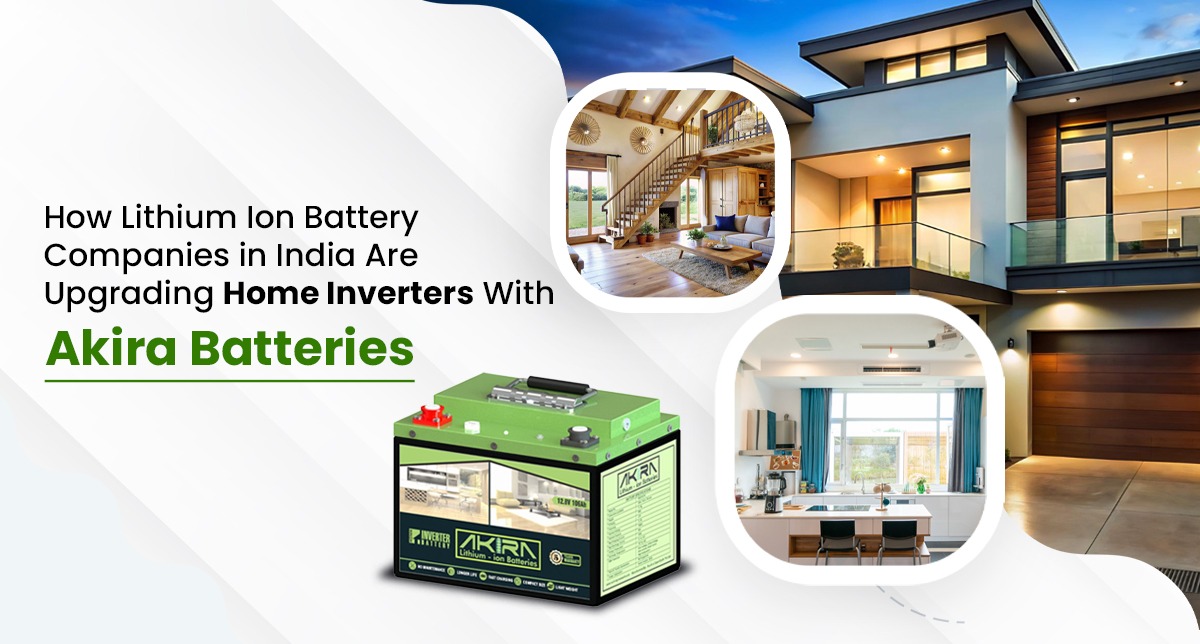
How Lithium Ion Battery Companies in India Are Upgrading Home Inverters With Akira Batteries

Being a habitual resident of India, you know one thing for sure: power cuts don’t follow rules. They show up in the middle of your work call, while cooking, or when the room finally starts cooling down. That’s exactly why people have started paying more attention to what kind of battery sits inside their home inverter. And because lithium technology is slowly becoming the “new normal,” many Lithium ion battery companies in India, including Akira batteries, one of the leading Lithium ion battery manufacturers in India arepaving the wave for interrupted power solution

Why India Should Care About Better Inverter Batteries

Homes today run on more appliances than they did even five years ago. Everyone has a router, multiple fans, lights, a laptop, sometimes two and everything needs steady power. Lead-acid batteries simply can’t keep up anymore.

People aren’t looking for luxury, they’re looking for stability, and that’s something the better Lithium ion battery companies in India, like Akira Batteries, have been addressing so far. Akira batteries, ranked among top Lithium ion battery manufacturers in India just happens to do it more cleanly, more efficiently, and with fewer compromises.

How Akira batteries Changes the Way Your Home Inverter Performs

In this blog with Akira batteries, one of the leading lithium-ion battery manufacturers in India, let’sbreak this down in simple, real-world terms.

1. The battery charges faster

Think about those short 40-minute power returns between long outages. With older batteries, you barely get any real backup. Akira charges quickly enough to make those small windows useful. No drama, no heat spikes, just efficient charging that suits Indian electricity patterns.

2. The Smart BMS quietly watches over everything.

There’s a lot happening inside a battery that we never see. Temperature changes… sudden voltage drops, random surges. Akira’s BMS keeps an eye on all of that. It protects the battery from the kind of small mistakes that usually shorten its life. And because safety matters even more in homes with kids or elderly people, this part becomes a huge deal not just a feature on paper.

3. A longer life, which saves money quietly in the background.

Lithium batteries don’t age the way lead-acid batteries do. The performance stays more stable, they survive more charge cycles, and they don’t suddenly become inefficient after a year. Akira’s chemistry is tuned for Indian temperatures, so it lasts even longer in real-world use, not just in controlled lab tests.

And yes, over time that means fewer replacements and much better value.

Why Akira Feels More “Made for India”

Plenty of Lithium ion battery companies in India make good products, but there’s a difference between a “good lithium battery” and a lithium battery that’s built with Indian households in mind.

Akira batteries, one of the leading lithium-ion battery manufacturers in India, offers an inverter battery design that quietly solves problems most families are used to:

  • Outages stretch unexpectedly for hours.
  • Voltage drops damage normal batteries.
  • Homes rely on multiple devices at once.

Last Thought

Akira Stands Out Among Lithium Ion Battery Companies in India Because It Solves Real Problems.

In a market filled with promises, Akira’s value shows up in actual everyday performance. While many Lithium ion battery companies in India focus on marketing, Akira focuses on solving things that matter: backup, safety, charging time, and long-term stability.

And that’s exactly why homeowners who switch rarely want to go back. Because once your home runs on a smarter battery, power cuts stop feeling like a disruption… and start feeling like just another moment your inverter can comfortably handle.

FAQs

Q1. Is a lithium inverter battery really better for home use?

Yes. It charges faster, lasts longer, performs better during heavy load, and needs zero maintenance.

Q2. What makes Akira different from other Lithium ion battery companies in India?

Akira is engineered specifically for Indian homes- long outages, high temperatures, voltage instability, and daily appliance load.

Q3. Does Akira offer stable backup for long power cuts?

Absolutely. Its high-density lithium cells and smart BMS deliver reliable, long-duration power.

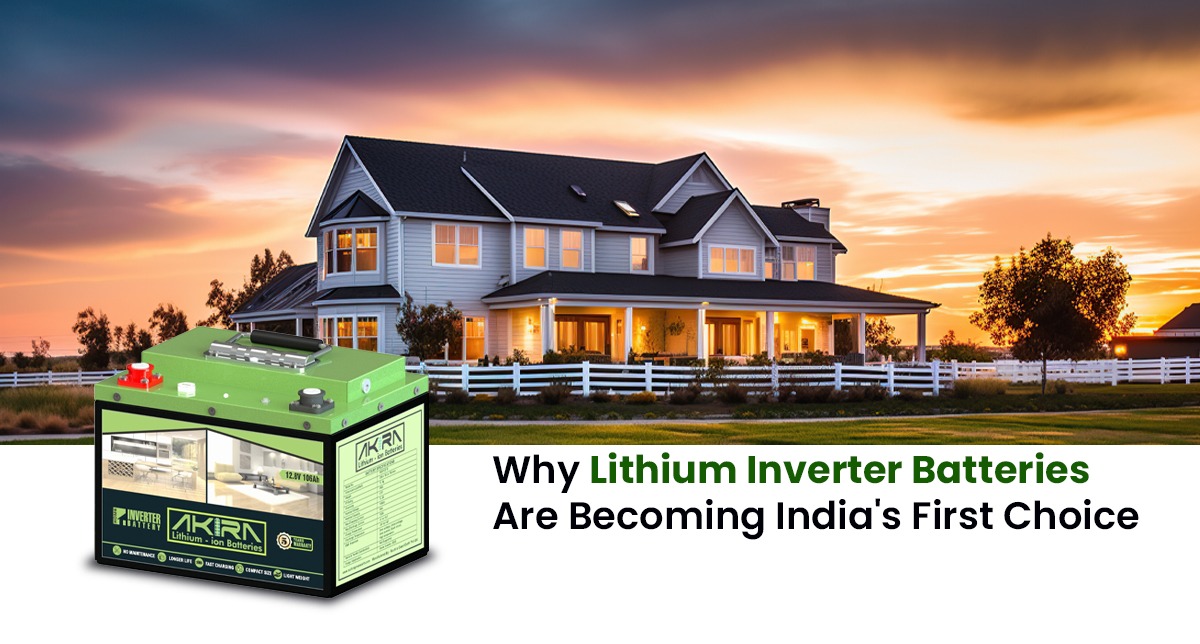
Why Lithium Inverter Batteries Are Becoming India’s First Choice

Look around, and you will find how the conversations about home power backup are changing rapidly. Gone are the days when everyone wanted heavy, maintenance filled batteries with quick drainage. We all want something more that is smarter, faster, and reliable. It is due to this growing demand that the Lithium battery for inverter has become one of the most talked about technologies Keeping all these points in mind, Akira, one of the leading Lithium inverter battery manufacturers in India, provides lithium batteries for inverters.

Why India is Moving towards Lithium Power

Akira batteries, one of the leading Lithium inverter battery manufacturers in India, provides Lithium inverter batteries which have multiple benefits, some of them are lightweight, fast charging, and it consistently provides power compared to lead-acid batteries.

Top Reasons Lithium inverter Batteries Are Winning Choices 

It is not just 1 or 2  incidents that make lithium inverter batteries popular. Real advantages that consumers can experience each day after switching to lithium inverter batteries for their inverter:

  •  charges almost three times faster.
  •  supplies constant output with no voltage drop.
  •  requires zero maintenance.
  •  lasts 8 to 10 years, reducing replacements.
  •  uses advanced technology that supports smart inverters.

Understanding Lithium inverter Battery Prices in India

Speaking of the Lithium inverter battery price in India, users first notice a far higher upfront price. When it comes to long-term savings, though, lithium inverter batteries win hands down.

Akira batteries, one of the leading Lithium inverter battery manufacturers in India, provides lithium batteries for inverters to replace 3 to 4 lead-acid batteries over its useful life. It also saves money spent on the cost of maintenance, electricity bills, and replacement cycles. It is because of this that more and more consumers prefer to pay a little extra upfront to enjoy years of worry free performance.

Growing Role of Indian Manufacturers in Power Backup Innovation

Most of the Lithium inverter battery brands today work with deep investments in R&D, advanced testing, and automation. All this is gradually helping in offering much-improved safety, longevity, and performance to batteries. In due course, lithium inverter batteries will become more economical and accessible for households across the Indian sub-continent.

With more local manufacturing, the consumer benefits from an increase in technology at competitive pricing.

Smart Energy Taking off in India With Akira Batteries 

Akira, a leading battery manufacturer in India, provides Lithium batteries for inverters leading the switch towards cleaner energy and a modern home power system in India. Their compatibility with solar panels, smart energy apps, and hybrid inverters makes them highly apt for modern homes.

The Lithium inverter battery for the inverter is an epitome of reliable, long-lasting, and energy-efficient backup power. As India moves to smarter energy solutions, Lithium technology will only get stronger.

FAQs

Q1. Do Akira lithium inverter batteries really last longer?

Yes. Most users notice they hold power better and stay stable for years without slowing down.

Q2.. Does  Akira Lithium inverter battery support long power cuts?

Lithium handles repeated charging well, so it performs better during frequent outages.

Q3.. Can  Akira Lithium inverter batteries run heavy appliances?

It can handle essentials easily; larger loads depend on your inverter capacity.

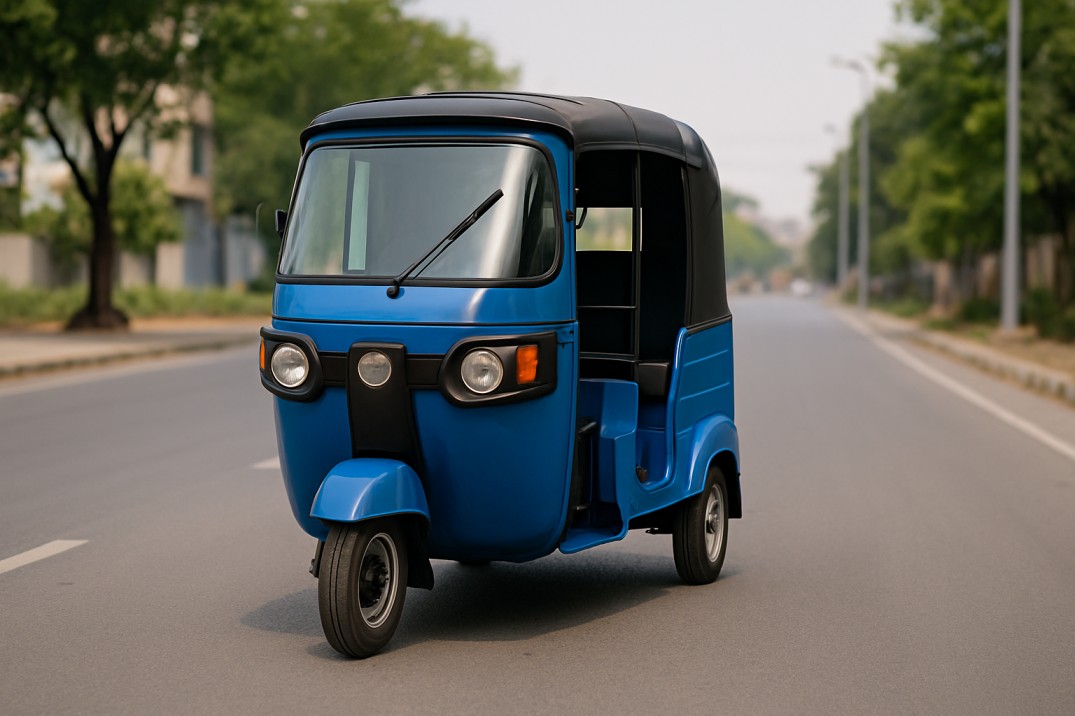
Let Akira Lithium-Ion Batteries Keep Your 3-Wheeler Rolling Strong

Have you ever experienced an instance where your battery-powered vehicle completely loses power on the trip? Slow rides, constant stops to charge, and battery failures seem to be a daily struggle for multiple drivers. All of these circumstances are annoying, time-consuming, and negatively impact your income.

This is where Akira Lithium Ion Batteries come in the picture. Akira Lithium Ion Batteries are specifically designed for 3 wheeled vehicles, last longer, charge quicker, and are a reliable power source with no worries about stopping  your vehicle when you need it the most.

Opt for Akira batteries, one of the leading Lithium-ion battery manufacturers in Haryana for your 3 wheeler, and watch your 3-wheeler transform. Passenger pickups, veggie deliveries, school runs everything stays on track. It’s cutting-edge tech packed with unbreakable dependability.

Why Kick Old Batteries to the Curb?

Regular lead-acid packs? Total drags heavy as bricks, painfully slow to charge, and forever begging for water refills. Akira, one of the leading Lithium-ion battery manufacturers in Haryana offers Lithium-Ion batteries for 3 wheeler that flips the script. Swap it in, and suddenly your ride:

  • Flies farther on one charge—no more “low battery” freakouts.
  • Recharges in a blink—plug in over lunch, zoom out fully juiced.
  • Demands zero babysitting—skip the water checks and rusty headaches.

Going for a lithium ion battery isn’t just fancy; it’s straight up smart for anyone whose daily bread rolls on three wheels.

What You Really Get with Akira

1. Rock-Steady Power

No sputters, no surprises. Akira, one of the leading Lithium-ion battery manufacturers in Haryana, keeps the throttle snappy on marathon routes or steep climbs.

2. Safety You Can Bank On

Every cell is torture-tested for heat, jolts, vibrations, and short circuits. Monsoon splashes, pothole parties, 45°C scorchers-Akira remains chill and secure.

3. Wallet-Friendly in the Longer Run

Yeah, a little more expensive upfront. But when it outlives old batteries 3-4 times and avoids workshop bills, the savings add up fast. It’s peace of mind, ride after ride.

Why 3-Wheeler Owners Can’t Stop Raving About Akira

  • Built for Real Indian Chaos Lightweight yet beast-tough perfect for overloaded autos, dusty backroads, and post-rain puddles.
  • Grab It Anywhere From your neighborhood mechanic to metro dealers, Akira, is a quick call away via trusted lithium-ion battery suppliers in India.
  • Pro-Backed Quality We’re among the leading lithium-ion battery manufacturers in Haryana and EV battery manufacturers in Haryana. Every pack rolls out of our Yamuna Nagar plant only after surviving brutal, real-world beatdowns.

Ready to Level Up? Swap Smart with Akira

Akira Lithium-Ion Batteries mean longer life, quicker charging, zero drama and a happier planet. Wondering about the lithium ion battery price in India? Hit up any reliable lithium ion battery supplier in India; they’ll sort you with fresh rates and perfect fitment.

One simple swap, and your 3-wheeler turns faster, cheaper to run, and 100% reliable. That’s Akira, one of the leading Lithium-ion battery manufacturers in Haryana.

FAQ – Akira 3-Wheeler Batteries

Q1: Why pick Akira for my e-rickshaw?

A: Insane range, turbo charging, and almost no maintenance. Your daily hustle just got effortless..

Q3: Do they actually save cash?

A: Higher start cost, but 3-4× lifespan + zero service tabs = massive wins over time.

Q4: Available across India?

A: Yep! Nationwide network of lithium ion battery companies in India—your city’s covered.

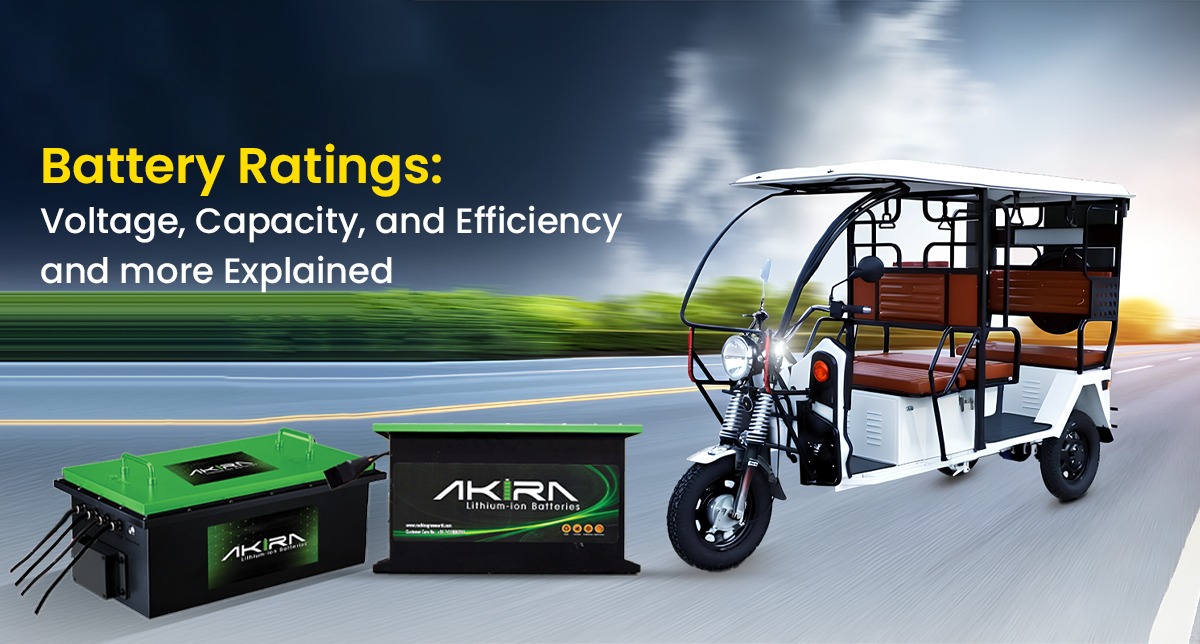
Battery Ratings: Voltage, Capacity, and Efficiency and more Explained

12V, 100 Ah or 80% DOD. Have you come across these terms? Must have. But you must not have paid much attention to it. These are the terms we see on the batteries. Be it lead acid or lithium ion batteries. These are very important terms. That tells us about how strong the battery is and how long they can work. Learning about these terms is important to be a well informed consumer. In this blog, from Akira, a reliable Lithium ion battery manufacturer in India, let us understand these terms in detail.

1. Voltage

Voltage is how strong a battery pushes electricity. Imagine water pressure in a pipe—the more pressure, the faster it flows. Big machines need bigger volts, small gadgets need less. Voltage shows what a battery can handle.

2. Capacity

Capacity basically shows how long a battery can keep going. Measured in Ah, a 100Ah battery can give 1 amp for 100 hours—or 10 amps for 10 hours. Bigger capacity means longer power, kind of like a big water tank—super handy for inverters or solar systems!

3. Efficiency

Efficiency basically tells us how much energy from a battery we can actually use. As we know, some energy is always kind of lost as heat, so no battery ever gives a full 100%. But, a battery with 90% efficiency gives back most of its power, which is really great! At Akira, a dependable Lithium ion battery manufacturer in India, we make sure our batteries use energy super smartly, so they last longer and basically keep you powered up without any worries!

4. BMS

BMS or Battery Management System, is like a battery’s helper. It keeps your battery safe and healthy. It makes sure the battery doesn’t get too hot or too full. The BMS helps the battery work better.

5. Discharge

Discharge is when the battery gives out its energy to run devices, like water flowing out of a tank to fill cups.

6. DOD

Depth of Discharge (DOD) shows how much energy a battery has used. If a battery is full and you use half, then the DOD which is a short form of Depth of discharge is 50%. Keeping DOD low makes the battery last longer.

7. Cycle Life

Cycle life is how many times a battery can be charged before it starts losing power. The more cycles, for the longer time the battery lasts.

8. Self-Discharge

Self-discharge is when a battery loses a little energy even if it isn’t being used. Some energy disappears over time, like a leaky water bottle.

Why Battery Ratings Are Important

Knowing voltage, capacity, and efficiency is like having a battery superpower! Big machines need batteries with a strong “push” (more voltage), while tiny gadgets are happy with a smaller push. Capacity shows how long your battery can keep going, and efficiency makes sure none of its energy goes to waste!

Akira Batteries: Power You Can Trust

At Akira, a trusted Lithium ion battery manufacturer in India, every battery is made to have the perfect mix of voltage, capacity, and efficiency. Our batteries are strong, long-lasting. They work great for home inverters, solar panels, or big machines, giving power you can trust.

Conclusion

Learning about battery ratings makes picking the right battery simple! Voltage shows the battery’s strength, capacity tells how long it can last, and efficiency shows how well it works. With Akira, one of the trusted Lithium ion battery manufacturers in India, every charge is strong and useful!