As India’s cities grow busier and fuel prices keep climbing, both everyday people and policymakers are looking for smarter, cleaner ways to get around. In this shift toward electric mobility, two-wheelers like scooters and bikes are taking the lead. They’re easy on the pocket, perfect for narrow city lanes, and super convenient for daily rides. But as more people consider going electric, one practical solution is catching everyone’s attention — battery swapping.
What is battery swapping?
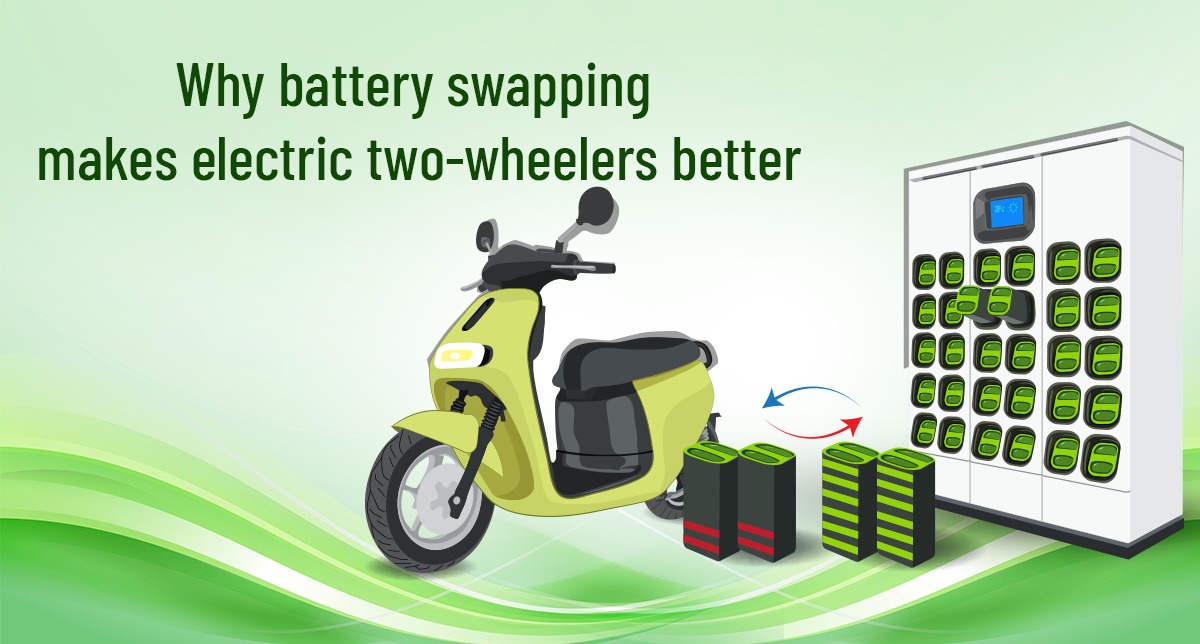
Battery swapping is the process where a low or discharged battery in an electric vehicle is swapped with a fully charged battery, thus getting on to the road in a few minutes. This way you don’t have to wait for hours to get the battery charge. It’s super convenient, especially for riders who can’t afford long charging breaks. Also, it keeps costs low and makes using electric two-wheelers and e-rickshaws way more practical.
How it works:
- You drive your electric vehicle (like an e-bike or e-rickshaw) to a battery swapping station.
- Your used battery is removed.
- A fully charged battery is installed instantly.
- You pay for the energy or take it on a subscription model.
Why Battery Swapping Works for Two-Wheelers
By allowing the riders to exchange the drained battery with a fully charged one, this eliminates the need to wait hours for charging and tackles multiple challenges head-on.
Faster Turnaround Time:
For delivery riders, gig workers, and everyday commuters, time is everything. Battery swapping cuts downtime dramatically—just a few minutes and you’re back on the road. It helps the people to ride with ease without any hassles.
Solves Charging & Parking Woes:
As not every rider has access to home charging or safe parking with plug points, swapping stations become a hassle-free solution for them, where they don’t have to worry about the space and charging time.
Battery Swapping: Challenges
Although there are multiple benefits of battery wrapping, it comes with some hurdles. Let us go through them:
1. Standardization Issues:
Different EV brands use different battery designs, thus limiting the interoperability. To solve this, government-led standards and collaboration between OEMs will be important to a scalable ecosystem that works with every lithium-ion battery type.
2. Battery Health & Safety:
As the swapped batteries must be reliable, safe, and efficient, hence their regular testing, smart tracking, and battery lifecycle management hold importance to ensure every lithium-ion battery remains in good health.
3. Infrastructure Investment:
The cost of building a robust swapping network itself is very costly and requires heavy investment—in kiosks, charging hubs, and inventory. Public-private partnerships and startup-led models are crucial to scaling efficiently.
Government Initiatives and Industry Efforts
The Indian government is supporting battery swapping through the FAME II scheme. To help more people use it, they are offering support, running test programs, and giving special benefits. A new Battery Swapping Policy is also being planned to make sure the batteries are safe, easy to use, and follow common standards.
Private innovators also have a key role to play. Some startups are developing real-world swapping ecosystems for electric two- and three-wheelers which focus on high-usage segments like delivery fleets. That immensely benefits from quick lithium-ion battery swaps.
Conclusion
Battery swapping isn’t just a convenience—it’s a transformative idea. For India’s massive two-wheeler market, it offers a faster, cleaner, and more affordable path to electrification. By removing range anxiety, reducing charging downtime, and making lithium-ion battery usage smarter, battery swapping is driving India toward a more sustainable future.